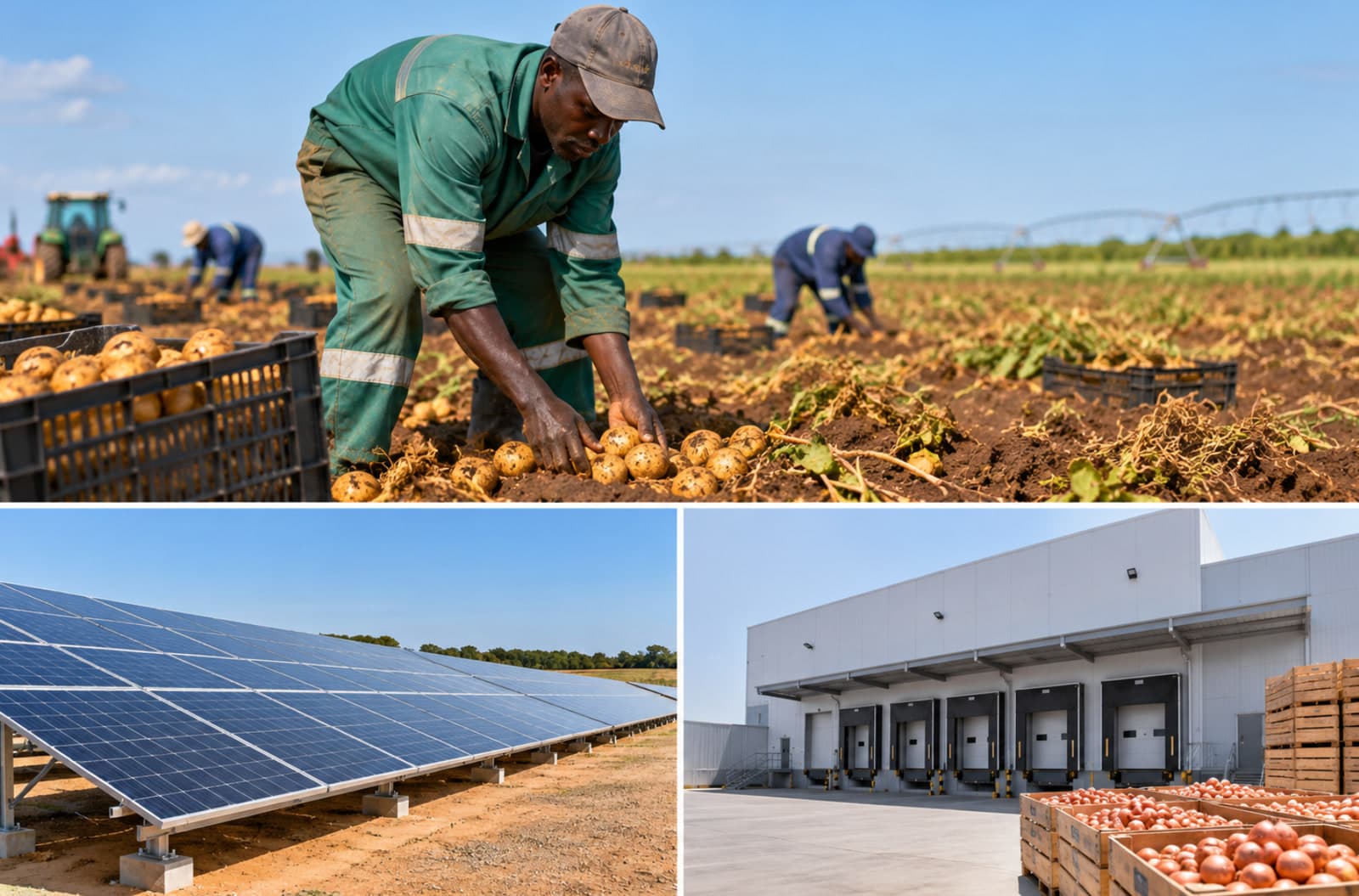
Ground Up Investing raises $6 million to finance agricultural suppliers in East Africa
Buying crops from smallholder farmers is only one part of running an agricultural supply business. The company also needs money for transport, storage, workers and other costs before it gets paid by the customer receiving the produce.

Ground Up
Buying crops from smallholder farmers is only one part of running an agricultural supply business. The company also needs money for transport, storage, workers and other costs before it gets paid by the customer receiving the produce.
AI-generated summary. It can miss nuance — read the full story above for the complete picture.
Buying crops from smallholder farmers is only one part of running an agricultural supply business. The company also needs money for transport, storage, workers and other costs before it gets paid by the customer receiving the produce. For a smaller supplier, the gap between buying crops and receiving payment can become expensive. A business may have several orders lined up but not enough cash to pay farmers for the next round of purchases.
Ground Up Investing has raised $6 million to provide working capital loans to agricultural businesses in Kenya, Uganda and Rwanda. The fund will focus on companies that buy produce from smallholder farmers and sell it to larger customers, including processors and other businesses in the food supply chain.
The financing is aimed at a part of agriculture that does not always receive much attention: the businesses responsible for collecting produce from farmers and getting it to market.
"For agricultural suppliers, the challenge is having enough money to buy the next batch of crops while waiting for customers to pay for the previous one."
Buying from farmers before getting paid
Consider a business purchasing maize from farmers in Uganda. It may have an agreement with a food processor to supply a certain quantity, but it needs to pay farmers before it can deliver the order. The supplier also has to arrange transport, find space to store the maize and cover the costs of handling the produce. Once the delivery reaches the customer, payment may take another 30 or 60 days.
During that time, the business still has to operate. Farmers may have more crops available, employees need their salaries and transport providers expect payment. If another customer places an order, the supplier needs additional money to fulfil it. This is where a business can run into trouble despite having customers and demand for its products. Its money is tied up in produce that has already been delivered, while the next purchase needs to be paid for in cash. Some suppliers may respond by reducing the amount they buy from farmers. Others may turn down orders because they cannot afford to purchase enough produce upfront.
Why agricultural suppliers need working capital
Agricultural supply businesses often operate on different payment schedules. Farmers may expect to be paid when they sell their produce, while large customers can take weeks to settle invoices. The difference puts pressure on smaller companies that do not have large cash reserves or access to affordable bank financing.
A supplier handling several hundred farmers, for example, may need to make frequent purchases during the harvesting season. If it runs short of money, it cannot simply ask farmers to wait until its own customers have paid. The problem also affects how much produce reaches the market. When suppliers cannot afford to buy, farmers may have to find alternative buyers, sometimes at lower prices or further away from their farms.
Ground Up Investing's fund is intended to provide loans to businesses dealing with these expenses. The money can help them purchase produce and cover operating costs while waiting for payments from customers.
The financing comes with its own costs
Borrowing money can help a supplier take on another order, but it does not automatically make the business more profitable. A company needs to work out how much it earns from each delivery after paying farmers, transport costs, storage charges, staff and other expenses. Loan repayments must also be included in that calculation.
There is a further risk when customers delay payments. A supplier may have delivered the produce and issued an invoice, but still be waiting for the money when its loan repayment falls due. The interest rate, repayment period, loan conditions and approval process will therefore matter to businesses considering the funding. A loan that is too expensive could leave a supplier with less money after completing an order. For companies operating on narrow margins, the cost of borrowing needs to make sense against the value of the business they are financing.
The businesses connecting farmers to larger markets
Ground Up Investing is targeting agricultural companies rather than lending directly to individual smallholder farmers. These companies play an important role in getting agricultural produce to larger markets. They purchase crops from farmers, organise collection, manage storage and supply customers that individual farmers may struggle to reach on their own.
Their ability to keep buying also affects the farmers who depend on them for regular sales. If a supplier has enough working capital, it may be able to purchase larger quantities, serve more customers and return to the same farming communities for future harvests. But that depends on having reliable buyers and managing the costs of moving produce. The $6 million fund will cover businesses in Kenya, Uganda and Rwanda, three markets where smallholder farmers play an important role in agricultural production.
What will the $6 million change?
The amount raised gives Ground Up Investing money to lend, but the details of how it will be distributed will matter to the businesses it wants to reach. How many agricultural suppliers will qualify? What size loans will be available? Will smaller companies with limited assets be able to access the funding, and how much will they pay to borrow?
These are important considerations for businesses that need money to purchase produce but cannot afford expensive financing. The funding will also need to reach companies that have established relationships with farmers and customers, rather than businesses that are simply looking for money to cover existing losses. For agricultural suppliers in East Africa, the problem is often not finding someone willing to buy their produce. It is having enough money to purchase the next batch while waiting for payment on the previous one. Ground Up Investing is putting $6 million towards that gap. Whether the funding reaches smaller suppliers on affordable terms will determine how useful it becomes to the businesses buying from farmers.