
Swami Agri Secures $52.2 Million for Solar Power and Storage in Senegal
Swami Agri needs somewhere to keep its potatoes and onions after harvest, and enough electricity to run those facilities. The Senegalese agricultural company is putting $52.2 million in new financing towards both.
Swami Agri
Swami Agri needs somewhere to keep its potatoes and onions after harvest, and enough electricity to run those facilities. The Senegalese agricultural company is putting $52.2 million in new financing towards both.
AI-generated summary. It can miss nuance — read the full story above for the complete picture.
Swami Agri needs somewhere to keep its potatoes and onions after harvest, and enough electricity to run those facilities. The Senegalese agricultural company is putting $52.2 million in new financing towards both. The company raised the money through a five year green bond. The African Local Currency Bond Fund, managed by Cygnum Capital, invested $7 million in the issue.
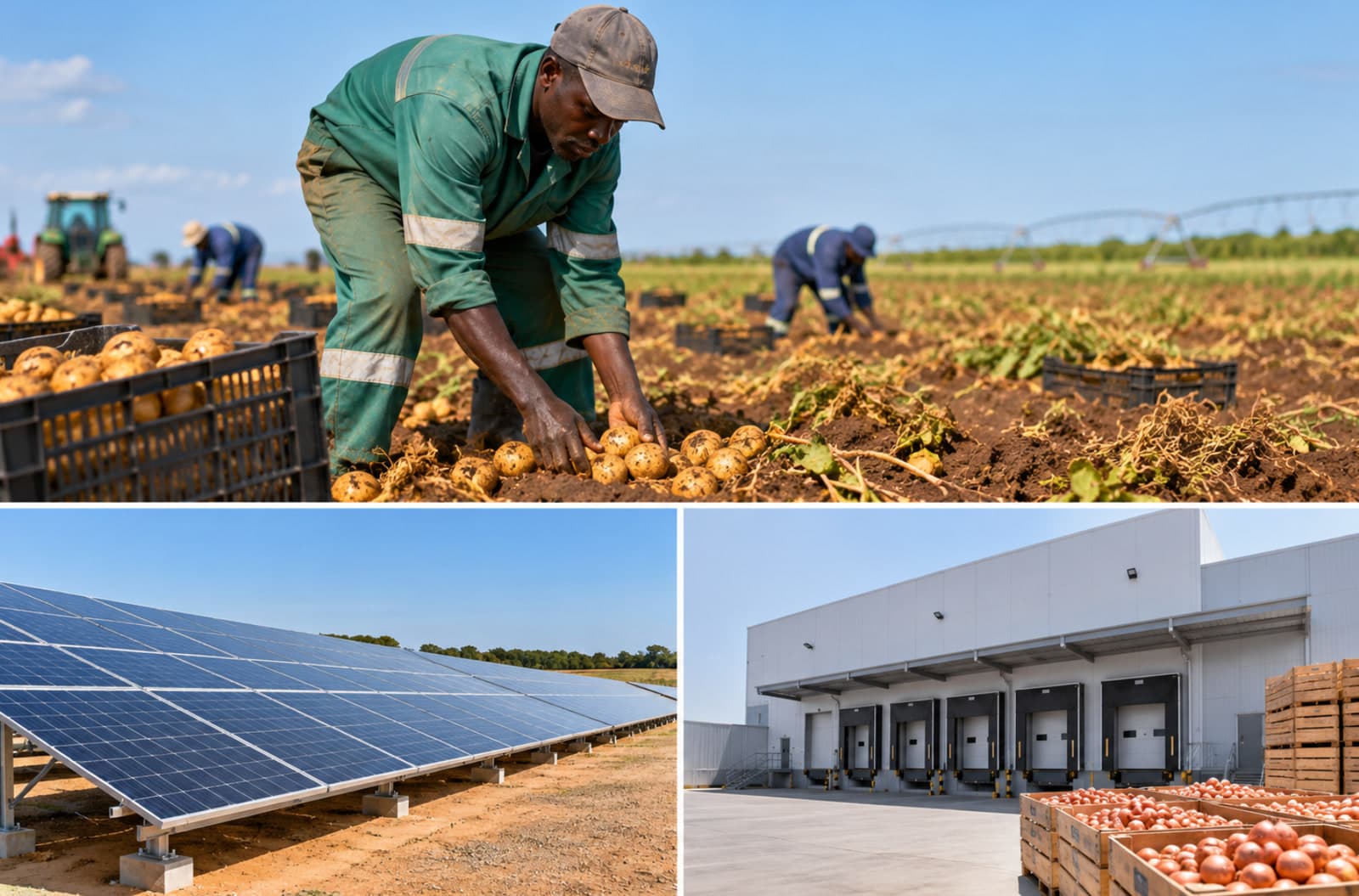
Swami Agri plans to use the funding to add 16.7 megawatts of solar power capacity and build five cold-storage facilities with room for a combined 62,500 tonnes of produce. The scale of the project reflects the size of the company's farming operation. Swami Agri cultivates more than 3,500 hectares and reports annual production of about 90,000 tonnes of potatoes, 25,000 tonnes of onions and 5,000 tonnes of bananas.
What the company plans to build
“The facilities need to support the business well enough for Swami Agri to cover both its operating costs and its financing commitments.”
Each of the five planned storage facilities will have capacity for 12,500 tonnes. For Swami Agri, that means more room to hold produce while it manages sales and deliveries. Potatoes and onions need suitable storage conditions to remain in good condition after harvesting. If storage is limited, a producer has less flexibility in managing its stock. Produce that deteriorates before reaching buyers can mean lost revenue.
Swami Agri wants to reduce post-harvest losses by at least 50%. The company has not disclosed its current loss rate, so it is not yet possible to assess how much produce that target would save. The new facilities will also need a dependable power supply. Refrigeration uses electricity continuously, which is why solar generation forms part of the investment.
Solar power comes with its own costs
The planned 16.7MW solar installation is intended to supply part of the company's energy needs. Swami Agri aims to source between 70% and 90% of the energy used across its storage and production operations from renewable sources. It also wants to cut carbon emissions by 20% to 30%.
Those targets will depend on how much power the system generates, how much the facilities consume and what other electricity sources the company needs. Solar equipment also brings installation and maintenance costs. The financial benefit will become clearer once the facilities are operating. Swami Agri will need to show whether the investment reduces its electricity bill and helps it preserve more of the produce it grows.
Borrowing to expand the business
The $52.2 million bond is Swami Agri's first capital-markets issuance. Cygnum Capital describes it as the first agricultural green bond issued in the West African Economic and Monetary Union. The bond is denominated in West African CFA francs, carries a reported annual interest rate of 7% and runs for five years. The African Guarantee and Economic Cooperation Fund guarantees the principal and interest, while IMPAXIS Securities arranged the transaction.
Raising money through a bond allows Swami Agri to finance the project without selling an ownership stake in the company. It also leaves the company with repayments to meet over the life of the bond. That makes the performance of the new infrastructure important. The facilities need to support the business well enough for Swami Agri to cover both its operating costs and its financing commitments.
What happens beyond Swami Agri's farms?
The company expects the investment programme to create at least 700 direct jobs. Construction and operation could also create work for equipment suppliers, contractors and maintenance businesses, although the company has not disclosed its procurement plans. It is also unclear whether independent farmers will be able to use the new storage facilities or whether the capacity will be reserved for Swami Agri's own produce.
That distinction matters. If the facilities serve only the company's operations, the immediate benefits will be concentrated within its own supply chain. If other growers can access the space, the project could have a wider role in how produce is stored and moved in Senegal. For now, Swami Agri has secured financing for a substantial expansion. The next figures worth watching are how much storage is completed, how much solar electricity is generated and whether the company can reduce crop losses towards its stated target.