Chery President Warns 90% of Chinese Carmakers Are Losing Money: Will Chinese Cars Hold the Line?
China's automotive industry is facing mounting financial pressure, with Chery International president Zhang Guibing estimating that around 90% of Chinese car manufacturers are losing money.
ASSEMBLY PLANT
China's automotive industry is facing mounting financial pressure, with Chery International president Zhang Guibing estimating that around 90% of Chinese car manufacturers are losing money. He warns that rising development costs and intense competition will force more companies out of the market.
Research from consultancy AlixPartners supports the concerns about profitability, finding that only three of 30 Chinese manufacturers focused on new-energy vehicles achieved full-year profitability in 2025.
Rising Development Costs Put Carmakers Under Pressure
Speaking to media, including CarExpert, in China, Zhang was asked how many manufacturers would survive the competition and whether buyers in New Zealand could expect newer Chinese brands to remain in business over the next five to 10 years.
“Looking at those reports, I think most of them, maybe around 90 per cent, are losing money,” Zhang said, referring to the financial reports published by listed Chinese automakers.
“Too many companies, surely later will die, will disappear.”
He also pointed to the rising cost of developing vehicles as manufacturers compete to introduce new technologies.
Vehicle development previously focused more heavily on mechanical engineering. Manufacturers must now invest in a wider range of technologies, increasing the cost of bringing new models to market.
Zhang said the combination of rising investment and persistent losses would make it difficult for some companies to remain competitive.
AlixPartners' June 2026 Global Automotive Outlook found that only three of 30 Chinese manufacturers focused on new-energy vehicles were profitable in 2025. The category includes battery-electric vehicles, extended-range electric vehicles and plug-in hybrids, making the study narrower in scope than Zhang's estimate for the wider automotive industry.
The consultancy expects only seven of those 30 manufacturers to break even by 2030. Companies that fail to improve their financial performance could leave the market or become acquisition targets.
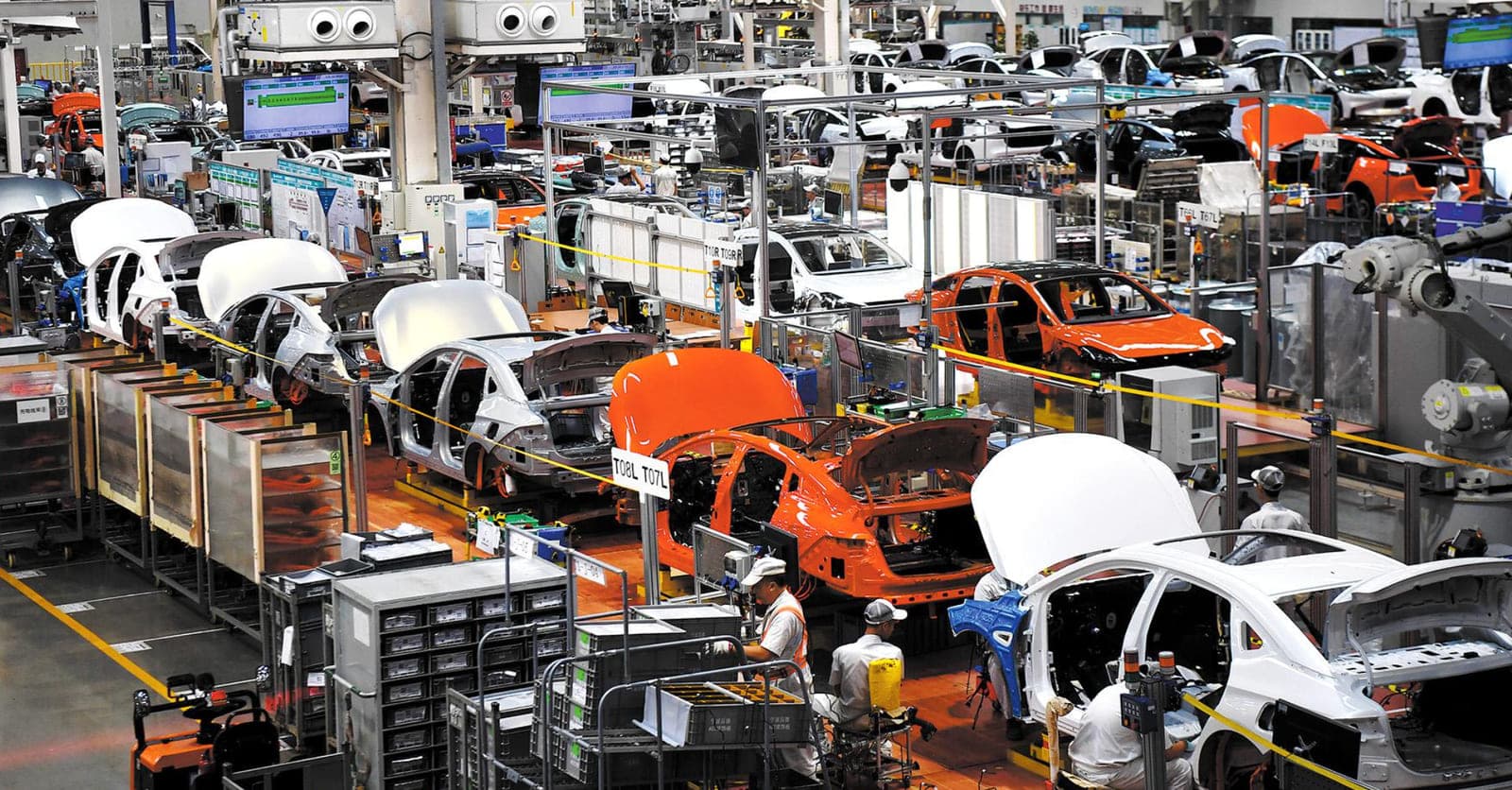
Excess manufacturing capacity is another source of pressure, particularly for smaller manufacturers.
China produced approximately 35 million new vehicles in 2025, while its annual production capacity was estimated at around 55 million. A report published by Sohu earlier in 2026 also put the industry's profit margin at 3.2% in the first quarter.
The gap between production capacity and actual output leaves manufacturers competing for buyers while carrying the costs of factories, employees and vehicle development.
Chery's Research and Development Spending Increases
Chery itself remains profitable, although its latest financial results show that development costs are rising.
Hong Kong-listed Chery Automobile reported a net profit of 9.02 billion yuan for the first half of 2026, down 9% from the same period a year earlier. Foreign-exchange losses affected the result, although gross profit increased.
The company's research and development expenses rose 28.3% to 6.67 billion yuan during the first half. Chery attributed the increase to expanded development activities and higher personnel expenses.
The figures illustrate the investment required to maintain a competitive vehicle lineup as manufacturers introduce new technologies and develop additional models.
Chery has also increased its reliance on international markets. Overseas customers accounted for 69.1% of Chery Automobile's revenue in the first half of 2026, compared with 46.3% a year earlier.
The company said overseas vehicle sales generated higher gross margins than domestic sales, helping improve its overall gross margin.
Chery Plans Further Expansion in New Zealand
Chery is preparing to expand its brand presence in New Zealand, with several additional marques expected to enter the market in 2027.
Freelander and Exlantix are scheduled to launch that year, while the company's off-road brand, iCaur, is also expected to arrive around the same time.
Zhang was also asked whether vehicle development costs might eventually stabilise as technologies mature, drawing a comparison with the mobile-phone industry. He said he could not confidently predict how cars would develop.
“But I think now even for me, I couldn’t understand what will be tomorrow’s car, the day after tomorrow’s car,” he said.