Egypt and South Africa want to make more car parts locally
An Egyptian manufacturer and a South African automotive supplier have agreed to work together on making vehicle components.
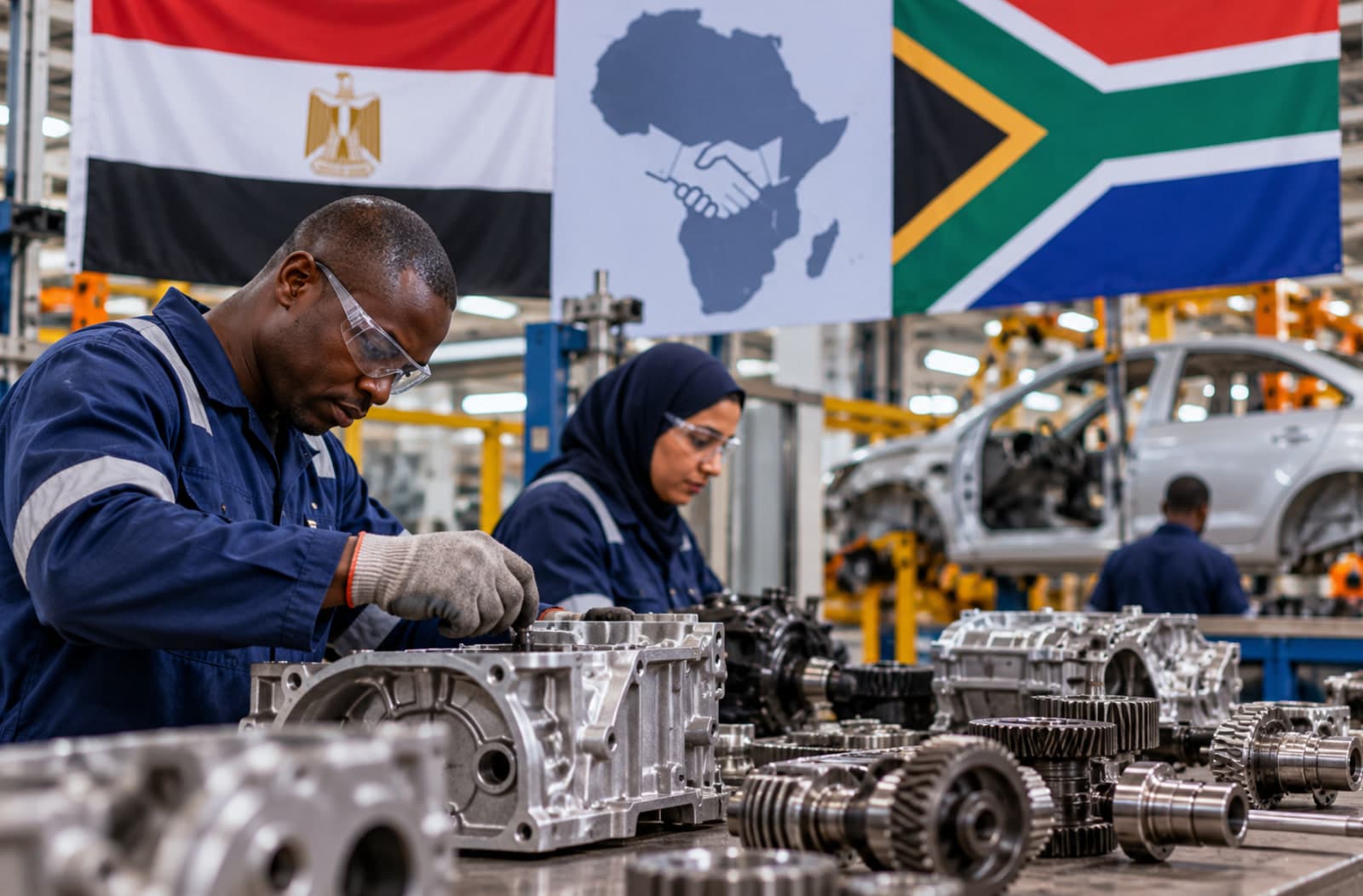
Egypt & South Africa
An Egyptian manufacturer and a South African automotive supplier have agreed to work together on making vehicle components. El Araby Group in Egypt and Malben Engineering in South Africa signed the agreement on 2 October at the African Automotive Investment Forum in New Alamein.
AI-generated summary. It can miss nuance — read the full story above for the complete picture.
An Egyptian manufacturer and a South African automotive supplier have agreed to work together on making vehicle components. El Araby Group in Egypt and Malben Engineering in South Africa signed the agreement on 2 October at the African Automotive Investment Forum in New Alamein.
The two companies plan to establish a joint platform for automotive component manufacturing. There is no value attached to the deal yet, and the companies have not said which components will be made or where production will take place. For now, it is a manufacturing agreement between two companies from two of Africa's biggest automotive markets.
The work behind the assembly line
“A vehicle assembly plant is only as strong as the companies supplying its parts.”
When a vehicle leaves an assembly plant, most of the work has already been done by a network of suppliers. A supplier might make a metal pressing. Another may produce a plastic component. Another makes the tooling used to manufacture the parts. There are also companies providing machining, welding, electrical work, maintenance, packaging and transport.
Malben operates in this part of the industry in South Africa. Its business includes automotive components, tooling and metal fabrication. El Araby is a major Egyptian manufacturing group with businesses covering electrical and electronics products, among others. Their agreement is focused on adding more component manufacturing between the two markets.
Why Egypt is looking at components
Egypt has been trying to increase local production in its automotive industry. That includes getting more components made locally instead of importing them. For a manufacturer, this is not simply about finding a local company that can make a part. Automotive components have to meet specific measurements and quality requirements, and production has to remain consistent.
A supplier also has to deliver on schedule. If a factory is waiting for a particular component, a late delivery can hold up production. That is why the companies supplying vehicle manufacturers tend to become an important part of the industry themselves.
South Africa already has that supplier base
South Africa has spent decades building an automotive component industry around its vehicle assembly plants. That includes large suppliers as well as smaller engineering and manufacturing businesses. Some specialise in one type of component or process. Others supply larger companies rather than dealing directly with vehicle manufacturers.
A partnership with an Egyptian manufacturer gives a South African company another market to work with, while Egyptian manufacturing companies get a link into South African automotive expertise. Whether that develops into a larger supply chain will depend on what the two companies actually decide to manufacture.
The details still need to come
The agreement does not yet tell us how many factories will be involved, how many jobs could be created or how much production will come from the partnership. Those details will matter more once the companies announce specific projects. For smaller manufacturers, the interesting part is what happens around the main component suppliers. A new automotive contract can mean orders for toolmakers, machine shops, plastics companies, electrical suppliers, transporters and other businesses that support production. That is how an automotive supply chain grows one part, supplier and factory at a time.