
SolarTaxi Targets Ghana as Electric Vehicle Manufacturing Hub
SolarTaxi, now also known as ST Mobility, wants to turn its Ghana operation into a regional electric-vehicle manufacturing and export hub, with plans to produce up to 5,000 vehicles a year and expand sales across African markets.
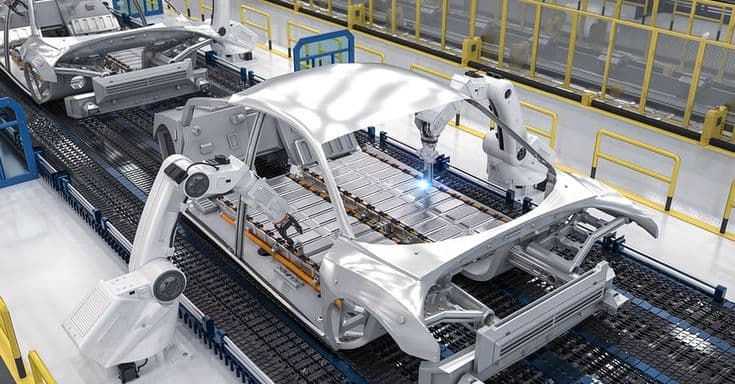
Vehicle Assembly
SolarTaxi, now also known as ST Mobility, wants to turn its Ghana operation into a regional electric-vehicle manufacturing and export hub, with plans to produce up to 5,000 vehicles a year and expand sales across African markets.
The company outlined the plan during an Ecobank-organised press visit to its facilities in Accra on Wednesday, September 23. Founded in 2018 by Jorge Appiah, SolarTaxi describes itself as Africa's third-largest electric vehicle assembler and is positioning its Prampram facility in the Greater Accra Region as the base for its expansion.
The bigger challenge will be increasing the amount of value created in Africa. To qualify for AfCFTA tariff preferences, vehicles must contain at least 40% African-originating content. SolarTaxi still sources a significant share of its vehicles and components from Asia, particularly China, meaning it will need to deepen local and regional sourcing as production expands.
Building Production Capacity in Ghana
SolarTaxi's Prampram project represents a $4.5 million investment across three phases. The facility will have four production lines covering cars, two-wheelers, three-wheelers and 40-seat buses, with installed capacity of 5,000 vehicles a year.
The company plans to gradually move beyond Enhanced SKD assembly, where vehicles arrive partially assembled, towards CKD production, where components arrive separately and more of the manufacturing process takes place locally.
That approach fits within Ghana's Automotive Development Policy (GADP), which was introduced to develop vehicle assembly and manufacturing capacity in the country. Companies seeking recognition as vehicle assemblers must, among other requirements, demonstrate installed capacity of at least 5,000 vehicles a year.
SolarTaxi sees local production as a way to address both delivery times and vehicle costs. Appiah said vehicles imported from China can take up to three months to arrive, while locally assembled vehicles can be delivered within one to two weeks.
Available incentives for vehicle assemblers also allow SolarTaxi to offer some models at prices 30% to 40% lower than comparable imported vehicles, according to the company. It is also promoting the lower fuel and maintenance costs associated with electric vehicles.
Ecobank Financing Targets Vehicle Buyers
SolarTaxi wants to establish demand in Ghana before expanding further across the region. Its private-sector targets include ride-hailing drivers and corporate fleets, where fuel accounts for a substantial part of operating expenses.
The company is also looking at public-sector fleet renewal and has identified operators including Metro Mass Transit and InterCity STC among potential customers. SolarTaxi values its key order pipeline at $179 million.
Ecobank is expected to play a role in converting that pipeline into vehicle purchases. According to information presented by SolarTaxi and Ecobank, the bank has established an $8.35 million asset-financing facility covering two-wheelers, cars and buses.
Ecobank is also involved in customer financing through Truzt, SolarTaxi's platform for vehicle selection, credit, payments, maintenance and charging.
For SolarTaxi, the relationship also provides access to Ecobank's presence across about 30 African countries. The company sees that network as a potential channel for identifying customers, arranging financing and supporting expansion into markets such as Nigeria, Senegal and Côte d'Ivoire.
The financing model is designed to address one of the biggest barriers to electric vehicle adoption: the upfront purchase price. SolarTaxi is betting that monthly repayments can be partly offset by lower fuel and maintenance costs.
AfCFTA Creates a 40% Local Content Test
SolarTaxi's regional expansion brings the African Continental Free Trade Area (AfCFTA) into focus.
The company plans to export to markets including Nigeria, Côte d'Ivoire and Senegal and says it has already made sales in Nigeria, Togo and Benin. It sees Ghana as a potential production base from which it can supply these markets under AfCFTA trade preferences.
However, those preferences depend on meeting rules of origin.
At their February 14–15, 2026 summit, African Union heads of state approved common rules for automotive products covering tariff codes 8701 to 8716. Under the framework, vehicles and components must contain at least 40% African-originating content, while non-originating materials can account for no more than 60% of their value to qualify for AfCFTA preferences. The 60% ceiling is an interim threshold that will be reviewed after five years.
SolarTaxi does not necessarily have to manufacture every component in Ghana to meet the requirement. Qualifying components sourced from other African countries can contribute to the African-originating content.
At present, however, a substantial portion of SolarTaxi's vehicles and components comes from Asia, particularly Chinese manufacturers. That leaves the company with a clear production challenge: increasing the amount of value created in Ghana and elsewhere in Africa.
Ghana is also moving to tighten its own requirements for automotive incentives. On September 15, President John Dramani Mahama said the government was preparing a minimum local-production threshold for vehicle assemblers seeking VAT exemptions. The percentage is expected to be set in the next national budget.
The proposed measure is aimed at preventing vehicles that arrive almost fully assembled from qualifying for incentives after only limited work in Ghana. Mahama also called for greater local production of components such as batteries, tyres, glass, wiring harnesses, plastics and metal parts.
Tariff Benefits May Not Apply Everywhere
SolarTaxi also faces different tariff conditions in some of its target markets. In countries where electric vehicles already receive broad import concessions regardless of where they are produced, assembling vehicles in Ghana may provide less of a tariff advantage over importing directly from China.
Togo's 2026 Finance Law provides a 100% reduction in customs value for new electric and hybrid vehicles for duty purposes, alongside a VAT exemption and other tax concessions. The incentives are not restricted to vehicles assembled elsewhere in Africa.
Benin has a similar arrangement. From January 1 to December 31, 2026, new electric four-wheel vehicles imported, manufactured or sold in the country receive a 99% reduction in customs value and a VAT exemption.
In these markets, SolarTaxi cannot depend entirely on tariff advantages to compete with vehicles imported directly from China. Appiah instead points to faster delivery, local-currency financing, maintenance, parts availability and after-sales service as areas where local assembly can offer an advantage.
“Everyone, including Tesla, does assembly,” he said in defending the company's approach.
For SolarTaxi, however, assembly capacity alone will not determine whether Ghana can become a regional electric vehicle hub. AfCFTA rules distinguish between assembling a vehicle in Africa and creating enough value in Africa for that vehicle to qualify for preferential tariffs.
The company's next challenge is therefore to increase African content alongside production. Reaching 5,000 vehicles a year would give SolarTaxi significant assembly capacity, but building a sustainable export business will also depend on how much of each vehicle's value is created in Ghana and across the African supply chain.