South Africa’s EV shift puts local manufacturers and suppliers under pressure
South Africa’s car industry has a decision to make. As global manufacturers move towards electric vehicles, local factories must decide how to adapt, component suppliers must prepare for different production requirements, and businesses must work out where they fit into the changing market.
EV Market
South Africa’s car industry has a decision to make. As global manufacturers move towards electric vehicles, local factories must decide how to adapt, component suppliers must prepare for different production requirements, and businesses must work out where they fit into the changing market.
AI-generated summary. It can miss nuance — read the full story above for the complete picture.
South Africa’s car industry has a decision to make. As global manufacturers move towards electric vehicles, local factories must decide how to adapt, component suppliers must prepare for different production requirements, and businesses must work out where they fit into the changing market. The government has introduced a tax incentive to encourage investment in electric vehicle manufacturing. Since 1 March 2026, qualifying investments in buildings, machinery and equipment used to produce battery-electric and hydrogen-powered vehicles have been eligible for a 150% tax deduction.
The aim is to make local production more attractive to manufacturers. But the incentive arrives at a time when the industry is also facing questions about export competitiveness, local demand and the cost of moving to new production technologies. For South African businesses, the issue is not simply whether more electric cars will be sold. It is whether local factories and suppliers can secure a place in the next phase of vehicle manufacturing.
Suppliers need to know what manufacturers will build
“A tax incentive can improve an investment proposal. It cannot settle every concern a manufacturer has about operating in South Africa.”
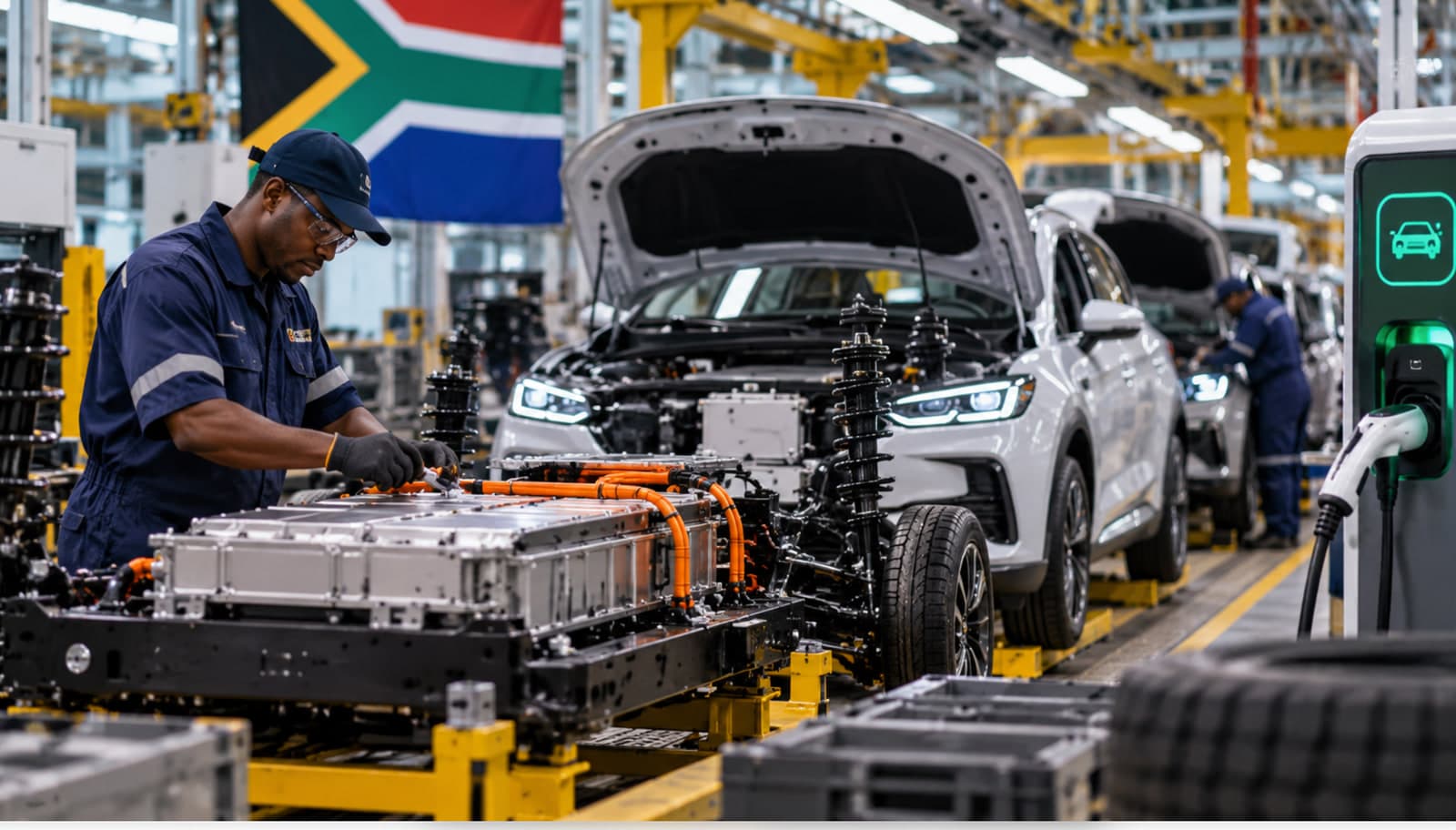
A factory producing conventional petrol and diesel vehicles relies on a network of companies supplying parts, equipment and technical services. As production changes, some of those requirements will change too. Electric vehicles use different drivetrains and battery systems, creating demand for new technical capabilities. Suppliers may need to invest in equipment, retrain workers or develop new products to remain part of manufacturers’ supply chains.
That decision costs money. A component manufacturer cannot easily justify new machinery or training without a reasonable expectation of future orders. The government has also been working to increase the amount of vehicle content sourced locally. In October 2026, Trade, Industry and Competition Minister Parks Tau announced plans to phase out support for assembly operations that rely heavily on imported vehicle kits, with the stated aim of encouraging deeper local production. Reuters reported that the government wants domestic content to rise from 38% to 60%. For local suppliers, that could create opportunities. But winning the work will depend on price, quality, production capacity and the ability to meet manufacturers’ requirements.
The export market is part of the calculation
South Africa's automotive industry depends heavily on exports. Manufacturers must consider what overseas buyers want and how quickly their markets are moving towards electric vehicles. If global manufacturers shift production to other countries, South African factories risk losing future investment and the supplier contracts that come with it.
The new tax deduction is intended to help make investment in electric vehicle production more attractive. However, companies also consider electricity supply, logistics, infrastructure, labour costs and the certainty of government policy when deciding where to build vehicles. A tax incentive can improve the numbers in an investment proposal. It cannot settle every concern a manufacturer has about operating in South Africa.
Local buyers remain part of the problem
Building electric vehicles locally will not automatically create a large market for them. For many motorists, the purchase price remains a major consideration. Buyers also need to consider finance repayments, insurance, charging access and the availability of suitable models.
Someone who can charge a car at home may find ownership easier than someone who relies entirely on public charging stations. Businesses operating delivery vehicles have another concern: whether vehicles can complete their routes without disrupting daily operations. If electric vehicles remain too expensive for a large share of local buyers, manufacturers may have to depend more heavily on exports to support production volumes. That makes the relationship between manufacturing incentives and consumer affordability important. The government is helping manufacturers invest, but the local market needs conditions that encourage people and businesses to buy the vehicles being produced.
Skills and services will need to catch up
The transition also has implications for workshops, dealerships, training providers and companies installing charging equipment. Technicians will need the right training to service high-voltage systems. Workshops may need specialised tools and safety equipment. Businesses installing charging stations will need qualified workers who understand electrical systems and the requirements of different sites.
These are practical opportunities for small and medium-sized businesses, but they require investment and customers. Companies considering entering this market should look closely at where vehicle manufacturers are investing, what skills are becoming harder to find and which services dealerships and fleet operators will need.
The question for South African businesses
South Africa has introduced a financial incentive to encourage electric vehicle production, but the success of the policy will depend on what manufacturers do with it. Will they invest in local production? Will component suppliers secure more work? Will workers gain the skills needed for new manufacturing processes? And will local motorists and businesses be able to afford the vehicles?
For suppliers and smaller businesses, waiting until electric vehicle production becomes widespread could mean missing opportunities to prepare. Investing too early, without confirmed demand, carries its own risks. The next phase of South Africa’s automotive industry will depend on whether manufacturers, suppliers and skills providers can move together. The tax incentive may help start that process, but businesses will ultimately need orders, customers and a clear reason to invest.