Bolt and BYD target 500 electric vehicles in South Africa’s ride-hailing market
Bolt wants to bring 500 electric vehicles into South Africa’s ride-hailing market by December 2026, working with Chinese carmaker BYD and local industry partners.
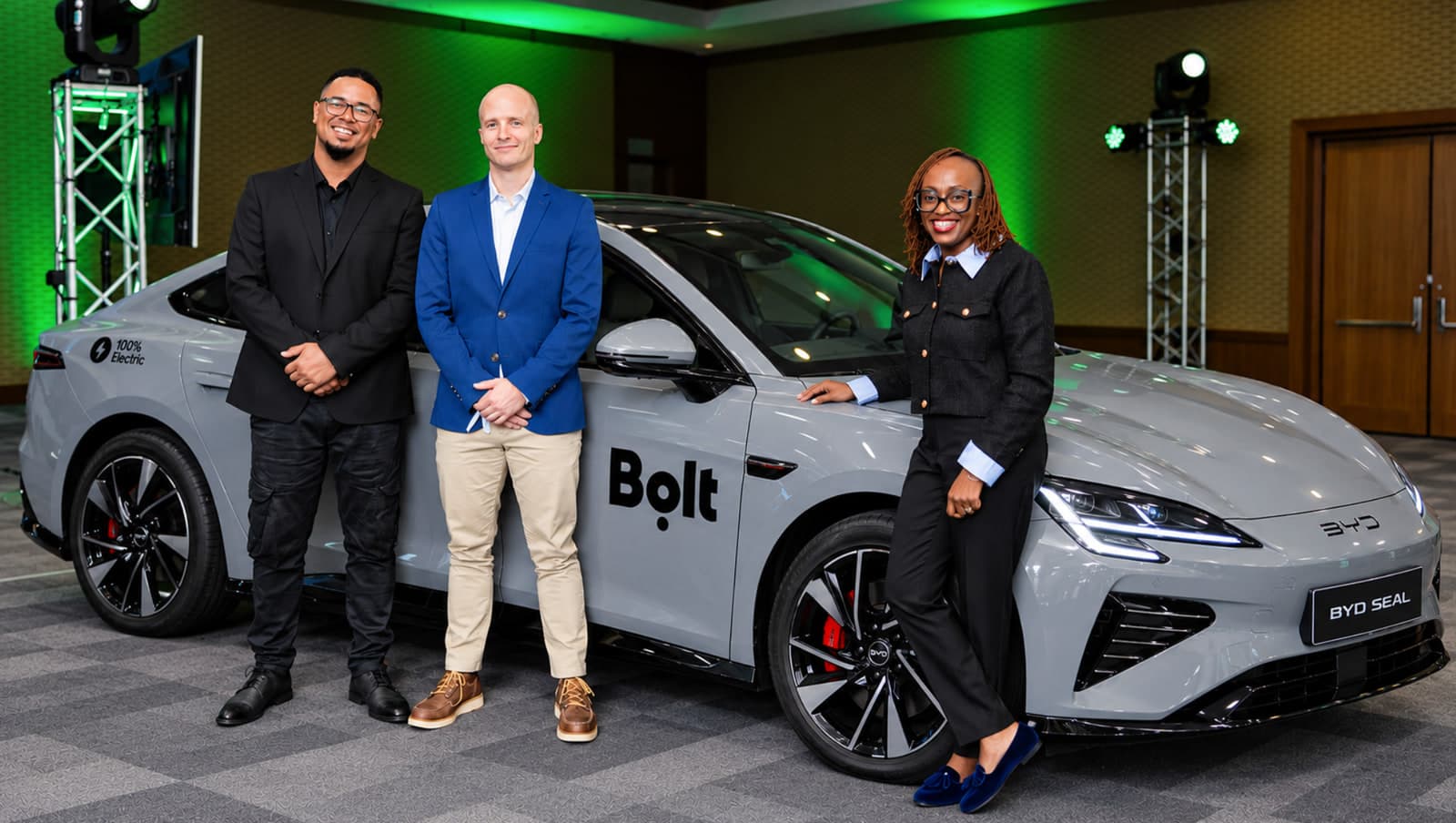
Bolt and BYD
Bolt wants to bring 500 electric vehicles into South Africa’s ride-hailing market by December 2026, working with Chinese carmaker BYD and local industry partners.
AI-generated summary. It can miss nuance — read the full story above for the complete picture.
Bolt wants to bring 500 electric vehicles into South Africa’s ride-hailing market by December 2026, working with Chinese carmaker BYD and local industry partners. Johannesburg is among the markets where the company plans to expand its electric vehicle offering. For drivers, though, buying or accessing an electric car is only the beginning. The car still has to pay for itself.
A driver working long hours in Johannesburg might spend a large part of the day’s earnings on petrol. An electric car could cut that bill, but the driver also needs to cover the vehicle payment, insurance, charging and repairs. If the car costs more to finance, the savings at the charging station might not amount to much. That is where the details of Bolt and BYD’s plan become important.
A cheaper charge does not always mean cheaper motoring
“The real test is whether an electric vehicle costs less to run once repayments, charging, insurance and repairs are included.”
Fuel is a regular expense for ride-hailing drivers, particularly those covering long distances each day. Switching to electricity could reduce what they spend on energy, depending on the vehicle and where they charge it. But drivers will not all have the same charging options. Someone with a suitable parking space and a charger at home may be able to charge overnight. A driver living in a rented room or an apartment without charging facilities may have to use public stations instead.
That can change the calculation. Public charging has its own costs, and getting to a charger takes time. If a driver has to stop in the middle of a busy shift, there may be fewer trips to earn money from. The question is not simply whether electricity costs less than petrol. It is how much a driver spends keeping the car running over a full month.
The monthly payment matters more than the sticker price
Most drivers cannot afford to buy a new vehicle outright. Their ability to move to an electric car will depend partly on the finance or rental arrangements available to them. A lower running cost may look attractive, but it has to be weighed against the monthly payment. If the electric vehicle costs substantially more to finance than a petrol car, a driver could end up with little extra money despite spending less on energy.
The terms of the Bolt-BYD arrangement have not been set out in the supplied report. It is therefore not yet clear what drivers will pay upfront, whether special finance options will be available or how the vehicles will be allocated. Those are not minor details. A driver needs to know the deposit, monthly instalment, insurance cost and any conditions attached to using the vehicle for ride-hailing before deciding whether the switch makes sense.
What happens when the car needs charging or repairs?
A driver cannot earn from a car that is sitting in a workshop or waiting to be charged. Electric vehicles avoid some maintenance associated with petrol engines, but they are not free to maintain. Tyres, suspension and brakes still wear down, while faults involving high-voltage systems may require specialist technicians.
Parts and repair times will also matter. If a vehicle is out of service for several days, the driver may lose income while still being responsible for the monthly payment. Charging creates a different problem. Drivers who can charge overnight may be able to start each day with a full battery. Those relying on public stations need to work charging stops into their schedules. The effect on earnings will depend on how long charging takes and whether stations are conveniently located. For BYD and Bolt, access to servicing, parts and suitable charging facilities will be important if drivers are expected to use these vehicles for work every day.
The numbers need to add up for drivers
A useful way to assess the offer would be to compare two drivers doing similar work, one using a petrol car and the other an electric vehicle. Take their monthly vehicle payments, fuel or charging bills, insurance and maintenance costs. Then account for time spent charging and any days lost to repairs.
That would show whether the electric vehicle leaves the driver with more money, rather than simply showing that charging costs less than filling up with petrol. The result will vary. A driver who covers high mileage and has access to affordable charging could benefit. Someone paying a high instalment and relying on public chargers may find the savings harder to achieve.
Who carries the cost of the switch?
Bolt’s target is 500 electric vehicles on South African roads by December 2026. Reaching that number will depend not only on getting cars into the market, but also on whether the arrangement works for the people driving them. The key information still needed is straightforward: how much will drivers pay for the vehicles, where will they charge them, and what support will be available when repairs are needed?
Until those details are clear, the financial case for drivers remains uncertain. An electric car may use less money on energy, but the real measure is what the driver has left after every monthly expense has been paid.