Unitel Money Wants More Angolan Businesses to Use Mobile Payments
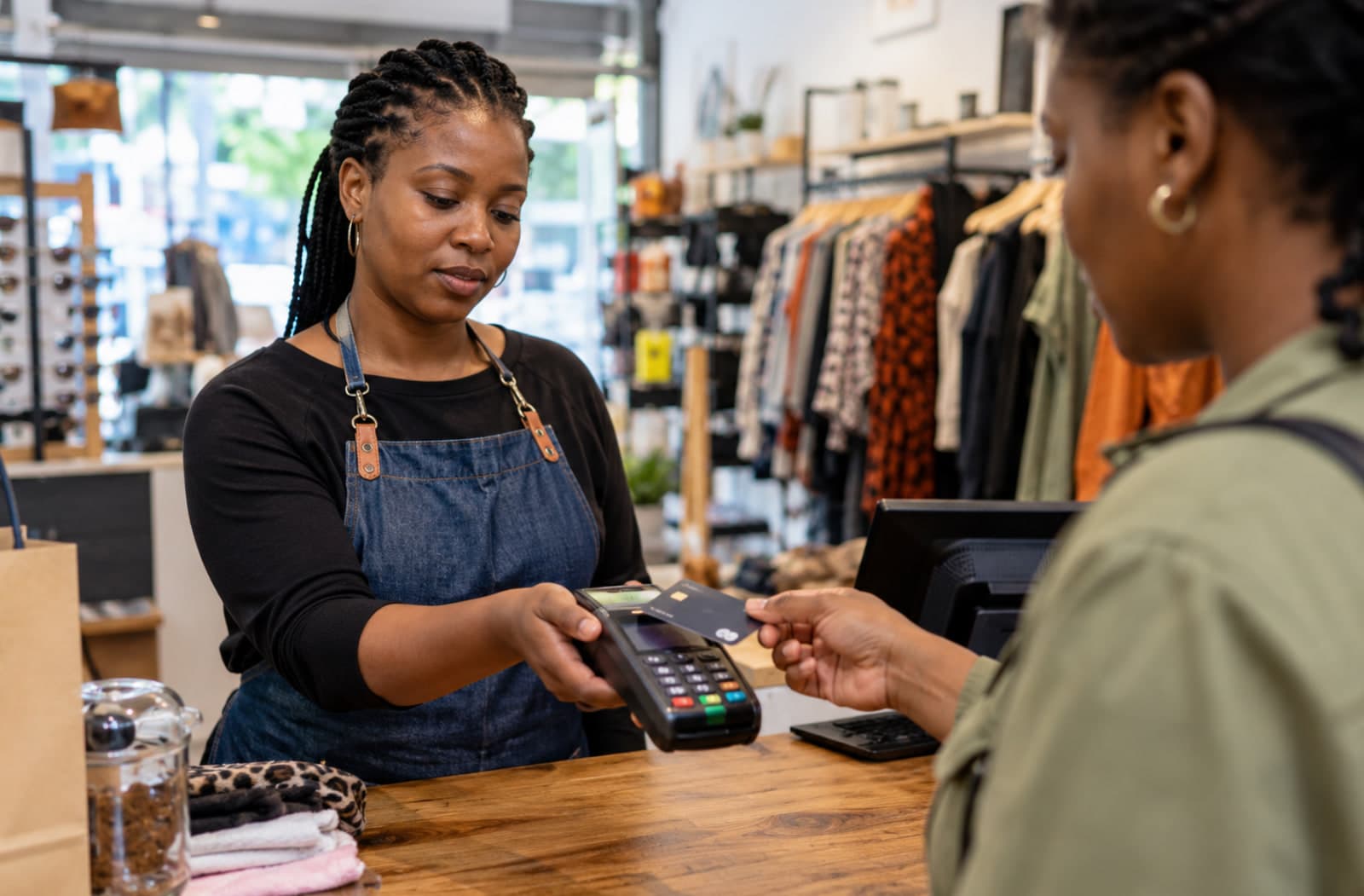
A customer pays for groceries using mobile money. The shop owner receives the payment, but the next supplier wants cash for a delivery of stock. The owner now has to find an agent, withdraw the money and pay any fees involved.
Unitel
A customer pays for groceries using mobile money. The shop owner receives the payment, but the next supplier wants cash for a delivery of stock.
AI-generated summary. It can miss nuance — read the full story above for the complete picture.
A customer pays for groceries using mobile money. The shop owner receives the payment, but the next supplier wants cash for a delivery of stock. The owner now has to find an agent, withdraw the money and pay any fees involved. For a small business, that extra step matters. Owners need to keep money moving between sales, stock purchases, transport and other daily expenses. A payment service may bring in money from customers, but it also needs to help businesses manage what happens after the sale.
This is the market Unitel Money is trying to reach in Angola. Unitel promoted its digital financial services at Expo Icolo e Bengo 2026, held in Catete from 22 to 25 October. The exhibition brought together businesses looking to showcase products, meet potential partners and find new customers. Unitel used the event to present its telecommunications services, including its digital financial offering.
For Unitel Money, the opportunity is to get more people and businesses to use its wallet. But attracting attention at an exhibition is different from persuading a shop owner to use a service every day.
“For a trader, the calculation is simple: if the wallet makes it easier to collect money and pay for stock, it has a practical purpose.”
The challenge of getting small businesses to use mobile money
Angola has a large informal trading sector, with many small businesses handling daily sales and buying stock in relatively small quantities. Cash remains useful because it is widely accepted and easy to use for payments between traders. A digital wallet has to compete with that convenience. Consider a trader selling clothing at a market. Some customers may prefer to pay in cash, while others may want to transfer money electronically. Accepting digital payments could give the trader another way to serve customers. But the trader also needs to know how quickly the money will be available and what it will cost to withdraw it.
The same problem applies to a small grocery shop, a food business or a person selling household goods. If the money received through a wallet cannot easily be used to pay suppliers, the owner may still need to keep cash available. This does not mean mobile money has little value. It means the service has to fit the way small businesses buy and sell. For a trader who receives several digital payments a day, the ability to check transactions and keep a record of sales may be useful. A business owner may also be able to accept payments from customers who do not carry enough cash. But those benefits have to outweigh any extra charges or difficulties involved in accessing the money.
Unitel Money already has a network
Unitel Money is not entering the market without an existing customer base. The company says it has more than two million users, over 35,000 agents and more than 2,000 shops and merchants on its network. Its services include money transfers, bill payments and purchases from participating businesses.
That network gives the company a base from which to attract more merchants. However, the number of registered users does not show how often people use the service or how many small businesses rely on it for regular transactions. A person might use a wallet to send money to a relative once a month. A shop owner has different needs. The business may need to receive payments throughout the day, access funds quickly and make payments to several suppliers every week.
For merchants, the availability of agents is also important. An owner who needs cash to buy stock cannot afford to spend too much time looking for an agent who can complete a withdrawal. The cost of using the service matters too. Small businesses often operate on narrow margins, particularly when selling everyday goods. Transaction charges, withdrawal fees and the time spent managing payments all affect whether a service is worth using.
Unitel Money needs to show merchants that its service works for the transactions they handle most often, not just for occasional transfers.
What happened at Expo Icolo e Bengo?
The exhibition gave Unitel an opportunity to meet businesses and introduce its services to people who might not otherwise have considered them. According to Angola’s public broadcaster RNA, Expo Icolo e Bengo attracted 355 exhibitors and generated around 500 million kwanzas in business activity. Those figures relate to the exhibition as a whole, rather than Unitel Money specifically.
There is no publicly disclosed breakdown showing how many merchants registered for Unitel Money at the event, how many started accepting payments or how much transaction activity followed. That information would help establish whether the exhibition brought the company new business customers or mainly raised awareness of the service.
For example, signing up 100 traders would be one measure of the event’s reach. Finding out how many of those traders were still accepting payments a month later would say more about whether the service had become useful to them. The same applies to existing merchants who visited the exhibition. If they began using the wallet more frequently after speaking to Unitel, that would be another sign that the event had an effect beyond promotion. Without these figures, the commercial impact of Unitel Money’s participation remains unclear.
What small businesses should check before signing up
For a business owner considering mobile money, the decision should start with the way the business handles payments now. The first step is to understand the charges. Merchants should check whether they pay to receive money, withdraw funds or transfer money to another account. Even small fees can add up when a business handles many transactions.
The second is access to cash. Owners should find out where the nearest agents operate, whether withdrawals are reliable and what alternatives are available when an agent cannot provide the required amount. The third is whether customers and suppliers can use the service. A wallet may be useful for receiving customer payments, but its value is limited if the business still has to make costly withdrawals for most of its expenses.
Keeping records is also important. Owners can compare the number of digital payments received each week with the charges incurred and the time spent managing those transactions. This helps them decide whether the service is making the business easier to run. There is no need for every small business to abandon cash. For some traders, offering both cash and digital payments may be the more practical arrangement.
The next step is regular use
Unitel Money has an established network and a potential market among Angola’s small businesses. Expo Icolo e Bengo gave the company another opportunity to put its services in front of that market. The question is whether traders will find enough value in the service to keep using it after the event.
That will depend on ordinary things: whether payments go through, whether the money is accessible, how much transactions cost and whether the service helps owners manage their daily expenses. For Unitel Money, the number of people who register is only part of the picture. Regular merchant transactions would provide a better indication of its place in the small-business market.
For a trader, the calculation is simpler. If the wallet makes it easier to collect money from customers and pay for stock, it has a practical purpose. If it adds another cost without making those jobs easier, cash will remain difficult to replace. That is what Unitel Money needs to prove as it looks to bring more Angolan businesses onto its platform.