
Kenya’s mobile money agents are disappearing as customers do more on their phones
A mobile money shop can still have plenty of customers and yet be a much harder business to run than it was a few years ago.
Kenya's Fintech
A mobile money shop can still have plenty of customers and yet be a much harder business to run than it was a few years ago. That is what is happening in Kenya, where the number of registered mobile money agents fell by more than 34,000 between March and June 2026.
AI-generated summary. It can miss nuance — read the full story above for the complete picture.
A mobile money shop can still have plenty of customers and yet be a much harder business to run than it was a few years ago. That is what is happening in Kenya, where the number of registered mobile money agents fell by more than 34,000 between March and June 2026. The Communications Authority of Kenya recorded 602,470 agents at the end of March. By June, that figure had fallen to 568,463, a 5.6% drop.
The decline is happening while mobile money itself continues to grow. Subscriptions increased from 53.37 million to 54.01 million during the same three months. That is an increase of about 637,000 subscriptions. Over the year, subscriptions increased by 13.2%. So the problem is not that Kenyans have stopped using mobile money. They are simply doing more of it without going to a shop.
The transaction is still there. The agent isn't.
“The agent used to be where a large part of a customer’s mobile money activity happened. Increasingly, the agent is only needed when the customer has to deal with cash.”
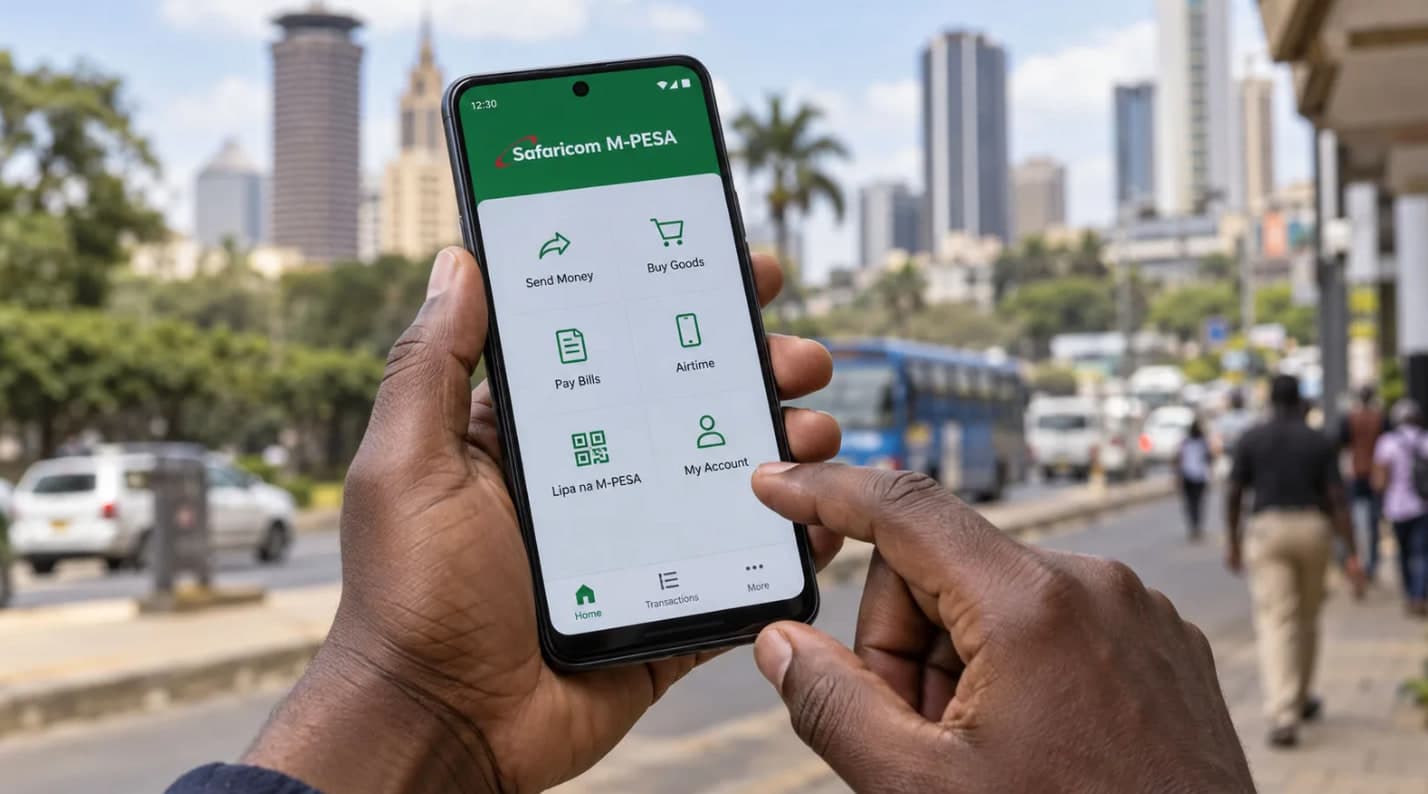
Consider a customer buying groceries. A few years ago, withdrawing cash from an M-PESA agent and paying at the till would have been a normal part of the transaction. Today, that customer can pay directly using a Buy Goods number. The same applies to bills. PayBill allows customers to send money directly to schools, insurers, utilities and other organisations. Small businesses can use Pochi la Biashara to receive payments, while bank to wallet services allow people to move money between their bank accounts and mobile wallets from their phones.
The money is still moving. The customer just isn't standing in an agent's shop while it happens. That distinction matters because deposits and withdrawals are where agents earn much of their commission. A payment made directly to a merchant or organisation does not put the same transaction through the agent's hands.
Rent doesn't fall when transactions do
The cost of running an outlet has not followed the decline in physical transactions. One agent in Kisii told TechCabal that monthly M-PESA commissions range from KES 11,000 ($85) to KES 30,000 ($230). At KES 11,000, the agent said there is little room after paying rent, staff and other costs. Business permits have also become more expensive, with the agent reporting a 30% increase. An agent in Ruaka described a similar change.
The operator said that KES 22,000 in monthly commission once went a lot further. Rent was around KES 3,000 and a worker cost about KES 5,000. Now, according to the operator, rent starts at about KES 5,000 and an attendant can cost KES 7,500. Fraud and other operating expenses add to the bill. That leaves an agent with a simple problem. There are fewer profitable transactions coming through the shop, but most of the bills still have to be paid.
The phone is becoming the shop
Kenya's growing smartphone base is making it easier for customers to bypass the agent. The country had 52.26 million smartphone connections by June, up from 50.18 million in March. Feature phone connections fell to 27.42 million. Mobile broadband subscriptions also rose from 52.85 million to 54.93 million between March and June. Mobile data subscriptions increased from 62.63 million to 64.26 million.
That gives more customers access to banking apps, digital payments and other services that once required a visit to a physical outlet. It also changes what an agent is competing with. The competition is not necessarily another M-PESA shop across the road. It can be the customer's own phone.
The network is still important
This does not make agents irrelevant. Safaricom has 88.8% of Kenya's mobile money subscriptions, while Airtel Money accounts for 11.1%. Both rely on large networks of agents to support customers. There are still customers who need cash. Agents also serve people who are less comfortable with digital services and customers in areas where access to other financial services is limited. They help with onboarding and liquidity as well. But the job is changing. The agent used to be where a large part of a customer's mobile money activity happened. Increasingly, the agent is only needed when the customer has to deal with cash. That is a much smaller part of the overall mobile money market.
A growing market with fewer shops
Kenya's figures create an unusual picture. There are more mobile money subscriptions than before, more smartphones and more digital payment options. At the same time, there are fewer people operating the physical outlets that helped make mobile money accessible in the first place. For the mobile operators, digital payments can reduce the need to maintain such a large physical network.
For an agent running a small shop, it is different. The question is whether the commissions from the transactions that remain are enough to cover rent, salaries, permits and the other costs of keeping the doors open. For thousands of agents, that calculation appears to be getting harder.