Should Chinese Carmakers Target African Franchises and SMEs to Secure Their Future?
A few years ago, the question for Chinese carmakers in Africa was whether buyers would take them seriously. In South Africa, the continent's most developed passenger-car market, that question has been settled. But the long-term prospects of these brands are less certain.
Automotive
A few years ago, the question for Chinese carmakers in Africa was whether buyers would take them seriously. In South Africa, the continent's most developed passenger-car market, that question has been settled. But the long-term prospects of these brands are less certain. Chery International's president recently warned that around 90% of Chinese car manufacturers are losing money and that many could eventually disappear amid intense competition. The harder question now is which of the many brands arriving in Africa will still be here in a decade. The answer will depend less on price or technology than on who stands behind the cars: the franchise groups, SMEs and startups that sell and service them, as well as the small businesses that depend on them.
A Market That Has Already Changed
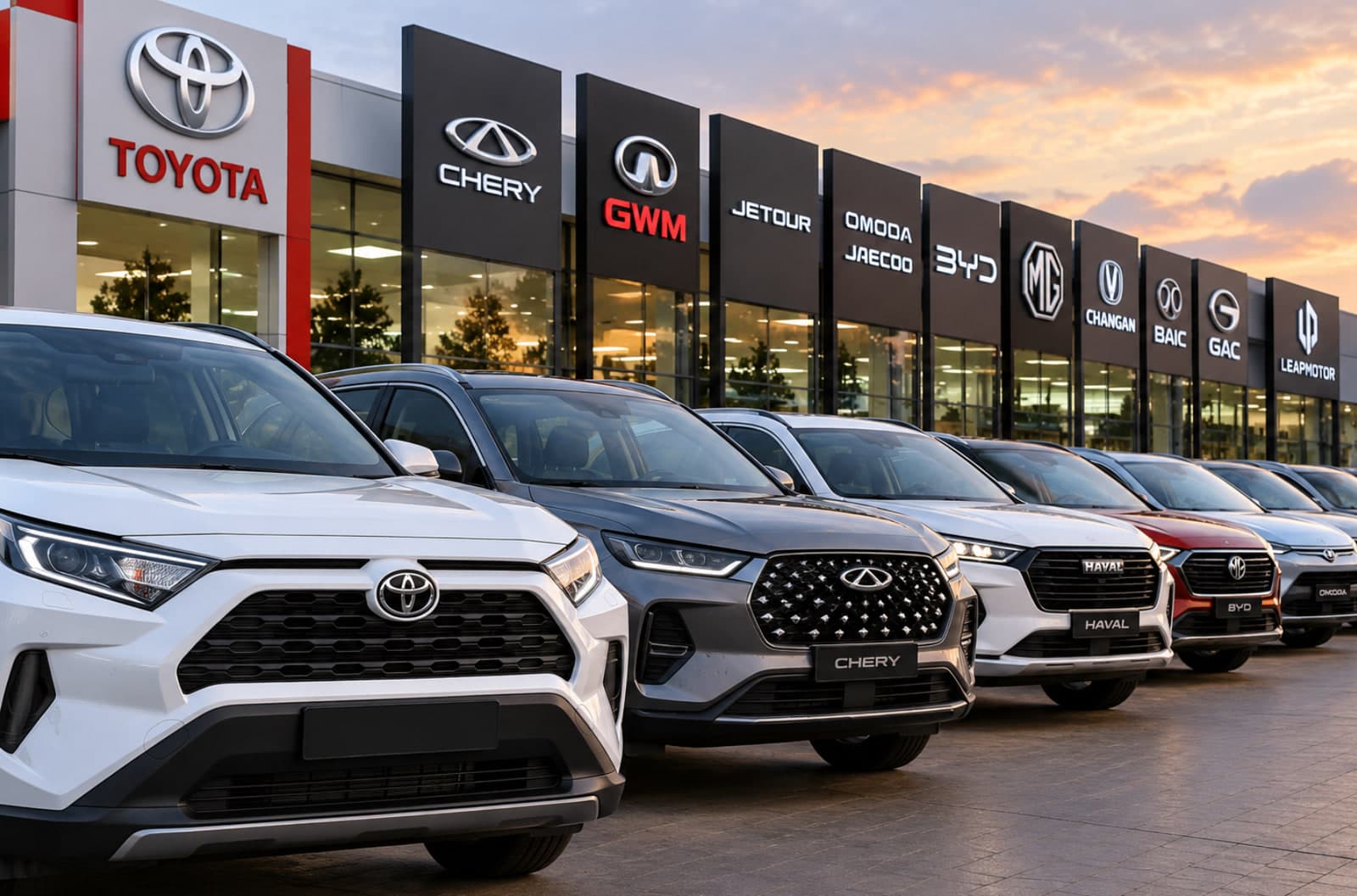
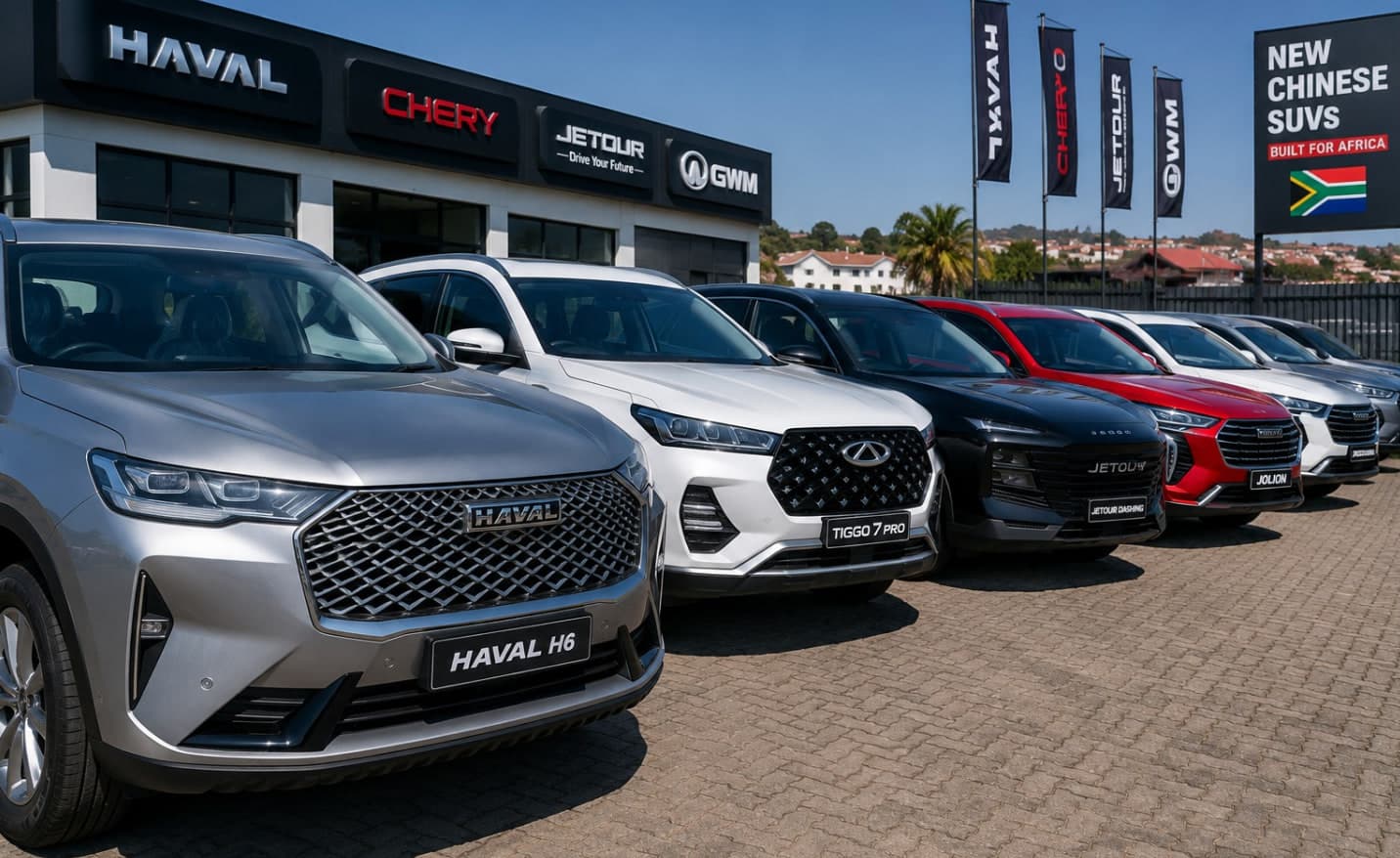
The scale of the shift is striking. Industry reporting puts the Chinese share of car brands sold in South Africa at roughly 40%, a surge that followed the success of Chery and GWM and then drew in Changan, GAC, MG, BYD, Geely, Dongfeng and others. Premium legacy brands have felt the pressure as buyers trade down, according to reporting that cited the National Automobile Dealers' Association.
The dealer groups have noticed. Motus Holdings has pivoted towards Chinese and other emerging brands, and in February 2026 it bought a multi-franchise dealership in George for R10 million, adding GWM, Haval and Honda to its portfolio. The group reported a 20% rise in profit before tax to R4 billion for 2026. South Africa's largest dealer, which holds around a fifth of the new passenger-car market and represents 38 brands through more than 300 dealerships, is likewise widening its lineup in response to Asian competition.
This is a telling pattern. Established franchise groups are not reluctant partners who need persuading. They are reallocating capital towards Chinese brands because volumes are moving that way. The brands' job is to make that bet pay off for them.
The Race to Build Networks
Chinese manufacturers are expanding dealer footprints at speed. MyBroadband reported that BYD had 32 South African locations at the end of March 2026, up 60% from 20 at the end of 2025, with a target of 60 to 70 by year-end and plans for 250 to 300 fast-charging sites. Geely, relaunched in November 2025, had reached 34 dealers and expects 50 to 60 by the end of 2026, with 90 as a longer-term goal. Changan is aiming for about 45 dealerships during 2026.
Newer entrants are borrowing credibility from experienced operators. GAC Motor has been working with established groups such as BB Motor Group, while Salvador Caetano Auto has been assembling a dealer network for the brand. Chery, meanwhile, is adding iCAUR and Lepas to its South African portfolio. A seasoned dealer principal brings workshops, trained technicians, parts logistics, local finance relationships and an existing customer base, all things that would take a new entrant years to build alone.
The Risk in Moving Fast
Speed has a cost. South Africa already ranks among the world's most brand-diverse markets, with most brands selling in very small volumes, and industry voices remain divided on whether more entrants help or hurt. For a dealer, signing a franchise is a long-term commitment of capital, floor space and staff. If the brand retreats, the dealer is left with stock, specialised tooling and customers who still need servicing.
That is not hypothetical. Geely once came to South Africa and left before returning as a wholly owned Chinese subsidiary. Dealers remember episodes like this, and the memory shapes how readily they sign with the next arrival.
To earn that trust, brands need to offer more than attractive wholesale pricing. Parts availability is one of the biggest concerns for buyers, particularly whether a replacement part will arrive in days or take weeks. Manufacturers need to maintain local stock rather than rely entirely on shipping parts when orders come in.
Technician training is equally important. Workshops need certified personnel and diagnostic equipment, with manufacturers funding or co-funding the training required to maintain their vehicles. Warranty arrangements must also protect dealers from absorbing the cost of design or quality problems they did not cause.
Commercial terms matter too. Franchise operators need margins and volume commitments that make sense at realistic sales levels, not just under the manufacturer's most optimistic projections. Dealers and customers also look for evidence of a manufacturer's long-term commitment through local assembly, investment and continued expansion in the market.
The SME Market Chinese Carmakers Cannot Ignore
The evidence base on SMEs and fleets is thinner than on passenger-car sales, so what follows is analysis rather than reported fact. Small transport operators, tradespeople, agribusinesses and local logistics firms buy bakkies, vans, light trucks and compact SUVs in volume. They watch total cost of ownership closely and tend to repurchase from brands that keep their vehicles working. That fits the value proposition Chinese brands have built.
It also raises the stakes. An SME owner whose vehicle sits in a workshop waiting for a part loses income every day, and that experience spreads quickly through trade networks. A good experience works the same way in reverse: fleet and small-business buyers are less swayed by brand snobbery and can prove a product's durability faster than retail buyers.
Finance is the other half of the equation. Lenders are already paying attention. FirstRand's WesBank has cited the influx of Chinese brands in its results as a source of opportunity. For SMEs, manufacturer-backed finance, flexible fleet products and clear residual values can matter as much as the vehicle itself. The used market, which reportedly lags new-vehicle adoption, will need to mature before residuals become fully predictable. Brands that support trade-in values through visible networks will help lenders feel comfortable.
The Challenge of Expanding Across African Markets
South Africa has a mature dealer ecosystem, formal finance and relatively strong consumer protection, so it is not a template for the rest of the continent. In many East and West African markets, used imports dominate, dealer networks are thinner and formal finance is harder to access. There, distributor partnerships, local assembly arrangements and fleet contracts with businesses and institutions may matter more than classic franchising. I did not find reliable current data on how Chinese brands are structuring these arrangements, and this is an area worth watching rather than assuming.
The Brands That Invest in Local Support
The Chinese brands most likely to endure in Africa will be those that treat dealers and small-business customers as long-term partners rather than a distribution shortcut. That means committing to parts, training, warranty and finance before problems appear, not after. Brands that rely on price, features and online buzz alone may enjoy a strong first wave, but the second wave, when the first buyers need servicing and resale, is where reputations are made or lost.