Are the wheels coming off China’s auto sector? Parts delays expose a weakness in the market
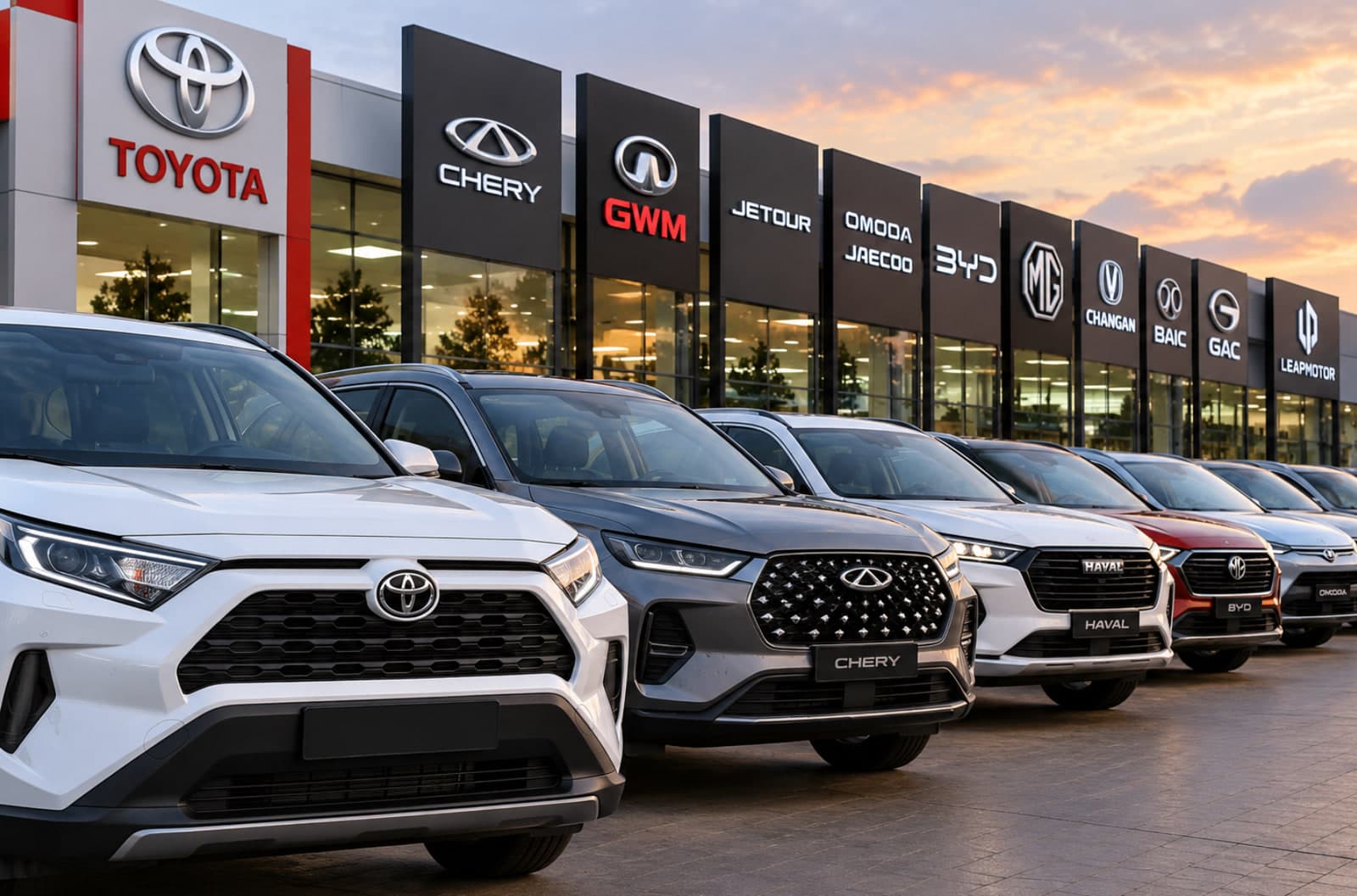
South Africa has become an important market for Chinese car manufacturers. Chery, GWM, BYD, Omoda and Jaecoo have all found buyers here, helped by competitive pricing, well equipped models and warranties that appeal to motorists looking for alternatives to the traditional brands.
China’s auto sector
South Africa has become an important market for Chinese car manufacturers. Chery, GWM, BYD, Omoda and Jaecoo have all found buyers here, helped by competitive pricing, well equipped models and warranties that appeal to motorists looking for alternatives to the traditional brands.
AI-generated summary. It can miss nuance — read the full story above for the complete picture.
South Africa has become an important market for Chinese car manufacturers. Chery, GWM, BYD, Omoda and Jaecoo have all found buyers here, helped by competitive pricing, well equipped models and warranties that appeal to motorists looking for alternatives to the traditional brands. The sales growth, however, is bringing another issue into focus. Some owners are struggling to get replacement parts, and in certain cases their vehicles have been left at workshops while they wait for repairs.
It is an uncomfortable problem for manufacturers trying to build trust in a market where Toyota, Volkswagen and Ford have spent decades establishing their dealer and service networks. A vehicle may look attractive in the showroom, but buyers also need to know what happens when it is involved in an accident or develops a mechanical fault. Recent reports suggest that parts availability is becoming a concern worth paying attention to.
A growing list of brands facing parts delays
“A customer who waits months for a repair is unlikely to be impressed by the features that attracted them to the vehicle in the first place.”
On 5 November 2026, The Citizen reported that KPC Brokers had warned clients about parts supply delays affecting several vehicle manufacturers. Chery, Omoda, Jaecoo and GWM were among the brands mentioned. Some parts were reportedly unavailable, with no confirmed delivery dates. The list also included brands outside the Chinese vehicle market. Changan rejected the claims relating to its supply chain, saying parts were being delivered on time.
So this is not a case of every Chinese manufacturer having the same problem. Parts delays affect the wider industry, and the reasons can differ from one manufacturer to another. But the number of newer brands entering South Africa does make the issue more pressing. BDO South Africa says the number of Chinese vehicle brands in the local market increased from eight in 2024 to 15 in 2025. That is a lot of new models for distributors, dealerships and workshops to support in a relatively short period.
The problem goes beyond getting parts into the country
When a replacement part is not available locally, the dealership usually has to order it from the manufacturer's overseas supply network. The wait depends on the part, where it is coming from and how it is being transported. Air freight is faster but more expensive. Sea freight is cheaper, but can leave a customer waiting much longer.
There is another complication. Modern vehicles rely heavily on electronics and software. Replacing a faulty component does not always finish the job. The workshop may still need specialist diagnostic equipment, software access or help from the manufacturer's technical team. A BYD Sealion 5 owner experienced this problem, according to an EWN report in July 2026. The vehicle developed a fault with its drive motor controller. The replacement part arrived from China after about two weeks, but the dealership could not configure it, leaving the vehicle out of service.
In a separate case reported by Business Day in May 2026, a Chery Tiggo 7 PHEV owner reportedly waited five months for repairs after an accident. Chery said a systems migration had disrupted its operations and affected parts availability. It disputed claims of a general shortage and said its supply performance had recovered. The cases are different, but both show that getting a part into the country is not necessarily the end of the problem.
Local stock needs to keep pace with sales
Some manufacturers are putting money into local parts operations. Chery has previously reported a warehouse covering more than 6,000 square metres and an inventory investment of approximately R180 million. Omoda and Jaecoo have also highlighted their parts distribution arrangements. These investments are necessary. A manufacturer selling thousands of vehicles cannot rely on importing every replacement part only when a customer needs one.
The difficult part is deciding what to keep in stock. Routine service items are easier to predict. Components for less common faults, specific model variants or newer technology can be harder to forecast. Manufacturers also have to consider how quickly their model ranges are expanding. Every new vehicle adds to the number of parts that may eventually be needed by dealerships and repair centres. For customers, the distinction between a manufacturer with a large warehouse and one with a smaller operation is less important than whether the required component is available when their vehicle needs attention.
Dealers are left dealing with frustrated customers
Parts shortages also put dealerships in a difficult position. They are often the ones facing customers who want answers, even when the delay sits with the distributor or manufacturer. A vehicle waiting for a repair takes up workshop space and creates pressure on service departments. The customer may still have monthly instalments, insurance and other costs to pay while the car is unusable.
Clear communication can help, particularly when a part has to be imported. But dealerships need reliable information from the manufacturer before they can give customers a meaningful delivery date. This is one area where newer brands will have to strengthen their operations. Selling vehicles through a growing dealer network is not enough if the same network cannot provide consistent support afterwards.
A bigger issue for the aftermarket
The pressure extends beyond franchised dealerships. BDO South Africa estimates that the country's automotive aftermarket was worth about R197 billion in 2025 and employed approximately 317,000 people. As more Chinese vehicles enter the market, parts suppliers, independent workshops, insurers and repair centres will have to deal with a wider range of models and components.
Access to parts and technical information will matter, particularly as vehicles become more dependent on electronic systems. Independent repairers will also need to understand which components can be sourced locally and which repairs require manufacturer support. For Chinese brands, the concern is not that buyers will suddenly stop considering their vehicles.
Their pricing and specifications have already made them serious competitors. The question is whether their local support operations can keep up with the number of cars they are selling. A customer who waits months for a repair is unlikely to be impressed by the features that attracted them to the vehicle in the first place. That is the part of the business manufacturers cannot afford to leave behind.