Chinese car brands are now close to Toyota in South Africa
Chinese car brands are no longer a small part of South Africa's new-car market. In September, 10 Chinese brands sold about 9,900 passenger cars between them. Toyota sold 9,964 passenger cars on its own.
Chinese car brands
Chinese car brands are no longer a small part of South Africa's new-car market. In September, 10 Chinese brands sold about 9,900 passenger cars between them. Toyota sold 9,964 passenger cars on its own.
AI-generated summary. It can miss nuance — read the full story above for the complete picture.
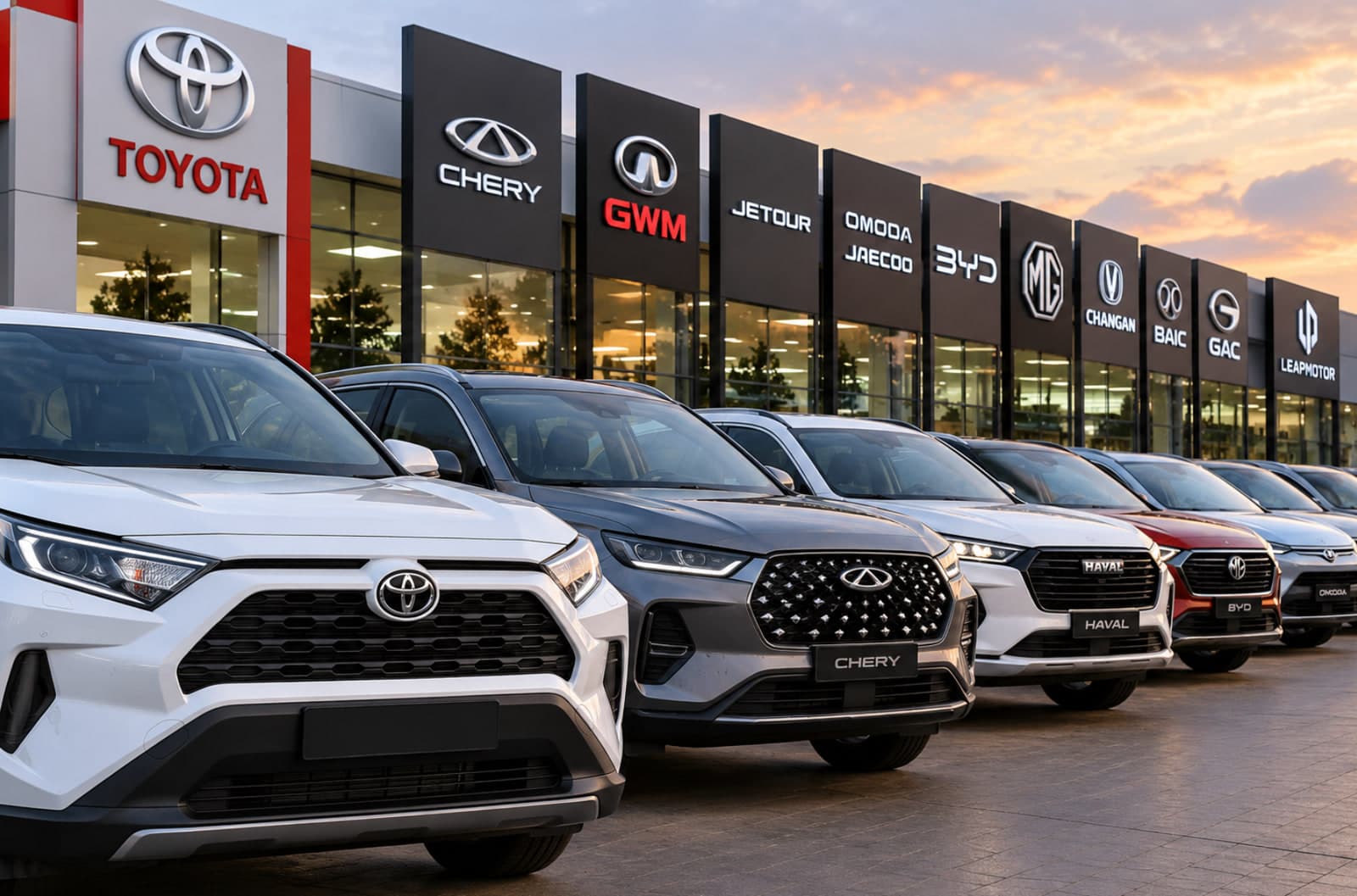
Chinese car brands are no longer a small part of South Africa's new-car market. In September, 10 Chinese brands sold about 9,900 passenger cars between them. Toyota sold 9,964 passenger cars on its own. The Chinese brands included Chery, GWM, Jetour, Omoda & Jaecoo, BYD, MG, Changan, BAIC, GAC and Leapmotor.
The comparison needs some context. Toyota is a single manufacturer, while the Chinese figure combines 10 different brands. Even so, it shows how quickly these manufacturers have built up sales in South Africa.
Buyers have more cars to compare
The biggest change is probably at the dealership. Someone shopping for a new SUV can now look at several Chinese models alongside Toyota, Volkswagen, Hyundai, Kia and other established brands. Many of the Chinese cars come with plenty of equipment as standard.
A buyer might find a large screen, parking cameras, a sunroof and various driver-assistance features on a model that costs less than an equivalent vehicle from a more established brand. That does not automatically make the Chinese car the better buy. But it gives customers another reason to compare before making a decision.
Chery has already built a name
Chery is one of the Chinese brands that has managed to become familiar to South African buyers. GWM has also been around for longer and has a strong presence in the bakkie and SUV market. More recently, brands such as Omoda, Jaecoo, BYD and GAC have added to the competition. Then there are Jetour, Changan, BAIC, MG and Leapmotor. The result is a market where buyers are seeing new badges regularly, rather than having to seek them out.
The monthly payment matters
For many buyers, the decision comes down to the finance quote. A vehicle that looks good on paper still has to fit into a monthly budget. Chinese brands have generally priced their cars aggressively, while offering a lot of equipment. That can make a difference when someone is comparing two vehicles and one comes with more features for a similar monthly payment. The same calculation applies to running costs, servicing and insurance.
Toyota still has the network
Toyota's sales remain difficult to ignore. Selling 9,964 passenger cars in one month is a strong result, particularly when it is almost equal to the combined sales of 10 Chinese brands. Toyota also has a long-established dealer and service network in South Africa. If a customer needs a part, a service or a repair, there is a good chance there is already a Toyota outlet nearby. The newer brands are still building that infrastructure.
Resale values will matter
There is one question the sales figures cannot answer yet: what happens when these cars become used cars? A customer buying a new Chinese vehicle today may want to sell it three or five years from now. Its resale price will affect the cost of ownership and the amount a dealer is willing to offer as a trade-in. Finance companies will be watching this too because used-car values affect the amount they are willing to lend against vehicles.
The more Chinese cars that enter the market, the easier it will become to see how their values hold up. For now, the September figures show how much the local market has changed.
Toyota sold almost as many passenger cars as 10 Chinese brands combined.
A few years ago, those Chinese brands were fighting to get noticed. Now they are taking enough sales to sit within reach of one of South Africa's biggest automotive names.