Porsche family loses patience with Volkswagen's slow turnaround
Volkswagen is being pushed to make harder decisions about its business. The Porsche-Piëch family, one of the carmaker's most influential shareholders, wants management to move faster with its restructuring plans as financial pressure continues to build.
Porsche
Volkswagen is being pushed to make harder decisions about its business. The Porsche-Piëch family, one of the carmaker's most influential shareholders, wants management to move faster with its restructuring plans as financial pressure continues to build.
AI-generated summary. It can miss nuance — read the full story above for the complete picture.
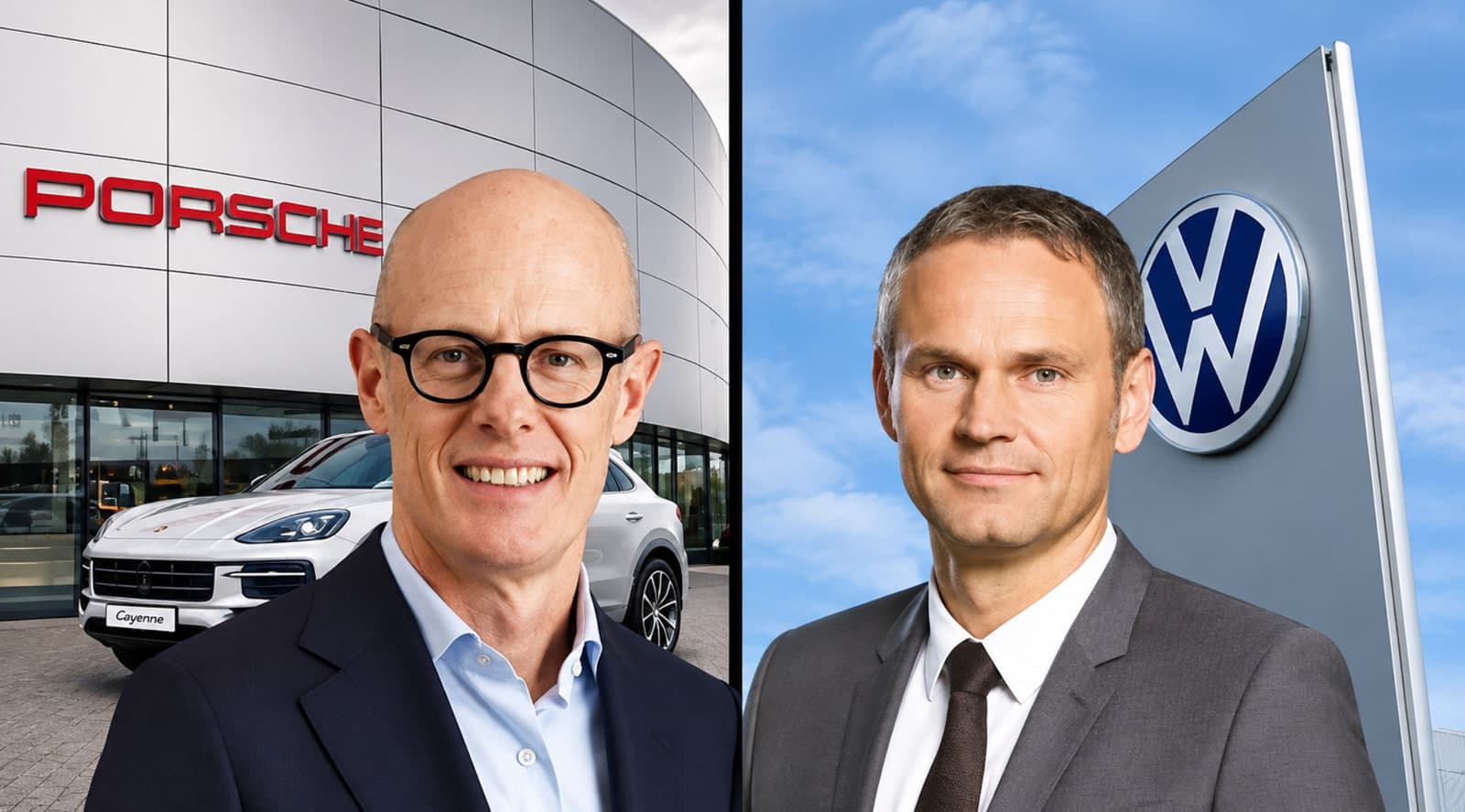
Volkswagen is being pushed to make harder decisions about its business. The Porsche-Piëch family, one of the carmaker's most influential shareholders, wants management to move faster with its restructuring plans as financial pressure continues to build. Hans Dieter Pötsch, chairman of Porsche SE, has been particularly vocal about the need to speed things up. His concern is that Volkswagen is taking too long to address costs and improve the performance of its operations.
There is also a financial reason for the family's concern. Porsche SE reported a net loss of €2.8 billion for the first nine months of 2026, against a profit of €1.2 billion in the same period last year. The loss was largely caused by a reduction in the value of its investments in Volkswagen and Porsche AG. Adjusted profit also dropped from €1.6 billion to €930 million.
Volkswagen is feeling the pressure
Volkswagen is under pressure to cut costs at home while fighting to hold its ground against Chinese carmakers in some of its biggest markets.
The problems at Volkswagen have been building for some time. Its business in China has come under pressure from local manufacturers, while demand for electric vehicles has not developed as quickly as the company had hoped. Producing cars in Germany is also expensive. High labour and energy costs make it harder for Volkswagen to compete with manufacturers that have lower production costs.
The latest figures offer little comfort. Third-quarter revenue fell by 6.3% to €75.28 billion, while the company recorded an operating loss of €5.86 billion. Volkswagen is having to reconsider the size of its operations, its vehicle range and how much money it spends on developing new technology.
Workers are caught in the restructuring
The company's plans are already affecting its German workforce. Volkswagen has agreed to cut 50,000 jobs in Germany by 2030. Further proposals have raised the possibility of reductions reaching 100,000 positions. The company is also considering the future of several factories, including the possibility of closing up to four plants. These are difficult decisions for a company that has been one of Germany's biggest industrial employers for decades.
Unions and employee representatives have resisted further cuts, arguing that workers should not carry the cost of management's mistakes and changing market conditions. There is also a concern about what happens to towns and smaller businesses that depend on Volkswagen's factories for employment and contracts.
The family wants better returns
Porsche SE holds 31.9% of Volkswagen's share capital and 53.3% of its voting rights. The Porsche-Piëch family therefore has considerable influence over the group. Pötsch also chairs Volkswagen's supervisory board, putting him close to the decisions being made about the company's future.
For the family, Volkswagen's weak performance is not just a corporate concern. It affects the value of a major investment. The message to management is that the restructuring cannot remain a long-term plan on paper. The company needs to show that the changes are improving its financial position.
South Africa should keep an eye on developments
Volkswagen's difficulties in Germany are relevant to South Africa, where the company operates its manufacturing plant in Kariega, Eastern Cape. The local operation forms part of Volkswagen's wider production network, with component suppliers, logistics companies and dealerships depending on the business.
Changes to global production priorities can influence where new models are built, which suppliers receive contracts and where future investment is directed. There is no indication that the current German restructuring plans will lead to changes at the Kariega plant. However, the company's financial position and future production decisions are worth watching.
Volkswagen is also competing in a South African market where Chinese brands are becoming increasingly difficult to ignore. Buyers have more choices, particularly in the SUV and electric vehicle segments. The company has to make its operations more affordable without falling behind on products and technology. That is the difficult balance its management is being asked to get right. The Porsche family wants quicker decisions. Whether those decisions will be enough to restore Volkswagen's position against its competitors is another matter.