Luxembourg fund backs four Rwandan agri-food businesses. How will SMEs benefit?
A business that dries fruit, supplies potato seeds or tests maize for contamination does not operate on its own. It buys materials, hires workers, uses transport and depends on farmers and customers. When that business expands, other companies may get more work too.
Luxembourg
A business that dries fruit, supplies potato seeds or tests maize for contamination does not operate on its own. It buys materials, hires workers, uses transport and depends on farmers and customers.
AI-generated summary. It can miss nuance — read the full story above for the complete picture.
A business that dries fruit, supplies potato seeds or tests maize for contamination does not operate on its own. It buys materials, hires workers, uses transport and depends on farmers and customers. When that business expands, other companies may get more work too. That is the opportunity to watch as four Rwandan agri-food businesses receive support through Luxembourg's LuxAid Demonstration Fund. Each company can receive up to €350,000 to expand its operations, with the projects' combined investment, including the companies' contributions, amounting to €2.154 million.
The four businesses are Hand in Hand for Sustainable Agriculture (HIHSA), Eza Neza, DAVET and Aflakiosk. They work in potato seed production, fruit and vegetable processing, agricultural storage and market access, and food safety testing. Their plans address practical problems in Rwanda's food supply chain. But the investment could also create work for small and medium-sized enterprises (SMEs) that supply goods and services to agricultural businesses.
Four businesses, four different needs
“A larger order can increase revenue while leaving a business short of cash. Suppliers need contracts they can afford to fulfil.”
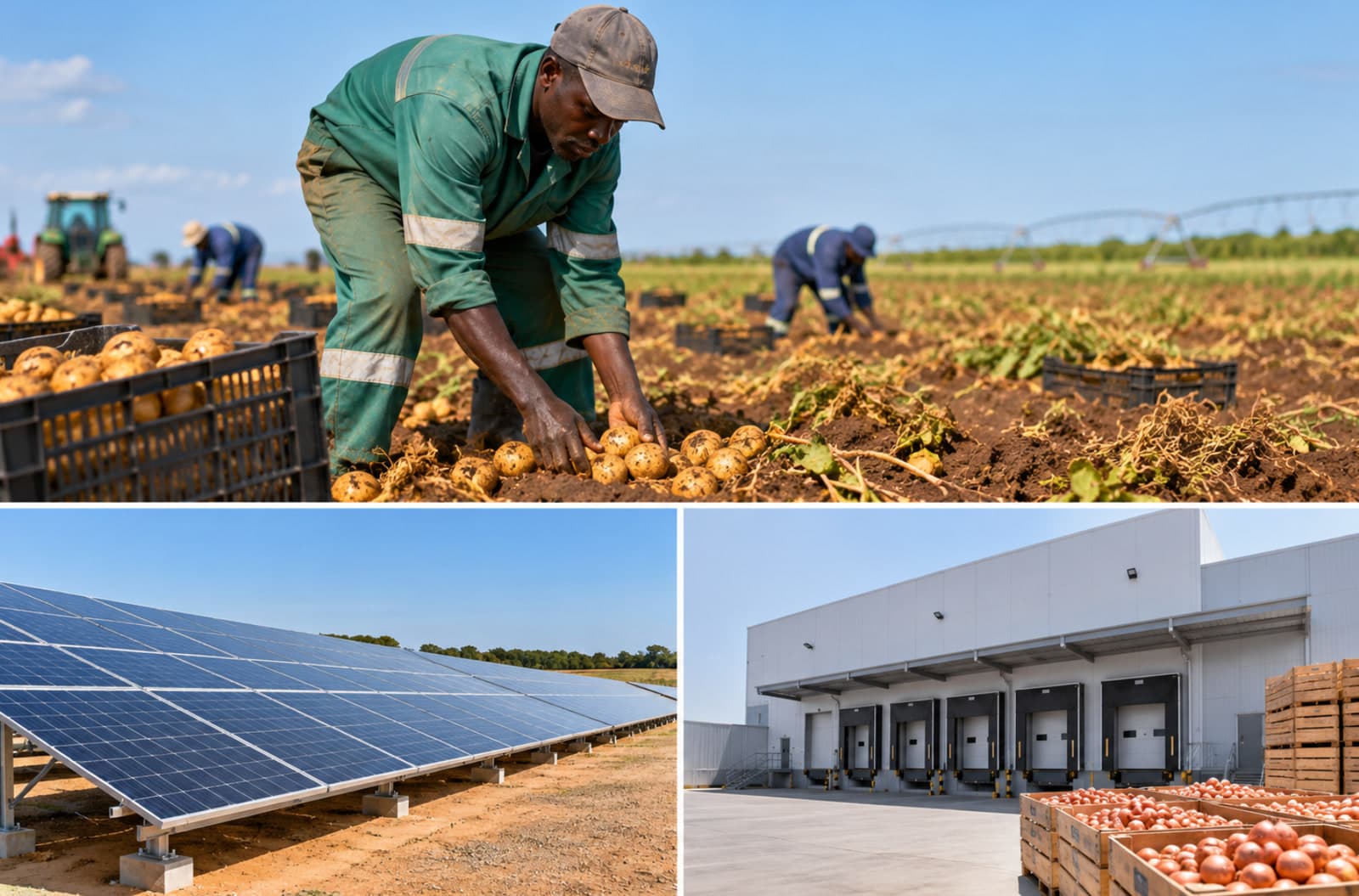
HIHSA plans to increase production of certified seed potatoes using rapid multiplication techniques. Farmers need healthy planting material, and poor quality or diseased seed can affect the size and quality of a harvest. Producing more certified seeds could help the company supply more farmers. It may also create opportunities for businesses involved in agricultural inputs, storage and distribution, depending on how HIHSA organises its operations.
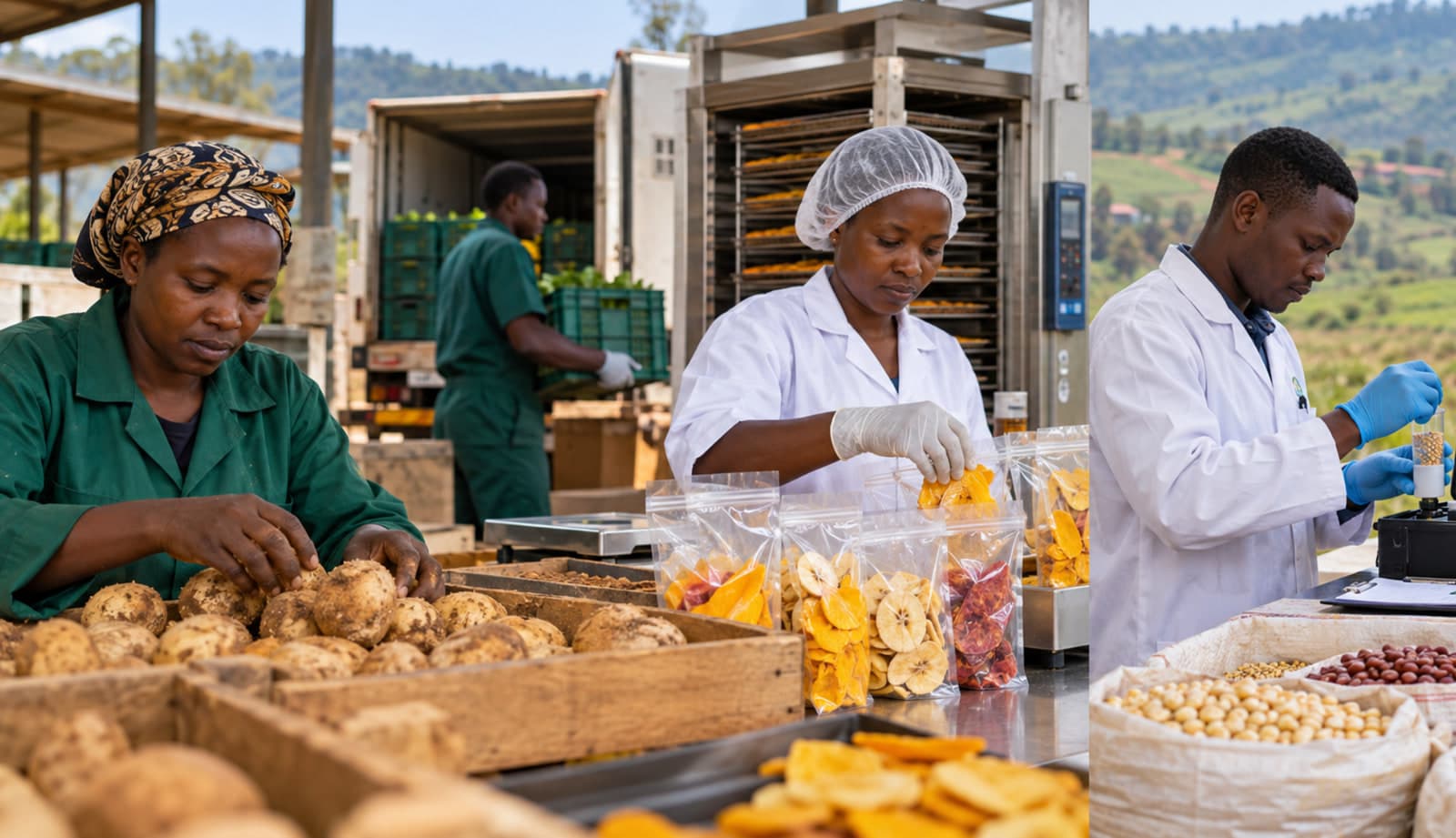
Eza Neza is developing commercial freeze drying for fruit and vegetables. Fresh produce can spoil before farmers find buyers, particularly when storage facilities are limited or transport takes too long. Freeze drying removes moisture and extends the shelf life of food. If Eza Neza expands production, it may need more produce from farmers and traders, as well as packaging, transport and distribution services. The company will still need to find buyers willing to pay a price that covers processing costs.
DAVET is developing agricultural hubs around the Mugombwa and Nyabiheke refugee camps. Its model combines agricultural inputs, technical support, produce collection, cold storage and connections to buyers. The business focuses on poultry and mushroom value chains and works with farmers from refugee and host communities. For small farmers, access to storage and reliable buyers can make it easier to plan production and avoid selling immediately after harvesting. If the hubs attract more farmers and customers, local businesses supplying agricultural inputs, transport and other services may also benefit.
Aflakiosk provides mobile laboratory services to test agricultural produce for aflatoxins, toxins that can develop when certain moulds contaminate crops such as maize and groundnuts.
Food contamination can cost a small business a customer or result in a rejected delivery. By bringing testing closer to farmers, cooperatives and food processors, Aflakiosk aims to help them identify problems and meet buyers' requirements. LuxDev says its service can provide test results within 24 hours.
Where other small businesses could benefit
The four companies are the direct recipients of the funding, but their expansion could create demand elsewhere. A food processor may need more packaging materials and transport services. An agricultural hub may require equipment maintenance, storage and deliveries. A testing business serving more customers may need additional laboratory supplies and technical support.
These are potential opportunities, not confirmed contracts. The impact will depend on how much each business expands, where it buys its supplies and which services it chooses to outsource. There may also be indirect benefits. If farmers can sell more produce or reduce losses, they may have more money to spend on equipment, inputs and services. Agricultural traders could handle larger volumes, while distributors may have more products to take to market.
For SMEs, however, being close to an expanding business does not guarantee new work. Suppliers still need to meet quality standards, deliver on time and offer prices that make commercial sense.
More orders can create cash-flow pressure
Winning a contract with a growing food processor can be good news for a small supplier, but it can also put pressure on its finances. A packaging company, for example, may need to purchase raw materials and pay workers before delivering an order. A transport operator must cover fuel, driver wages and vehicle maintenance before receiving payment. An agricultural trader may have to pay farmers before the buyer settles the invoice.
If a customer takes 30 or 60 days to pay, the supplier needs enough working capital to keep operating during that period. This is why SMEs should look beyond the size of a potential contract. They need to calculate the cost of fulfilling it, check the payment terms and establish whether they can afford to take on the work without falling behind on other expenses. A larger order can increase revenue while leaving a business short of cash. Suppliers that understand their costs and negotiate workable terms will be in a better position to benefit from new demand.
What the funding tells other SMEs
The LuxAid Demonstration Fund is designed for businesses that have already started operating and want to expand. Each selected company can receive up to €350,000, with the fund providing co-financing rather than necessarily paying the full cost of a project. That means businesses must contribute towards their investments and plan for the ongoing cost of running their operations.
LuxDev reported that 120 enterprises were invited to participate in the selection process, 80 eligible applications were received and 10 businesses reached the final stage before four were selected. For other SMEs looking for funding, the process offers a practical lesson. A business needs to show what it sells, who buys it and how the investment will help it grow.
A food processor seeking money for machinery should be able to explain how much additional output it expects to produce and whether there are customers for that output. A transport company planning to add vehicles needs to understand the volume of work required to cover fuel, maintenance, insurance and repayments. Businesses also need to show where their own contribution will come from. Spending available cash on expansion can leave too little to pay suppliers, wages and other operating expenses.
Funders need to see a credible plan for growth, but business owners must also make sure the expansion is affordable.
Will the benefits reach businesses beyond the four recipients?
The next test is whether the funding leads to more sales, more local purchasing and lasting business relationships. HIHSA needs farmers to buy its seeds. Eza Neza needs customers for its processed fruit and vegetables. DAVET must attract farmers and buyers to its hubs, while Aflakiosk needs a steady flow of customers willing to pay for testing services.
If these companies grow, they could create more work for suppliers and other businesses involved in getting food from farms to customers. But the scale of that impact will only become clear as their operations expand. For Rwanda's agricultural SMEs, the important question is not only how much funding four companies receive. It is whether the investment leads to regular orders, reliable payment and commercial opportunities that smaller businesses can afford to take on.
The funding gives the four companies room to grow. Whether other SMEs benefit will depend on how much of that growth translates into business for their suppliers, farmers and service providers.