Kenya’s WayaWaya wants AI to change how customers use their bank accounts
Most banking apps give customers access to the same set of services, whether they run a business, earn a monthly salary or manage several sources of income. Kenyan fintech WayaWaya thinks this approach can be improved.
WayaWaya
Most banking apps give customers access to the same set of services, whether they run a business, earn a monthly salary or manage several sources of income. Kenyan fintech WayaWaya thinks this approach can be improved.
AI-generated summary. It can miss nuance — read the full story above for the complete picture.
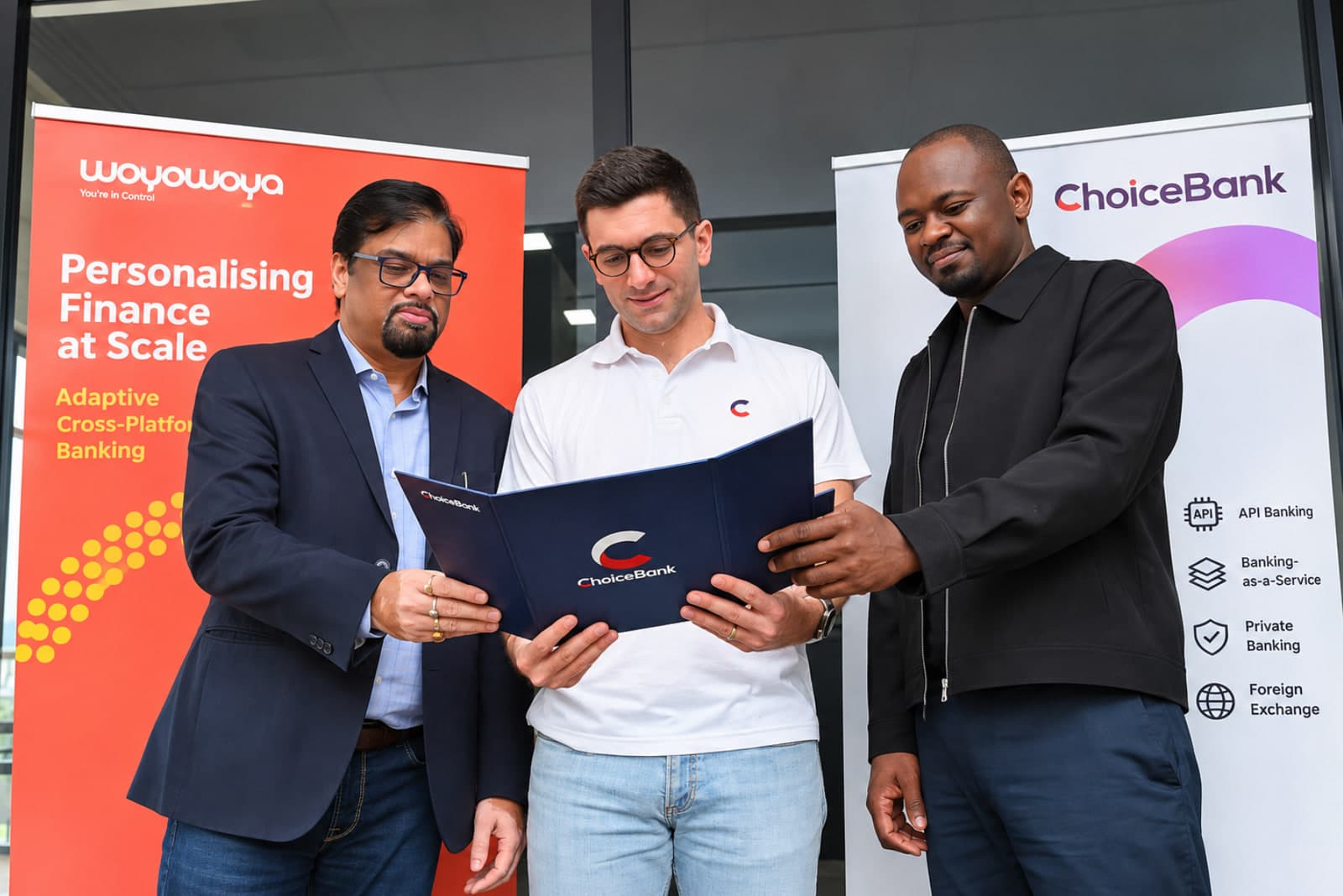
Most banking apps give customers access to the same set of services, whether they run a business, earn a monthly salary or manage several sources of income. Kenyan fintech WayaWaya thinks this approach can be improved. The company has partnered with Choice Bank to introduce WayaWaya Banking, a service that uses artificial intelligence (AI) to study customers' financial activity and make relevant banking tools easier to access.
The service will allow customers to open bank accounts, hold money in multiple currencies, make local and international transfers and pay utility bills. Choice Bank will provide the banking infrastructure, while WayaWaya will develop the technology and manage the customer-facing platform. The arrangement gives WayaWaya access to banking services without having to build and operate the underlying banking infrastructure itself.
Turning transaction data into banking services
"Having more banking features does not necessarily give customers a reason to change their banking habits."
WayaWaya's proposition is built around how people actually use their money. A small business owner receiving payments from customers has different needs from someone who receives a monthly salary. The same applies to someone who has recently started a business or earns money from several sources. WayaWaya wants its AI technology to identify these differences by analysing incoming and outgoing transactions, spending patterns, account balances and recurring payments.
For example, a customer who regularly receives a salary may mostly use their account for personal expenses and savings. If that person starts receiving business payments, the platform could identify the change and make business payment and expense management tools more visible. The company calls this approach Intelligent Adaptive Banking.
"Traditionally, banks build applications around products and expect customers to adapt to them. We believe the future should be the opposite: banking should adapt to the customer," said Teddy Ogallo, founder and CEO of WayaWaya. The system will not necessarily understand the reason behind every transaction. WayaWaya acknowledges that transaction patterns do not always explain the circumstances behind a customer's financial decisions. The challenge will be getting the technology to make useful recommendations without making incorrect assumptions about how people manage their money.
Why the Choice Bank partnership matters
WayaWaya is not building a bank from scratch. Instead, it is using Choice Bank's existing infrastructure to bring banking services onto its platform. Choice Bank offers API banking, banking-as-a-service, private banking and foreign exchange services. Its infrastructure will support the accounts and transactions available to WayaWaya customers.
For Choice Bank, the partnership provides another way to distribute its banking services through a fintech platform. Patrick Russel, Choice Bank's chief commercial officer, said the services could be presented differently depending on the customer's needs. A business owner managing daily collections, for instance, may need different tools from an individual setting money aside from their salary. The agreement was signed in Nairobi on 6 November 2026.
Kenya's mobile money market presents a challenge
WayaWaya is entering a market where customers already rely heavily on their phones to manage money. Kenya had 54 million mobile money subscriptions in June 2026, according to the Communications Authority of Kenya. Safaricom's M-PESA accounted for 88.8% of those subscriptions, while Airtel Money held 11.1%.
M-PESA is widely used by individuals, traders and businesses to receive payments, send money and pay suppliers. This gives WayaWaya a strong incumbent to compete alongside. The company is positioning its service beyond mobile money transactions. It wants customers to access bank accounts, foreign currency services, international transfers and utility payments through one platform. However, having more features does not necessarily give customers a reason to change their banking habits. WayaWaya will have to show that its AI technology and banking services offer something useful beyond what customers already have.
Taking the model beyond Kenya
WayaWaya also wants to enter other African markets, including Nigeria and Uganda. That will require partnerships with local banks and financial infrastructure providers, along with the necessary regulatory approvals in each country. The company appointed Raj Singh, a former Group Chief Operating Officer and Director of Retail Banking at Chase Bank Kenya, as a non executive director and board adviser in July 2026. His appointment was intended to support its strategy, governance and expansion plans.
For African fintechs, the partnership also points to another way of entering the banking market. Rather than building every part of the operation, technology companies can work with established financial institutions to provide the banking infrastructure while concentrating on the customer facing product. WayaWaya's immediate task is to get customers using its new service. Its longer-term opportunity will depend on whether its technology can make banking more useful and whether the model can be repeated in other African markets.