Electric bikes get a shot as delivery costs rise
Petrol could soon cost close to R30 a litre in Gauteng. For people who spend most of their working day on a motorcycle, that is a problem that shows up every week when they fill up.
Electric Bikes
Petrol could soon cost close to R30 a litre in Gauteng. For people who spend most of their working day on a motorcycle, that is a problem that shows up every week when they fill up. ARC Ride, a Kenyan electric motorcycle company, is betting that some of those riders will switch to its Panther electric bike.
AI-generated summary. It can miss nuance — read the full story above for the complete picture.
Petrol could soon cost close to R30 a litre in Gauteng. For people who spend most of their working day on a motorcycle, that is a problem that shows up every week when they fill up. ARC Ride, a Kenyan electric motorcycle company, is betting that some of those riders will switch to its Panther electric bike.
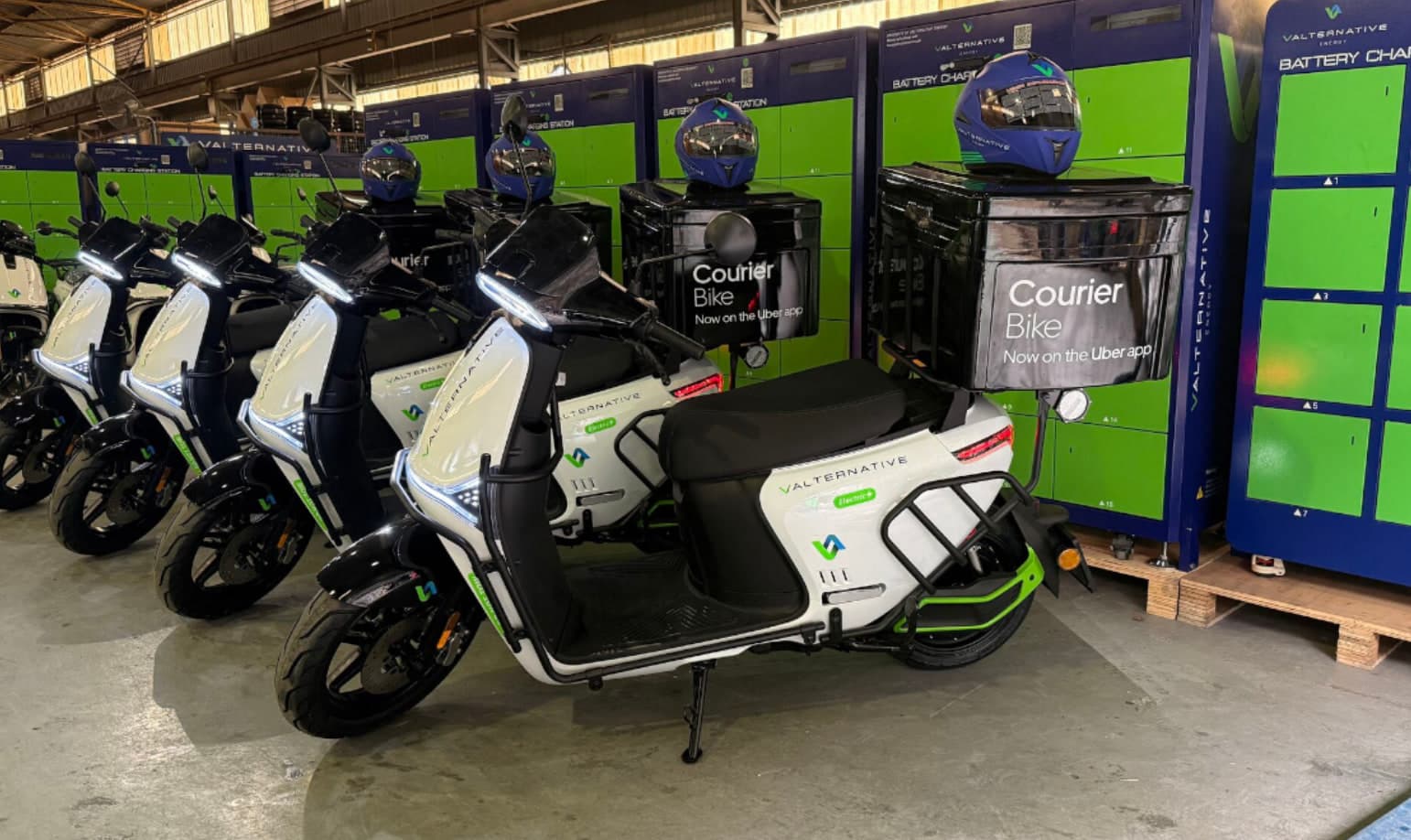
The company launched the Panther in South Africa this month, with prices starting at R22,500. Rather than charging the motorcycle at the end of the day, riders can swap its battery for a charged one. A full swap costs R50 and provides up to 110km of range, according to ARC Ride. The company has opened battery-swap hubs in Randburg, Centurion and Lyndhurst in Gauteng, and Paarden Eiland and Claremont in Cape Town. It plans to open another in Bellville in October. There are also unmanned battery-swapping cabinets, although ARC Ride has not given a figure for how many are currently operating.
The petrol bill is where the argument starts
“With petrol heading towards R30 a litre, that calculation is becoming harder for delivery businesses to ignore.”
ARC Ride's own comparison puts the Panther at about R45.45 per 100km. A 125cc petrol motorcycle costs more than R59 over the same distance when petrol is around R27 a litre, according to the company. At the current inland price of R26.92 a litre, that is already a difference of roughly R13.50 per 100km. The expected October increase would make the difference larger. Central Energy Fund data cited on 28 September indicated an increase of about R3.06 a litre for inland 95 petrol, which would put it at about R29.98.
ARC Ride estimates that, at that price, its electric motorcycle would cost about 30% less to run. The calculation is not the same for every rider. Someone covering 50km a day will save less than someone covering 150km. Battery-swap costs, maintenance and the way the motorcycle is financed also affect the final number. That is why the bike is being aimed at delivery riders and commercial fleets rather than the average motorcycle owner.
ARC Ride had to clarify its earnings claim
The company's launch material initially said riders could make "up to 20% more net earnings". That wording was later corrected. ARC Ride spokesperson Justus Visagie told TechCentral that the 20% refers to a possible reduction in weekly operating costs, not a 20% increase in income.
The estimate also does not come from a South African fleet. ARC Ride said it is based on its operating data from other African markets. So a rider earning R3,000 a week, for example, would not simply see that income increase by 20%. The potential benefit would come from spending less on running the motorcycle. How much that leaves in the rider's pocket depends on what they currently spend.
Fleets have more to consider
ARC Ride says it is in talks with some of South Africa's larger delivery fleets, but has not identified them. For these businesses, the calculation goes beyond petrol. A motorcycle that is sitting at a depot waiting to charge is not making deliveries. That is one reason ARC Ride has built battery swapping into the model.
The rider changes the battery and gets back on the road. But the system only works if there are enough swap points and charged batteries in the areas where riders operate. That is likely to be one of the first things fleet operators will have to look at before replacing petrol motorcycles. ARC Ride South Africa MD Mikael Cloete said the company sees interest from large delivery fleets in the combination of the motorcycle, battery-swapping network and support.
The emissions numbers are less straightforward
ARC Ride is also making an emissions case for the Panther, although some of the numbers it cites come from research outside South Africa. Stellenbosch University's Electric Mobility Lab studied delivery activity in Cape Town in 2025. The study modelled 39,005 delivery trips made by 385 motorcycles in Gardens and Rondebosch over 14 days. It found that the same service could potentially be handled by 125 motorcycles.
ARC Ride also refers to an earlier Nairobi study that estimated an emissions reduction of up to 85% when electric motorcycles replace petrol bikes. That figure needs to be treated differently in South Africa because the two countries have very different electricity mixes. The Nairobi study used a grid emissions factor of 0.226kg of CO2 per kWh. The figure used for South Africa was 0.931kg.
Using the South African electricity figure with the same inputs produces an emissions reduction of roughly 36%, rather than 85%. Charging the motorcycles with solar power would change that calculation. ARC Ride says its hubs can get up to 99.5% of their daytime charging power from solar. The underlying Cape Town research, however, assumes a 66kWp solar installation and managed charging. Those conditions do not necessarily apply to every ARC Ride hub.
The bike is the easy part
There is nothing particularly complicated about the reason ARC Ride is coming to South Africa. Delivery riders need motorcycles that are cheap to run. Petrol is getting more expensive. Electric motorcycles remove petrol from the equation, but introduce another set of costs around batteries, swapping infrastructure and charging.
ARC Ride is trying to deal with that by keeping the battery out of the rider's hands for long periods. Instead of buying a battery and worrying about its eventual replacement, the rider pays for access to the company's swapping network. ARC Ride was founded in Nairobi in 2019. In September it raised $33.3 million in debt and equity, led by Novastar Ventures and Norrsken22, and plans to add 5,000 motorcycles to its fleet.
South Africa is now another market for that model. For local riders, the question is fairly simple: how much does the electric bike cost to operate over a week, and can they get a charged battery when they need one? With petrol heading towards R30 a litre, that calculation is becoming harder for delivery businesses to ignore.