Isuzu Building More Truck Manufacturing Capacity in Gqeberha.
Isuzu Motors South Africa has invested close to R30 million into its commercial vehicle assembly plant in Gqeberha
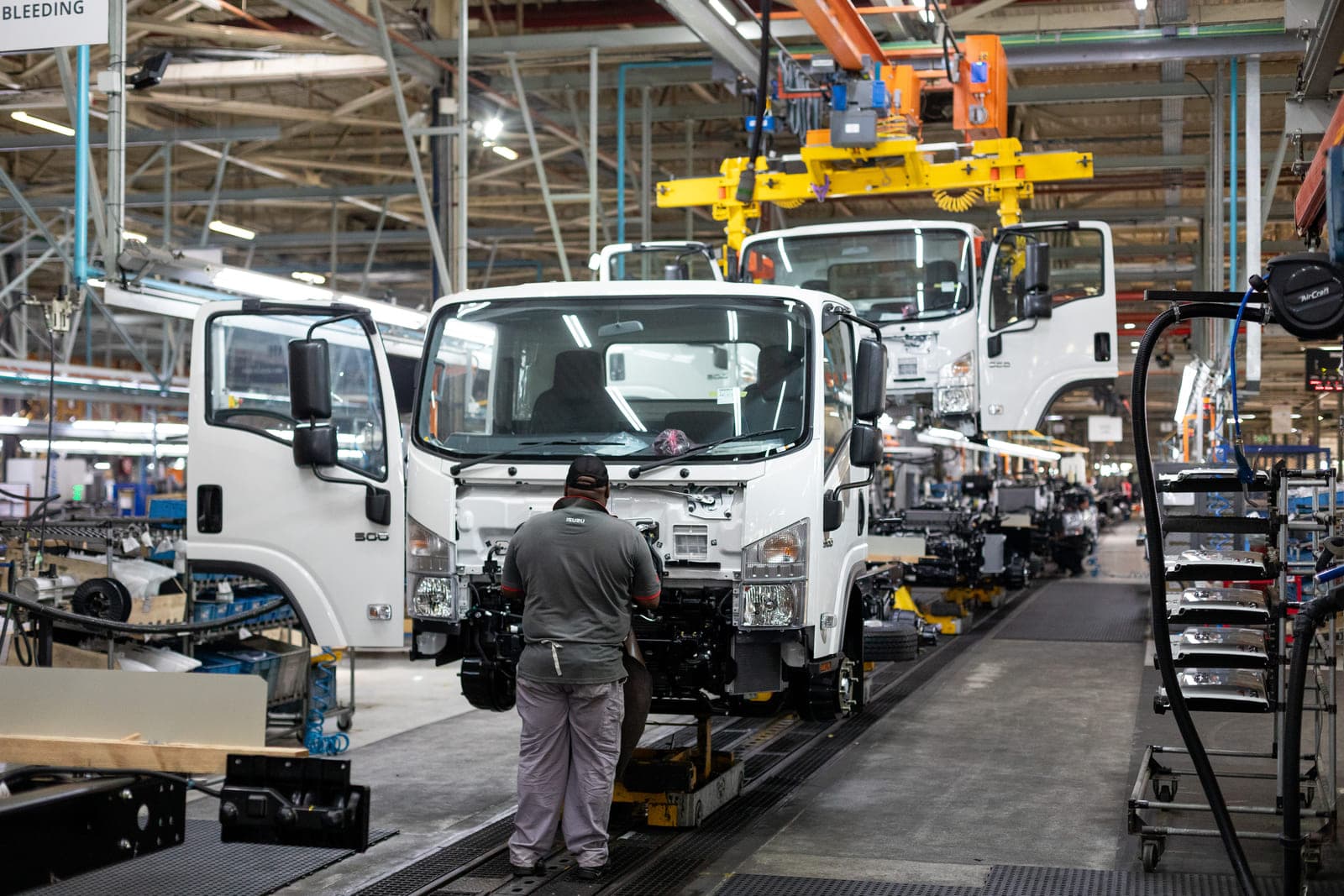
Isuzu Is Expanding Their Truck Assembly Plant in Gqeberha.
Isuzu Motors South Africa has invested close to R30 million into its commercial vehicle assembly plant in Gqeberha, and the timing points to a clear product reason. Two days after the company announced the plant work, it confirmed that the next-generation N-Series light and medium truck range will go on sale in South Africa in November. Isuzu has not said in writing that the line extension was built for that range. The fit between the two announcements is however close enough to treat the new N-Series as the likely driver.
The plant upgrade announcement, issued this week, limits the spend specifically to the commercial vehicle assembly operation. It does not cover the D-Max bakkie line. The work extends the chassis line so the plant can add stations and fit more content on each truck. It also updates tooling and production layouts in the chassis and engine sub-assembly areas, and it changes the cab-marriage section, where the cab is joined to the chassis. Isuzu says the changes will let the plant handle a wider set of commercial vehicle applications for customers in South Africa and in other African markets.
Long Term Commitment from Isuzu
Johan Vermeulen, executive vice president for manufacturing and product engineering at Isuzu Motors South Africa, tied the spend to product change rather than to a routine factory refresh. “This investment is about more than preparing our plant for a new generation of trucks,” he said. “It reflects our long-term vision for manufacturing in South Africa and our confidence in the country’s people, industrial capability and potential.” He added that continued investment in Gqeberha is meant to keep the plant competitive as mobility needs change across Africa.
The November N-Series is the new generation already on the public calendar. Isuzu Motors South Africa said on 8 October 2026 that it will launch the seventh-generation range next month. The trucks sit on the Isuzu Modular Architecture and Component System, a platform built to take more than one powertrain and to add new technology over time. The first derivatives named for South Africa are the NMR 250 with an automated manual transmission, in short-wheelbase and crew-cab form; the NPS 300 with an automated manual transmission, in single-cab and crew-cab form; and the NQR 550, placed at the upper end of the medium-duty segment. An NPR 400 compressed-natural-gas model, with a manual gearbox or an automated manual transmission, is due shortly after the main launch.
Upgrade to Facilitate new Powertrains
The content on those trucks matches the kind of work described in the announcement release. Selected diesel models use Euro 5 engines with an exhaust system built around a diesel oxidation catalyst and a particulate oxidation catalyst. That system does not need AdBlue. Isuzu says it can run on 50ppm diesel, although 10ppm diesel suits it better. Some models add Bi-LED headlights, daytime running lights, advanced driver-assistance systems and a revised cab shaped to cut aerodynamic drag. Automated manual transmissions are part of the launch range, not an option added later. A stronger chassis, more exhaust hardware, a gas-fuel derivative and extra electronic systems all need more stations and more controlled fitting than the outgoing trucks. That is what an extended chassis line and a revised engine-dress process are for.
Research Backed Model Development
Mpho Nkhumeleni, department executive for commercial vehicle sales at Isuzu Motors South Africa, said the product brief came from fleet operators. “Our customers demanded a vehicle that can withstand harsh terrains while actively contributing to the profitability of their businesses. These new models are a result of that research,” he said. The sales case is reliability, fuel use, uptime and the full cost of owning the truck, not a cosmetic change of cab.
The announcement release sets out two further plant changes that are not model-specific. The first is traceability. Isuzu is adding digital tracking through the build so quality checks can follow a vehicle across the line, rather than relying only on checks at the end of assembly. The second is the work on people and energy use. New equipment includes a fuel-tank gripper, lift-assist devices, a cab-marriage hoist and electronic torque tools, with changes to the engine-dress process. Isuzu says this equipment is meant to cut physical strain. Energy-efficient tools and motors, and revised workflows, are meant to reduce resource use in the same operation.
Scaling For Future Growth
The scale of the plant explains why a R30 million line change matters even though it is not a new-factory project. In the financial year to 31 March 2026 the Gqeberha plant built more than 31,200 vehicles, made up of more than 27,400 D-Max bakkies and more than 3,800 trucks, as reported by this publication (Read Here).
The bakkies are built for South Africa and for export across Africa. The trucks are built mainly for the local market. Isuzu Motors South Africa, a wholly owned subsidiary of Isuzu Motors Limited of Japan, has assembled commercial vehicles in South Africa since the 1970s and has built bakkies in Gqeberha since 1978. The truck line already covers medium, heavy and extra-heavy models sold into South Africa and the wider region.
Taken on its own terms, the move still adds capacity rather than parking it. A manufacturer that already leads combined medium and heavy truck sales in South Africa is extending the chassis line, adding traceability, and fitting safer handling equipment in the same week it puts a Euro 5 N-Series, an automated manual transmission and a compressed-natural-gas derivative in front of African fleets. That is a direct commitment to building commercial vehicles in Gqeberha for the next model cycle, and it widens the local automotive base at the point where the product is about to change.