Yango Fellowship Targets Africa’s Next Generation of Tech Companies
Dubai-based technology company Yango is looking beyond Africa’s established startup hubs as it builds a pipeline of founders developing businesses for local and cross-border markets.
Yango
Dubai-based technology company Yango is looking beyond Africa’s established startup hubs as it builds a pipeline of founders developing businesses for local and cross-border markets.
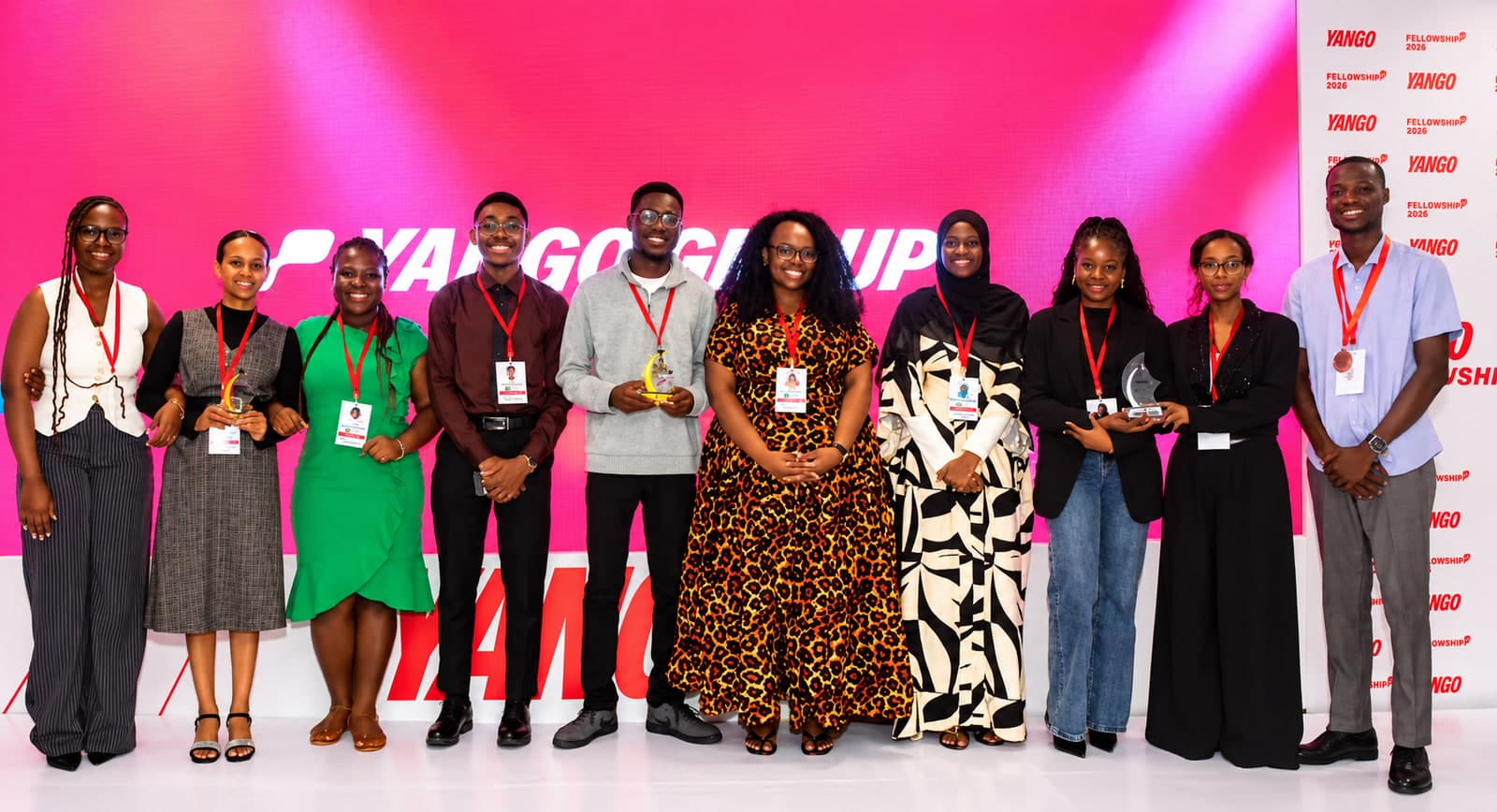
The company’s 2026 Pan-African Fellowship attracted more than 600 applications for 24 places, with founders selected from Ghana, Zambia, Senegal, Ethiopia, Mozambique and Côte d’Ivoire.
Yango wants the programme to help founders turn local problems into scalable technology businesses, with the company targeting the emergence of potential billion-dollar technology companies from these less-established startup markets.
Yango Targets Startup Growth Beyond Established Hubs
Shashi Singh, Director of Operations, Yango Ride MEA and Asia, said Yango hopes to see “a couple of unicorns” emerge from the fellowship within the next three to five years.
Singh said the company is particularly interested in founders operating in markets that receive less attention than established technology centres such as Nigeria, Kenya and South Africa.
“I want the next unicorn to come out of these frontier markets,” Singh said.
The 12-week fellowship took participants through problem research, solution development, business modelling, prototyping and pitching. Singh said the number of applications shows the level of interest among young African founders but also points to the need for more structured access to mentorship, networks and practical opportunities.
The programme has expanded since its launch. Yango started with one country in its first year, expanded to two in its second year and reached six countries in 2026.
Founders Tackle Practical African Market Problems
The 2026 fellows developed projects focused on challenges including cashless payments for informal transport, digital financial identity for informal merchants, medicine supply visibility, cross-border job matching, smart waste collection and affordable water-quality testing.
Yango also sees the programme as a potential source of technology that could eventually fit into its wider ecosystem. Singh said some of the projects could be integrated into Yango’s operations, while others could develop into independent businesses that compete in the same markets.
The company is also placing emphasis on founders with direct experience of the problems they are trying to solve. Singh argued that local developers can have an advantage because they understand the infrastructure, consumer behaviour and operating conditions in their markets.
Africoded Wins Top Fellowship Prize
The fellowship ended with a Pitch Day in Abidjan, where Africoded won the top group prize of $4,500 for an AI-assisted employment platform connecting African job seekers with cross-border employment, remote work and career-development opportunities.
Harambee finished second and received $2,500 for a smart waste collection and recycling platform connecting households, waste collectors and recyclers.
Bloom placed third, winning $1,500 for its African Transit Payment Revolution, a cashless fare-collection system designed for informal public transport networks across East and West Africa.
In the individual category, Fredrick Mwepu of Zambia won $1,500 for RoboCore Zambia, a robotics platform aimed at making practical STEM education more accessible.
Meshack Kwame Nartey of Ghana received $1,000 as runner-up for Shuttle Smart Ghana, an application that tracks university shuttles and provides students with real-time information on shuttle arrivals.
Oulimata Rose Dia won the $1,000 Best Technical/AI Contribution award for Smart Bin Collection, a solar-powered system that monitors waste-bin levels in real time and uses 2G connectivity to support more efficient collection.
For Mwepu, the programme also provided an opportunity to develop a project focused on a gap he experienced himself.
“Growing up, hands-on STEM tools were something I only saw in videos,” Mwepu said, adding that RoboCore Zambia was created to make practical STEM opportunities more accessible to students.
The fellowship gives Yango a growing network of founders across six African markets, while giving those startups access to mentorship, technical support, pitching opportunities and potential connections to a wider technology ecosystem.