Transnet collapse putting R200 billion industry at risk
The collapse of Transnet’s rail corridors has forced miners to transport their minerals to South Africa’s ports via trucks. However, the decline in the price of many minerals has become unviable for local miners, threatening their businesses. A lot of South African CEOs for the mining companies have bemoaned Transnet’s lacklustre performance, with Exxaro’s Nombasa
Transnet-collapse-putting-R200-billion-industry-at-risk
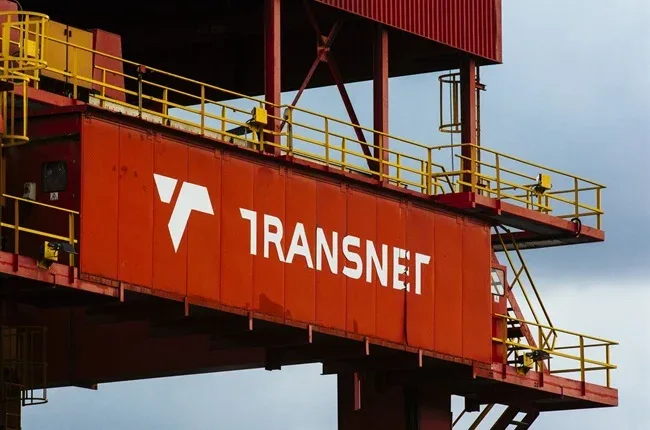
The collapse of Transnet’s rail corridors has forced miners to transport their minerals to South Africa’s ports via trucks. However, the decline in the price of many minerals has become unviable for local miners, threatening their businesses.
A lot of South African CEOs for the mining companies have bemoaned Transnet’s lacklustre performance, with Exxaro’s Nombasa Tsengwa being the latest. Exxaro released interim results for the six months to the end of June 2023, posting a 32% decline in net operating profit.
Tsengwa went on to emphasize the impact of Transnet’s poor performance on the company in an interview with Business Day TV. As the country’s largest fossil fuel miner, Exxaro relies heavily on coal exports. The company mentioned that the plunge in coal prices over the past ten months made it no longer viable to transport its products by road while it continues to battle with a poorly functioning state rail system.
The API4, the benchmark price reference for South African coal exports, rose to a high of about $280 a tonne in August 2022 but has since dropped to $100 to $120 a tonne. The estimation by the Reserve Bank is that transporting coal to Richards Bay via rail costs around $11 per tonne, while trucking costs companies roughly $70 per ton.
A number of miners have turned to trucks to transport their produce to Maputo in Mozambique to avoid using Transnet’s rail infrastructure and delays at South African ports. Because of this, South Africa’s mining industry, which contributes over R200 billion to GDP, is at risk.
Kumba Iron Ore, which is South Africa’s largest iron ore producer, said in its interim results presentation that it had lost R6 billion from Transnet inefficiencies alone in the first six months of the year. This is in addition to a R10 billion loss in 2022.
Kumba’s CEO Mpumi Zikalala said a efficient logistics system is fundamental to global trade and South Africa’s weakening economic growth. “Given the uncertainty due to the logistics challenges, the company decided to defer non-critical capital expenditure of R2 billion.” – Zikalala added.
Mining is far from the only industry at risk, with the chief economist at the Minerals Council of South Africa, Hank Langehoven, claiming that 60% of GDP is at risk due to Transnet’s collapse. According to Langenhoven, South Africa’s economy is peculiar in that it acts as a landlocked country with most of its GDP situated in the centre of the country in Gauteng.
The production in Gauteng needs to be transported outwards to other provinces and the coast for export, making South Africa heavily reliant on rail infrastructure to transport goods efficiently. Langenhoven also explained that 60% of South Africa’s GDP, worth R3.8 trillion, is generated from imports and exports.
Particularly, the Durban-Johannesburg container corridor is vital to the economy. This corridor has been operating at only 30% so far this year, resulting in billions of rands lost. The rail infrastructure in South Africa has suffered from chronic underinvestment and has not grown in lock-step with increases in trade and economic production in the country.
The last time a major railway was built in South Africa was in 1976 when the Saldanha-Sishen railway was completed.