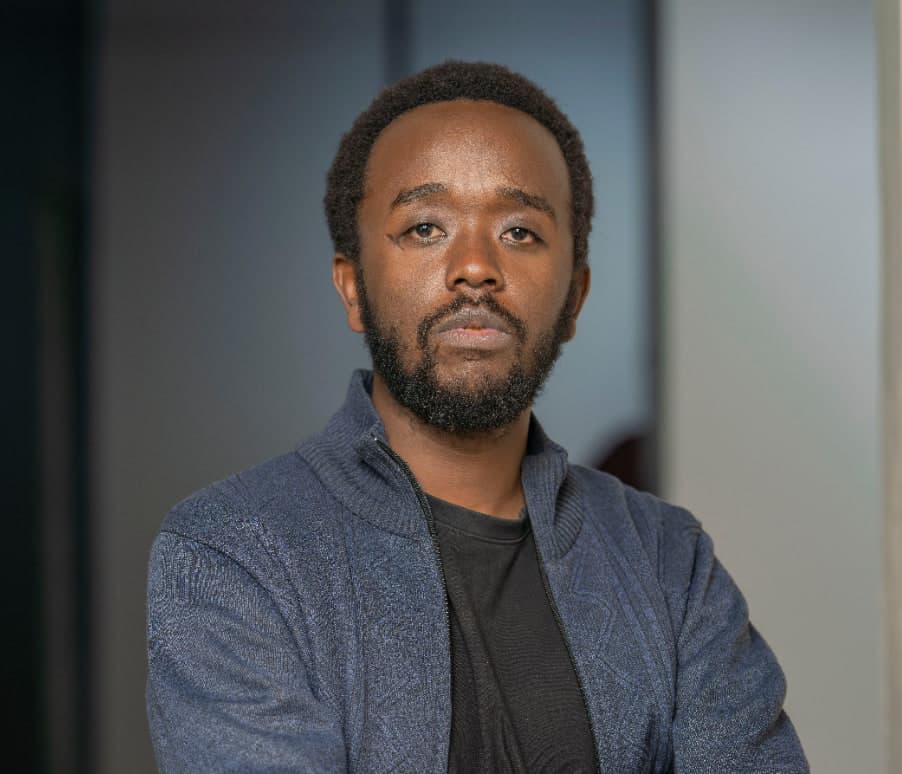
Founder Fridays : Rhea
African farming has long followed a familiar routine: plough the land, apply fertiliser, add more fertiliser and wait for harvest. Yet soil science has not always received the same attention as the inputs used to grow crops. Soinato Leboo and her co-founder, Priscilla Wakarera, want to change that by making soil testing faster, more accessible and useful to farmers.

Soinato Leboo Co-Founder Of Rhea
African farming has long followed a familiar routine: plough the land, apply fertiliser, add more fertiliser and wait for harvest. Soil testing can help farmers understand which nutrients their land needs and make better decisions about fertiliser use. Soinato Leboo and her co-founder, Priscilla Wakarera, want to make soil testing faster, more accessible and useful to farmers.
The idea for Rhea grew out of a challenge Priscilla encountered during her biotechnology research on bio-inoculants and how microbes can improve soil productivity. She needed baseline soil data, but collecting samples and sending them to a laboratory in Nairobi meant waiting three months for the results. By then, it was too late to use the findings in her study.
The experience exposed a practical problem: farmers needed reliable information about their soil, but getting test results could take too long. As Soinato explains, “Farmers were just doing guesswork.” Without timely soil data, farmers had limited information to guide decisions about fertiliser use and crop selection. This was the problem the co-founders set out to address with Rhea, a Kenyan agricultural technology company developing soil-testing devices and software to help farmers make better and faster production decisions.
From a Hotel-Room Prototype to a Commercial Product
Soinato joined the project in 2022 after meeting Priscilla during an entrepreneurship residency programme in Kigali. The founders spent three years developing the Agripad, completing four prototype iterations along the way. They sourced components locally in Kigali, assembled their first prototype in a hotel room and took it to farms outside the city for testing.
Seeing the device produce its first readings was a turning point. “When we first saw the initial readings, it was like, OK, so this can actually work,” she recalls.
The Agripad measures soil parameters including nitrogen, phosphorus, potassium and pH. Rhea uses a machine-learning algorithm to turn those readings into recommendations covering fertiliser types, quantities and application schedules. It can also suggest alternative crops suited to existing soil conditions.
The device reduces the process of obtaining soil-test results and agronomic recommendations to about 15 minutes. Rhea estimates that farmers implementing its recommendations could increase productivity by 10% in the first season and up to 30% by the third season. These are the company’s projections, with results depending on farm conditions and how recommendations are applied.
Getting farmers to trust a new technology required more than producing readings. Rhea works with local agents at agricultural input shops and regional agronomists who already have relationships with farming communities.
“The farmers already trust them,” Soinato notes. These partners explain the technology and help farmers understand their results. Rhea also follows up with calls and visits to find out whether farmers implemented the recommendations and what challenges they encountered. A WhatsApp chatbot provides additional support.
Building a Business Around Soil Data
The founders handled much of Rhea’s early work themselves, from soil sampling and testing to meeting farmers, sales and marketing. “We have done everything ourselves,” Soinato says. That hands-on experience helped them understand the challenges involved in reaching farmers and supporting them. From two founders and an intern in 2023, Rhea has grown to a team of 11.
As the business grows, Rhea is building the tools and networks needed to reach more farmers. Its agent application allows field agents to onboard farmers, access soil reports, track commissions and receive payments. The system will support the company’s expansion from 16 to all 33 agricultural counties in Kenya.
Rhea has also extended its services beyond farmers who use its Agripad device. Launched in May 2026, Rhea Optima allows farmers, laboratories and other users to submit existing soil-test results and receive tailored recommendations.
In 2026, the company has increased its focus on business-to-business partnerships. Soinato believes farmers need more than soil data, prompting Rhea to work with organisations involved in agricultural finance, insurance, irrigation and carbon markets.
One example is Rhea’s partnership with SunCulture, which provides solar-powered irrigation systems. Rhea contributes soil testing and recommendations, complementing SunCulture’s irrigation solutions.
Rhea wants to build a broader agricultural data system combining soil measurements with satellite information, crop suitability, input prices and market access. This could help farmers make production decisions while giving financial institutions and investors more evidence to assess agricultural opportunities.
Funding the Next Stage of Growth
Rhea received a $100,000 investment from Obudu Capital to support its next stage of growth. The funding will help the company manufacture another 100 devices, expand its agent network and work towards reaching 5,000 farmers. Trained local agents will play a key role in this expansion, conducting soil tests and supporting farmers in areas where Rhea is building its presence.
Securing funding has been a challenge for the company. “Financing the past few years has been very difficult,” Soinato says, pointing to the difficulties of raising capital for an agricultural and climate technology business that combines hardware and software.
Rhea received an initial $10,000 grant through Jasiri, an entrepreneurship programme run by Allan and Gill Gray Philanthropies. The grant helped fund its first prototype and initial go-to-market strategy. The company has also benefited from E4Impact, the Kenya Climate Innovation Center and the Women in Tech Standard Chartered programme, which provided technical assistance, exposure and introductions to investors.
Rhea is now closing its pre-seed round and working towards its seed round. For Soinato and Priscilla, raising capital remains an important part of scaling the business as two female co-founders building a hardware and software company. Support from the startup ecosystem has helped them move forward, but securing the funding needed to grow remains a central challenge.
Taking Rhea Beyond Kenya
Rhea has begun expanding into Tanzania through two partners that will provide soil-testing services using its devices. It is also exploring opportunities in Uganda, Rwanda and the Democratic Republic of Congo.
Expanding into these markets requires data that reflects local soil conditions, crop varieties, fertiliser availability and market prices. Rhea combines its own soil-test results with government and non-governmental datasets and satellite information to improve its recommendations.
“We want to see Rhea solutions being utilized across Africa, not just East Africa, not just Kenya, but across Africa,” Soinato says.
Over the next three to five years, Rhea aims to expand through partnerships in different countries. The company also wants to use agricultural data to reduce investment risks, giving financial institutions and investors a clearer picture of production potential and market opportunities.
Advice to Other Founders
For other founders, Soinato’s advice is direct: “Don't give up, wake up every day and ensure that you're doing something that pushes the business forward.” She also encourages founders to remain rooted in the reasons they started their businesses.
Rhea has benefited from organisations supporting women, climate technology and deep-tech innovation. Soinato believes founders should seek support from their ecosystems and make use of the opportunities available to them.
Asked where she would invest $1 million, Soinato points to agricultural infrastructure, hardware and AI applications designed for farmers.
“I would put it into building the infrastructure and the hardware that's needed,” she explains. She sees AI as an instrument for building agricultural businesses, but believes farmers need systems and data they can access easily. For her, the priority is to organise existing information and package it in a way that helps farmers make better decisions.
She believes smallholder farmers will play a central role in Africa’s future, and that giving them access to the right data can help them improve productivity.