
South Africa to see Fuel relief and Fiscal Discipline - Godongwana
Update from The Medium Term Budget Speech Today - 21 October 2026
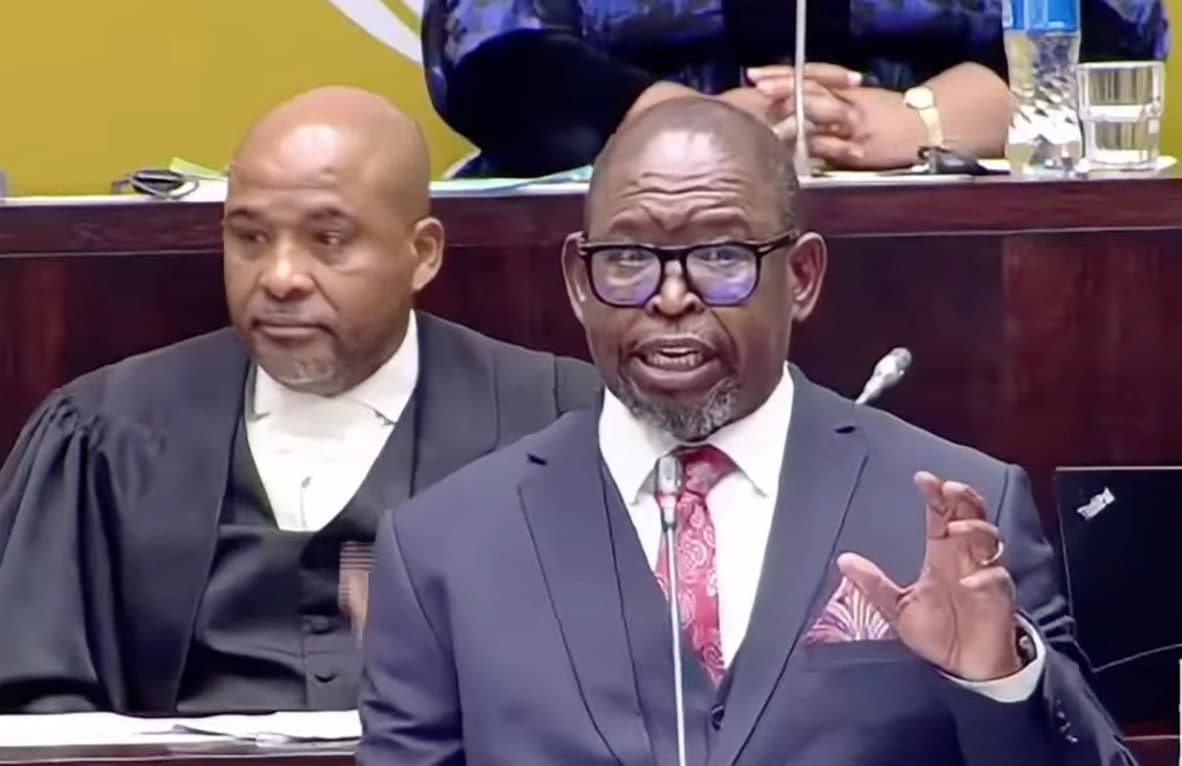
Enoch Godongwana
Finance Minister Enoch Godongwana tabled the 2026 Medium-Term Budget Policy Statement in Parliament in Cape Town on Wednesday afternoon (21 October 2026), outlining a temporary R10 billion fuel levy relief package that cuts the petrol levy by R1.50 a litre and the diesel levy by R3 a litre from 4 November until early January 2027.
He also announced a revised 2026 economic growth forecast down to 1.2% from the 1.6% projected in February, while confirming that the debt-to-GDP ratio has stabilised at 78.4 percent and is set to decline further, supported by a growing primary surplus and stronger-than-expected tax revenue driven mainly by mining.
The statement also released draft principles-based fiscal anchor legislation for public comment, identified R38.1 billion in savings for redirection to priority spending, and added billions to provincial and local government equitable shares to cover higher costs in health, education and basic services.
Key Points Outlined so far:
- Importantly for the economy, a temporary fuel levy relief of about R10 billion will be implemented and effective from 4 November 2026 (local government elections day) until 1 December 2026, the petrol levy is cut by R1.50 per litre and the diesel levy by R3 per litre. The relief will continue at a lower rate until 5 January 2027. It will be funded by returning R10 billion previously transferred to the Central Energy Fund to the National Revenue Fund / Contingency Reserve. This is intended to ease cost-of-living pressure from high global oil prices.
- Real GDP growth forecast for 2026 is revised down to 1.2% from the 1.6% projected in the February 2026 Budget. Growth is expected at 1.6% in 2027 and 2% by 2029. The economy is described as resilient despite Middle East-related oil shocks and global uncertainty.
- Debt-to-GDP ratio stabilised at 78.4% in 2025/26 (slightly better than earlier expectations) and is projected to decline further. The primary surplus (revenue exceeding non-interest spending) is expected to rise from 1.7% of GDP this year to nearly 3% by 2030. The consolidated budget deficit is put at 4.3% of GDP this year (down from 4.5%), with the main budget deficit at 3.7% and falling to 2.5% by 2029/30. Debt-service costs as a share of revenue are stabilising/declining modestly.
- Tax revenue for 2026/27 is revised upward by R17.1 billion, driven mainly by stronger corporate tax from the mining sector on high commodity prices. Total tax, non-tax revenue and related receipts are R54.1 billion above the February 2026 Budget estimates.
- Draft principles-based fiscal anchor legislation has been released for public comment. It aims to strengthen discipline and protect recent fiscal gains without imposing a rigid numerical debt or deficit rule.
- R38.1 billion in savings over three years is identified and redirected to economic and social priorities (about R6 billion from curbing grant payment fraud). An early retirement programme is expected to generate average annual savings of about R4.4 billion. Over 4,300 high-risk or suspected “ghost workers” have been flagged on the government payroll; further action details will come in the 2027 Budget.
- Infrastructure and capital assets spending is the fastest-growing category, rising at 5.2% a year over the medium term. Consolidated expenditure grows from about R2.7 trillion in 2026/27 to R3.02 trillion in 2029/30 (average 3.6% a year).
- Additional allocations include R21.8 billion to the local government equitable share (for bulk services and free basic services) and R20.5 billion to the provincial equitable share (mainly health and education cost pressures). An amended Municipal Finance Management Act is published for comment to strengthen municipal financial management and oversight. Treasury has withheld equitable share transfers from 69 municipalities over unpaid creditors, with some recovery already recorded.
- R10 billion of the extra revenue is set aside for El Niño-related response. SOE fiscal risks continue to be flagged (including prior guarantees involving Denel and SAA). Extra resources are directed toward protecting doctors, teachers and other frontline services, along with anti-crime measures for vulnerable households.