Zambia’s Kafue solar project: will local businesses get a share of the work?
A construction project worth millions of dollars can create business opportunities beyond the company building it. But for smaller contractors, getting a piece of that work often comes down to knowing who is buying, what they need and whether you can deliver at the right price.
Zambia’s Kafue solar
A construction project worth millions of dollars can create business opportunities beyond the company building it. But for smaller contractors, getting a piece of that work often comes down to knowing who is buying, what they need and whether you can deliver at the right price.
AI-generated summary. It can miss nuance — read the full story above for the complete picture.
A construction project worth millions of dollars can create business opportunities beyond the company building it. But for smaller contractors, getting a piece of that work often comes down to knowing who is buying, what they need and whether you can deliver at the right price. That is the position facing Zambian businesses as construction gets under way on the Kafue Solar project in Lusaka Province.
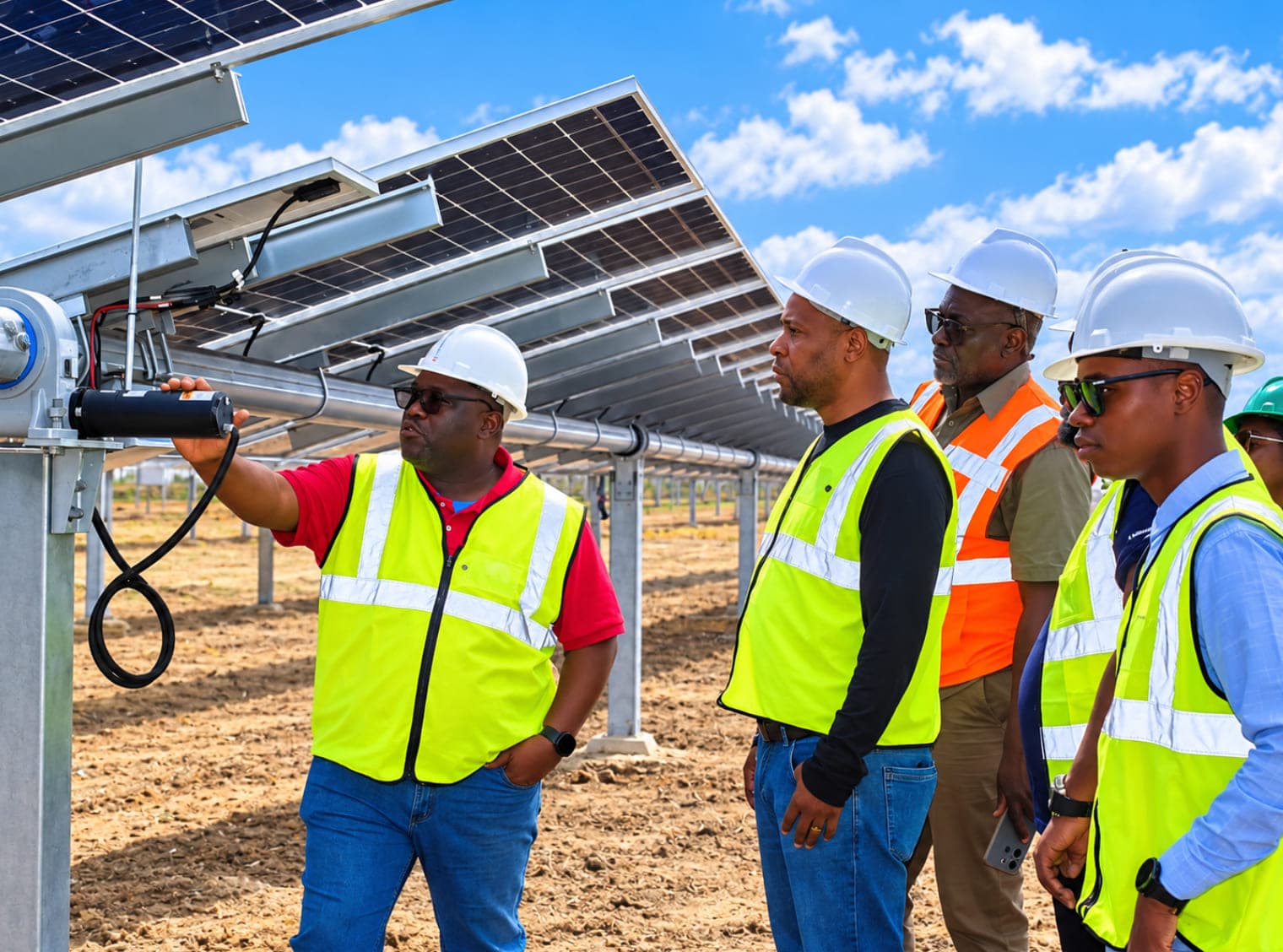
Globeleq has appointed Solarcentury Africa and Alensy Energy Solutions to build the plant, which will have a capacity of 40 MWac. The project is expected to start generating electricity in the third quarter of 2027. Around 200 local jobs are expected during peak construction. The figure is encouraging, but it does not tell us how many local companies will win contracts or how much of the project spending will stay in Zambia. Those are the details that matter to a small engineering firm, transport operator or equipment supplier deciding whether to pursue the work.
The main contract has already been awarded
“For a small contractor, the real question is whether there is a contract it can win, complete and get paid for.”
Solarcentury Africa and Alensy are responsible for engineering, procurement and construction. Smaller companies hoping to get involved will need to find out which parts of the work the contractors intend to outsource. There may be demand for site preparation, transport, electrical installation, security and other services. However, the availability of these contracts has not been confirmed, and some equipment or specialist services may already be covered by existing suppliers.
A business interested in supplying the project should start with a direct question: what are the contractors still looking to buy locally? A transport company, for instance, needs to know what materials must be moved, where they need to go and when deliveries are required. An electrical contractor needs to establish the technical standards and qualifications expected before pricing a job. Approaching a project with a clear service and a realistic price is more useful than simply registering interest in renewable energy.
Winning the job is only half the calculation
Small contractors also have to consider how they will pay for the work before receiving payment. A company supplying materials may need to pay its supplier upfront. A contractor hiring workers has wages to cover every week. Fuel, transport and equipment costs continue whether an invoice has been paid or not.
That makes the payment terms as important as the contract value. A job can bring in revenue on paper and still leave a small business short of cash. Companies considering subcontracting work should establish payment schedules, insurance requirements, delivery deadlines and penalties for delays before committing resources. They should also avoid buying expensive equipment or hiring additional workers based on the assumption that a contract will be awarded.
Who benefits after construction ends?
The project is expected to create around 200 jobs at peak construction, but many construction positions will be temporary. Once the plant is operating, it will need maintenance and technical support. The extent of the work available to outside companies will depend on Globeleq's operating arrangements and the services it chooses to outsource.
That is a separate market from construction. A company hoping to secure recurring work will need to understand the maintenance requirements, technical standards and contract duration. The distinction matters for businesses deciding whether to hire workers, train technicians or invest in specialised tools.
The project has long-term financing behind it
Globeleq has secured US$52.1 million in financing from British International Investment and Dutch development bank FMO for Kafue Solar. ZESCO, Zambia's state-owned electricity utility, will buy the electricity under a 25-year power purchase agreement. The plant is expected to supply enough electricity for approximately 38,000 households once operational.
The long-term agreement provides a buyer for the power. It does not guarantee contracts for local suppliers, but it gives the project a defined route to market. For Zambia, the plant will add generation capacity to the national grid. For local businesses, the more immediate question is whether they can win work during construction and establish themselves as suppliers for future energy projects.
What local businesses should look at
Companies interested in Kafue Solar should identify the work they can realistically handle and contact the main contractors to check whether opportunities remain available. They should have their company documents, pricing, technical qualifications and previous work ready. Businesses without experience on large energy projects may need to begin with smaller subcontracting jobs.
There is no guarantee that local firms will secure a significant share of the spending. That will depend on procurement decisions, pricing, technical requirements and the capacity of Zambian suppliers. But the project gives local businesses a reason to ask specific questions now, rather than wait until construction is nearly finished. For a small contractor, the value of Kafue Solar will not be measured by the size of the solar farm alone. It will depend on whether the company can secure a viable contract, complete the work and get paid.