
No Free Lunch Podcast - Finding Answers to The Connectivity Challenge in Africa
DNI has developed an integrated ecosystem involving SIM-card distribution, mobile devices, affordability solutions, fibre and digital services and has this last week announced a R2.1 Billion investment to expand connectivity, driving digital and financial inclusion in South Africa
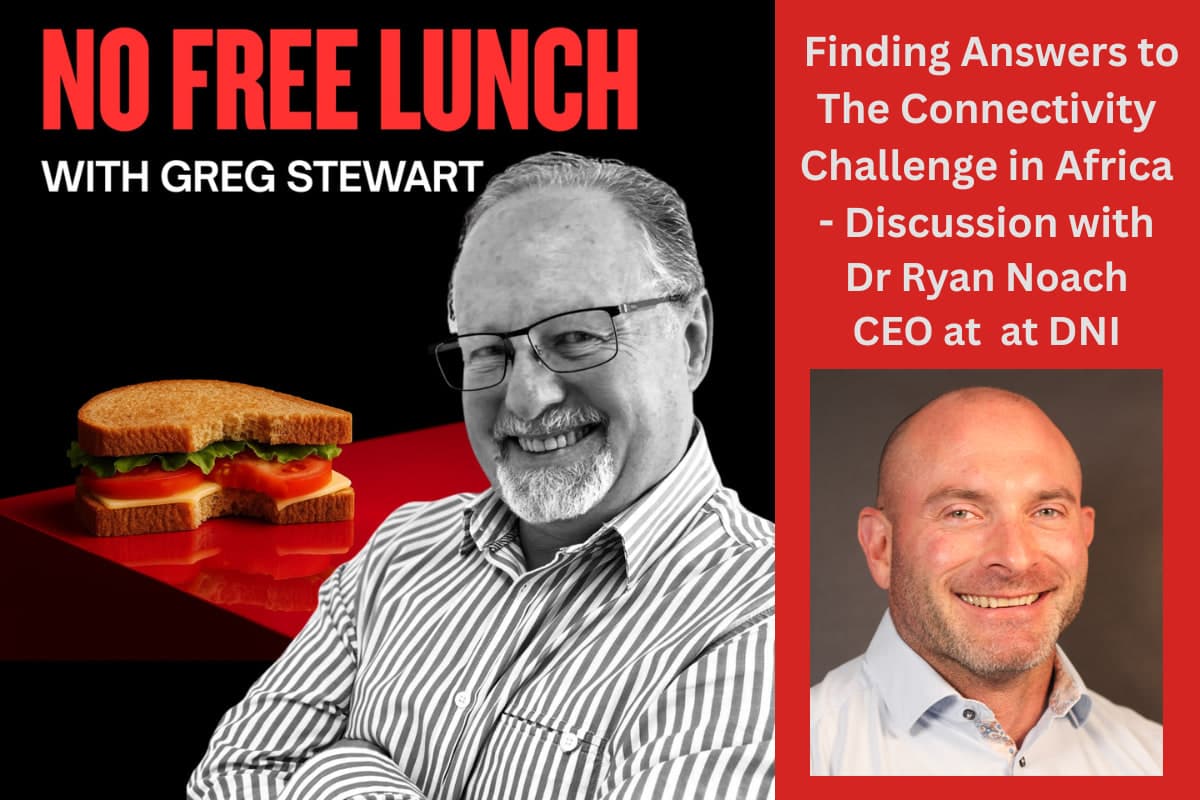
No Free Lunch Podcast with Greg Stewart brings fresh perspectives and discussions with some of Africa's top entrepreneurs
AI-generated summary. It can miss nuance — read the full story above for the complete picture.
Dr Ryan Noach’s career is anything but conventional. From emergency medicine and helicopter rescue services to senior leadership at Netcare, Discovery Health and now DNI, his journey reflects a consistent appetite for entrepreneurship, innovation and meaningful societal impact. In this engaging conversation with Greg Stewart, he explains how his experiences shaped a broader mission: expanding connectivity, affordability and digital inclusion across South Africa and the wider African continent.
Evolution of an Interesting Career Path
From trauma care to business leadership, Noach describes his career as having evolved “by default, not by design.” His early work in Johannesburg’s trauma unit and helicopter emergency service exposed him to high-pressure problem-solving and the importance of allocating limited resources effectively. When government funding for the helicopter service was withdrawn, the team responded entrepreneurially by helping privatise the operation, ultimately contributing to the development of Netcare 911.That experience led Noach into corporate leadership, first at Netcare and later at Discovery, where he became CEO of Discovery Health.
Entrepreneurial Accent
He says joining DNI marked a return to his entrepreneurial instincts and gave him the opportunity to work with innovative founders focused on building new businesses.DNI’s connectivity ecosystem.
Noach explains that DNI is built around a clear purpose: broadening connectivity to promote financial inclusion and better digital experiences. Rather than focusing on a single product, the group has developed an integrated ecosystem involving SIM-card distribution, mobile devices, affordability solutions, fibre and digital services. DNI has this last week announced a R2.1 Billion investment to expand connectivity, driving digital and financial inclusion in South Africa
SIM card"s - Here to Stay
The group’s origins lie in an inventive distribution model. SIM cards were added to bread deliveries, using an existing logistics network to reach informal shops and taverns that traditional mobile operators struggled to access. Today, DNI distributes physical SIM cards at scale through approximately 40,000 digitally enabled agents.Affordability and accessAlthough eSIM technology is growing globally, Noach notes that physical SIM cards remain important in Africa because affordable feature phones often cannot support eSIM technology.
Ryan also highlights the challenge of expensive smartphones and traditional credit models.Through Mission Mobile, DNI is helping customers access devices through smaller, bite-sized payments linked to affordable connectivity. This approach supports people who may be declined for conventional contracts but still need reliable digital access.
Fibre Strategy in Underserved Communities
Noach explains that fibre can be economically viable in informal settlements because high household density lowers the cost of connecting homes. Fibre operators can use aerial infrastructure rather than expensive trenching, install routers proactively and offer prepaid access.The model delivers more than internet access.
It furthermore supports education, remote work, entrepreneurship and financial inclusion. Community involvement, free connectivity for schools and local job creation also help protect infrastructure and build trust.
Looking ahead, Noach believes DNI’s mission can scale beyond South Africa, particularly across Africa, where demand for mobile connectivity and digital payments remains substantial.