Meta's Nigerian data case could change how SMEs advertise online
Meta
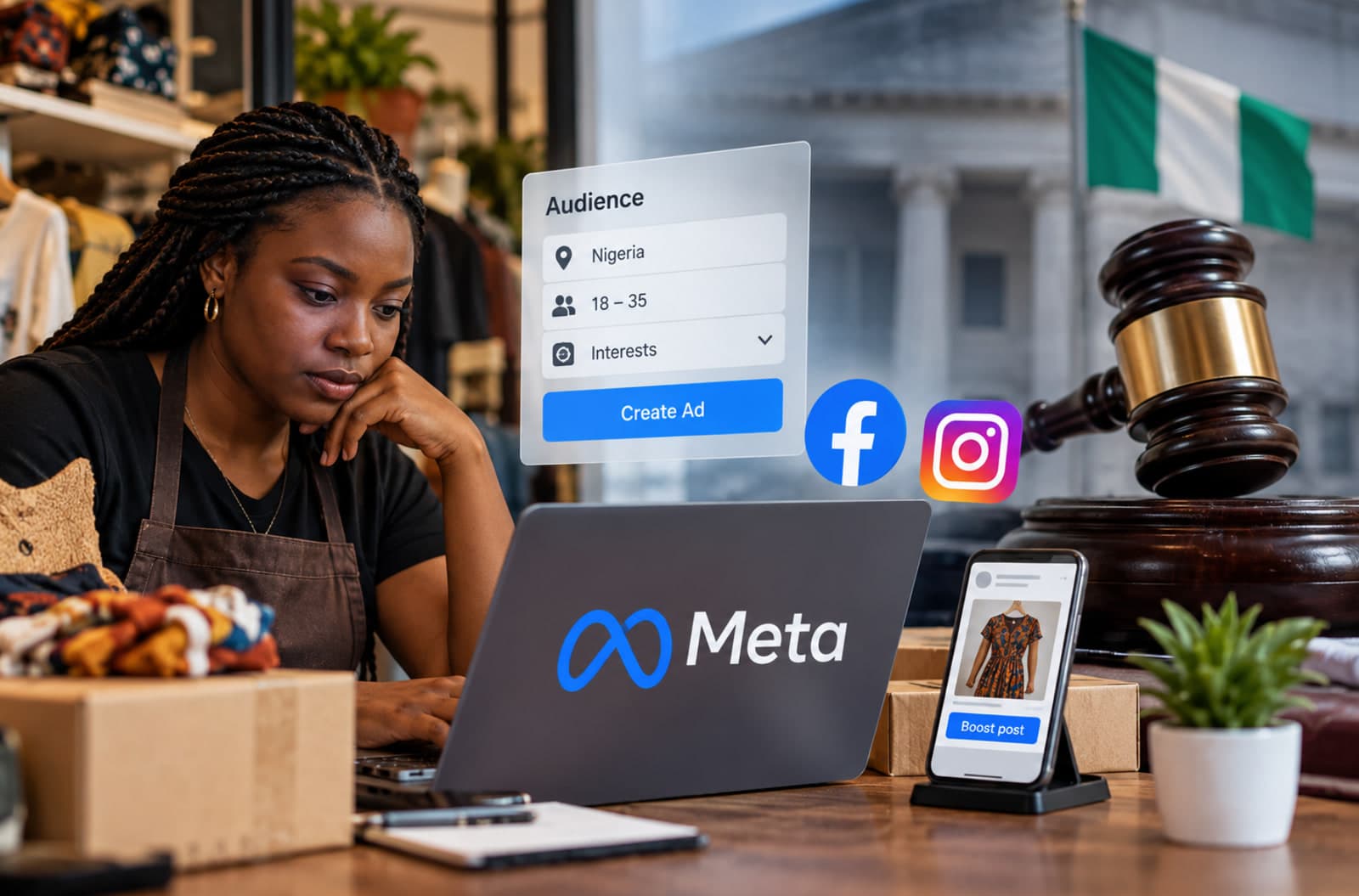
Meta’s fight with Nigerian users over data tracking could eventually affect businesses that use Facebook and Instagram to advertise.
The company has appealed a Lagos High Court ruling that found it had unlawfully processed Nigerian users’ personal data for behavioural advertising. The court ordered Meta to stop the processing and take steps to comply with Nigeria’s data protection law.
AI-generated summary. It can miss nuance — read the full story above for the complete picture.
Meta’s fight with Nigerian users over data tracking could eventually affect businesses that use Facebook and Instagram to advertise.
The company has appealed a Lagos High Court ruling that found it had unlawfully processed Nigerian users’ personal data for behavioural advertising. The court ordered Meta to stop the processing and take steps to comply with Nigeria’s data protection law. For SMEs, the concern is less about the $100,000 damages awarded against Meta and more about the advertising system behind Facebook and Instagram.
Small businesses use Meta’s platforms to find customers, promote products and run targeted campaigns without having to buy traditional media.
A clothing business can target people in a particular city. A restaurant can advertise to people nearby. An online seller can build audiences based on interests and previous activity.Much of that depends on the data Meta collects and analyses.
The court challenged that model
Meta argued that Facebook and Instagram are free services funded by advertising. Users agree to the company’s terms and privacy policy when they sign up. The court rejected the argument that this automatically gives Meta the right to use their data for behavioural advertising. Justice A.F. Pokanu found that profiling users and tracking their behaviour for advertising is not necessary to provide the basic social-networking service. The court also found that Meta had not shown that the applicants had provided valid consent for the processing. Meta is challenging those findings in the Court of Appeal.
What could change for SMEs?
If the ruling survives the appeal, Meta may have to change how it obtains consent from Nigerian users and how it uses their information for personalised advertising. That could affect the amount of data available for audience targeting. For SMEs, that may mean less precise targeting on some campaigns. It could also make it harder for a small business to reach a very specific group of potential customers using Meta's existing advertising tools. That does not mean Facebook and Instagram advertising would disappear. It means the information behind some targeting tools could change.
SMEs may need their own customer data
The case also highlights why businesses should not rely entirely on a social media platform to reach customers. An SME with its own website, customer database, email list or consented WhatsApp contacts has another way to reach people if an advertising platform changes its rules.
This is particularly relevant in Nigeria, where SMEs across retail, restaurants, professional services and technology businesses collect customer information as part of their day-to-day operations. Those businesses also have their own responsibilities when collecting and using personal information. The NDPA applies to businesses that collect customer information and decide how that information is used.
It could also affect cross-border services
The Lagos court also ruled that Meta remained responsible for Nigerian users’ data even when that information was processed outside Nigeria. The court found that users do not decide where their information is stored or processed and held that Meta had to comply with Nigerian requirements covering international data transfers.
That part of the judgment is relevant to SMEs using foreign technology providers. A Nigerian business may use an overseas CRM, email platform, cloud service, payment system or marketing tool without physically storing customer information itself. Where that data goes and who processes it can therefore become a business consideration, not just a legal one.
Meta's appeal leaves the question open
The High Court ruling is still subject to appeal. For SMEs, the immediate question is whether Meta will have to change its advertising tools for Nigerian users. If it does, businesses that depend heavily on Facebook and Instagram may have to adjust their targeting and put more effort into building direct customer relationships.
The case is therefore not just about what Meta can do with user data. It could also affect how thousands of smaller businesses find and advertise to customers online.
::