
Kenya Orders Tata Chemicals Out of Magadi as It Pushes Local Processing
Kenya has ordered Tata Chemicals Magadi to stop operations as the government seeks to reshape the economic model around the Magadi soda ash operation, with greater emphasis on local processing, jobs and domestic value creation.
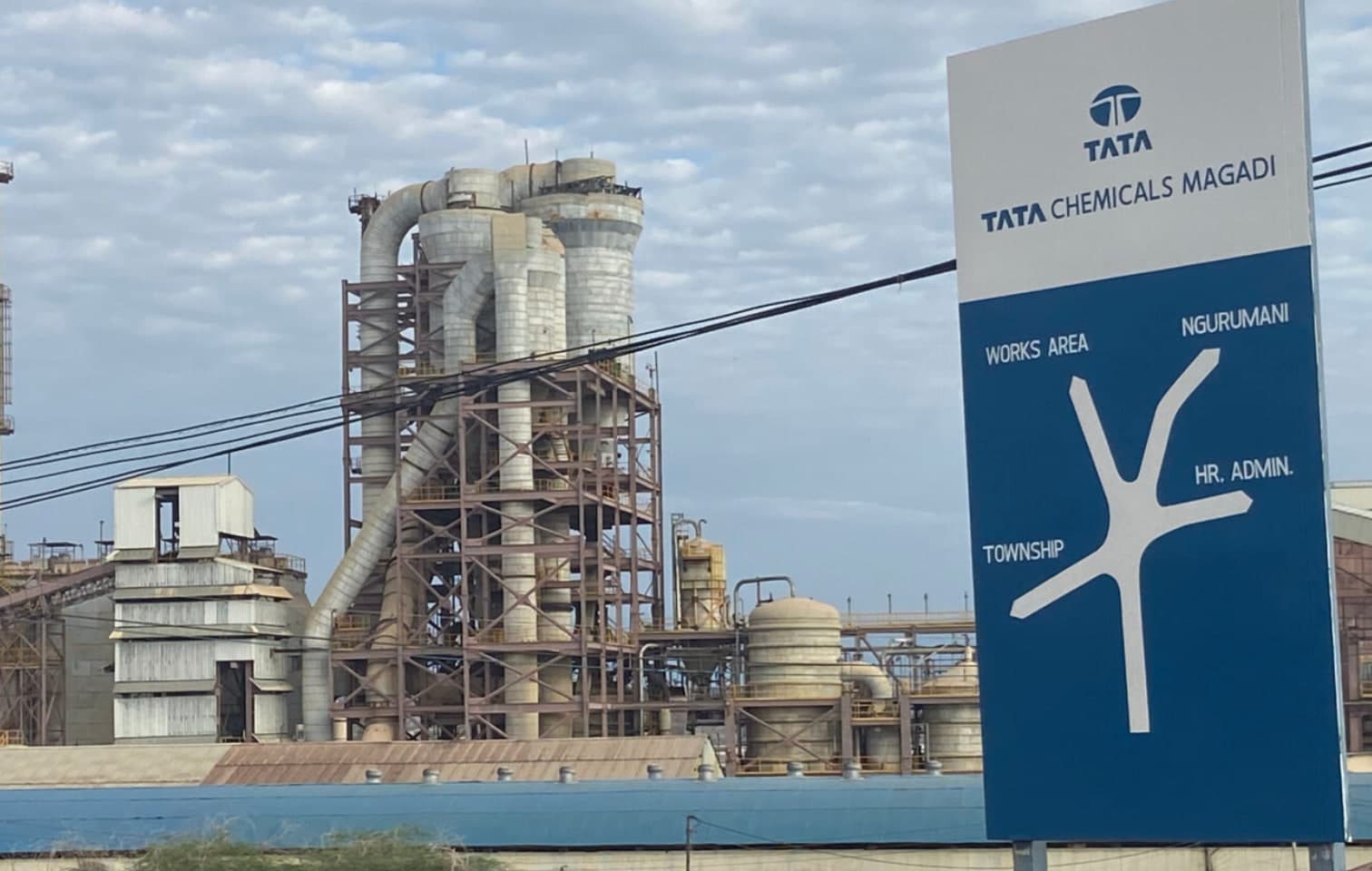
Magadi plant
Kenya has ordered Tata Chemicals Magadi to stop operations as the government seeks to reshape the economic model around the Magadi soda ash operation, with greater emphasis on local processing, jobs and domestic value creation.
President William Ruto said new operators would replace Tata, following a suspension imposed in late July. The government has raised concerns over royalties, exports, employment, local procurement, community obligations and environmental compliance.
Tata Chemicals disputes the concerns and says it has met the regulatory requirements set by the authorities.
The move also raises questions over the future of Tata's existing rights at Magadi. In 2025, a Kenyan court reaffirmed that the company's operating lease runs until 2053, leaving uncertainty over how the government intends to terminate or transfer those rights.
Tata's long-running Magadi operation
Soda ash production at Magadi dates back to 1911, when the Magadi Soda Company began operations. Tata Chemicals entered the business in 2005 after acquiring Britain's Brunner Mond, which owned the Kenyan operation.
The company processes trona recovered from Lake Magadi into soda ash at the site before transporting the product by rail to Mombasa for export.
Tata says more than 95% of its production is exported, supplying markets in Asia, the Middle East and other parts of Africa. The company describes Tata Chemicals Magadi as Africa's largest soda ash producer and one of Kenya's leading exporters.
The operation has also faced disputes with Kenyan authorities. Tata has been involved in a long-running disagreement with Kajiado County over land rates and royalties.
In October 2025, the Court of Appeal ruled in Tata's favour on several aspects of that dispute and reaffirmed the extension of its operating lease through 2053.
Government raises concerns over economic benefits
The latest confrontation began in July when the national government suspended Tata's operations.
The Ministry of Mining cited outstanding issues concerning royalties, export reporting, local processing, employment, Kenyan suppliers, community commitments and environmental compliance.
Tata rejected the allegations. On August 17, the company said it had provided the documents requested by the authorities and demonstrated compliance with regulatory requirements. It said it was waiting for approval to resume operations.
The government's latest position now goes beyond the immediate regulatory dispute and points to a broader change in how Kenya wants the Magadi resource developed.
Kenya wants downstream industries at Magadi
Ruto said future operators would be expected to develop industries that use soda ash as an input, including glass and chemical manufacturing.
The government's objective is to increase the amount of value retained in Kenya by linking soda ash production to downstream manufacturing. Nairobi also expects the model to create additional employment and expand opportunities for Kenyan businesses supplying the operation.
The shift would give Magadi a role beyond mineral processing and exports and tie the operation more closely to Kenya's industrialisation strategy.
For Tata, however, the government's approach creates uncertainty around an operation it has held for more than two decades and whose current lease extends well into the future.
Legal questions remain
The government has not identified the companies expected to replace Tata, disclosed the scale of investment planned for the proposed downstream industries or provided a timetable for their development. The legal basis for ending Tata's existing operating rights also remains unclear.
The 2025 court ruling reaffirmed the company's lease through 2053, meaning the government would need to address those existing rights if it intends to remove Tata and transfer the operation to new investors.
Whether the government can terminate or transfer the lease under the applicable legal framework, and whether Tata will challenge the decision, could determine the next stage of the dispute.