Dangote's $16 Billion Kenya Lamu Refinery Clears PPP Legal Challenge
Dangote Group has secured an initial legal victory in Kenya after the country's Public-Private Partnership (PPP) Committee dismissed a challenge to the legal status of its planned refinery in Lamu.
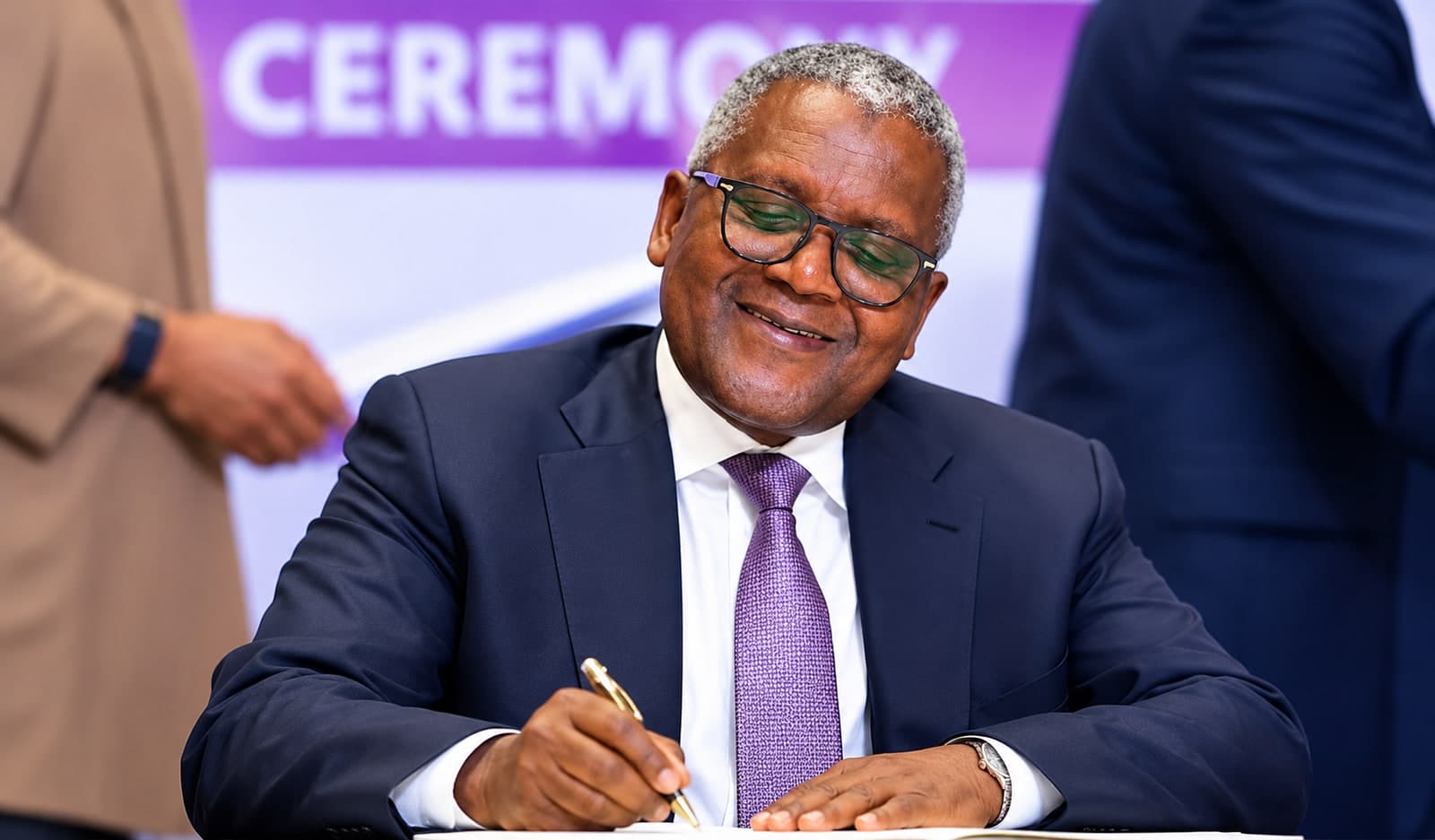
Dangote
Dangote Group has secured an initial legal victory in Kenya after the country's Public-Private Partnership (PPP) Committee dismissed a challenge to the legal status of its planned refinery in Lamu.
The committee issued its decision on October 30, making it public on November 5. It ruled that the Consumers Federation of Kenya (COFEK) had failed to demonstrate that the project qualified as a public-private partnership under Kenyan law.
COFEK filed its petition on September 30, the day Kenyan President William Ruto and Dangote Group founder Aliko Dangote launched construction of the refinery. The consumer advocacy organisation had asked the committee to review the project under Kenya's PPP legislation and sought access to feasibility studies, financing agreements and details of the project's risks.
However, the committee found that COFEK had not established that the refinery involved a private company performing a public function on behalf of a government contracting authority. It also concluded that the complainant had failed to identify a decision within the committee's jurisdiction that could be reviewed.
The ruling removes the PPP challenge but does not settle questions surrounding government investment, public financial commitments or the project's outstanding permits.
Kenya's Potential Investment Remains Undecided
Kenya is still considering whether to take an equity stake in the refinery, but the government has not disclosed a proposed investment amount or committed public funds to the project.
Treasury Cabinet Secretary John Mbadi told the committee that discussions over possible state participation were ongoing. He said any investment would fall under Kenya's public investment regulations rather than the PPP framework.
The National Infrastructure Fund, which has been considered as a possible vehicle for the investment, also told the committee that it had not made a decision on the project. Any contribution would need to comply with the fund's establishing legislation and investment policy.
Dangote Group representative Peter Lazarus maintained that the refinery was being developed, financed, owned and operated by a private company, with no public equity contribution received. The Treasury, however, acknowledged that the project benefits from incentives associated with its special economic zone status.
Refinery Targets 2030 Start-up
The proposed $16 billion industrial complex is planned to process up to 700,000 barrels of crude oil per day. It will also include a 1,000-megawatt power plant, alongside fertiliser and chemical production facilities.
Dangote Group is targeting commissioning in 2030, making the development one of the largest proposed industrial investments in East Africa.
The PPP Committee's decision does not end the project's legal difficulties. A separate case before Kenya's High Court is seeking clarification on government financial commitments and potential public guarantees. Residents of Lamu are also challenging the conditions under which land was allocated for the industrial complex.
The committee's decision addresses only the project's classification under Kenya's PPP framework. Separate legal proceedings concerning potential government financial commitments and the allocation of land for the refinery are still ongoing.