
Concerns for new food labels in SA
Experts at Webber Wentzel have revealed that the new food labelling laws that the Department of Health wants to introduce may be more harmful than good. It was in April when the minister proposed changes to the Foodstuffs, Cosmetics and Disinfectants Act, which opened the Regulations Relating to the Labelling and Advertising of Foodstuffs for

Concerns for new food labels in SA
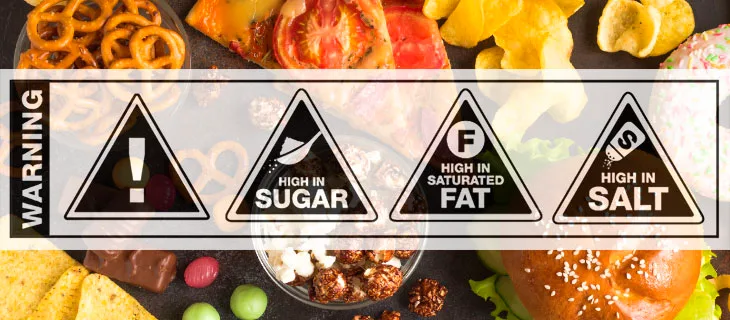
Experts at Webber Wentzel have revealed that the new food labelling laws that the Department of Health wants to introduce may be more harmful than good.
It was in April when the minister proposed changes to the Foodstuffs, Cosmetics and Disinfectants Act, which opened the Regulations Relating to the Labelling and Advertising of Foodstuffs for public comment.
The new regulations are set to introduce quite a number of changes to food marketing, with the most notable being that items that are high in sugar and fat have to come with a warning as well as to stop these items from being marketed to children.
The department stressed that it wants mandatory front-of-package labelling (FOPL) to be seen on any pre-packaged foodstuffs that has added saturated fat, added sugar, added sodium and exceed the nutrient cut-off values for total sugar, total sodium or total saturated fatty acids. A label similar to that one must also be used on products with artificial sweeteners.
Yolandi Robbertse and Bernadette Versfeld from Webber Wentzel exposed that the new regulations would come at a massive cost to producers. They said that trademark portfolios will need to be revised, requiring new trademark applications to be filed and amendments to existing trademarks. In respect of copyright portfolios, artworks will also have to be amended and media and digital advertisements revised and reinstated.
“The significant costs associated with all these additional measures come at a time when brand owners are already confronted with a challenging economy. We note in this regard that the JSE’s food producers index is down by 16% with rising production and distribution costs, exacerbated by load-shedding.” – Robbertse and Versfeld added.
Moreover, the experts also revealed that the draft regulations have gone too far and could see multinational companies exit the South African market. The draft regulations have the possible ability to do serious damage to companies that have spent decades building their brands and relationships with consumers.
This approach seems to be based on a combination of the European Union (EU), Australian and Chilean approaches, with the most restrictive measures coming from Chile. Even though Chile adopted extremely strict regulations in 2016 to address childhood obesity, Chile’s obesity rate still managed to climb up from 51.2% in 2016 all the way to 58% in 2022.
Recent studies have shown that there is limited evidence that unhealthy food advertising affects dietary behaviour, and Robbertse and Versfeld added that the models used in Australia, Canada or the EU, whilst still imposing strict requirements, are better for businesses than the Chilean model.
We have to also look at the risk that the additional costs related to compliance with FOPL and extensive warning signs will be passed onto consumers who are already facing heightened food inflation.
The deadline for public comment on the Regulations Relating to the Labelling and Advertising of Foodstuffs is 21st of July 2023