Bloccpay wants to make it easier for African workers to receive salaries from abroad
Jennifer Echenim had a job that paid her from abroad, but getting her salary into her bank account in the United Arab Emirates (UAE) was a monthly headache.
Bloccpay
Jennifer Echenim had a job that paid her from abroad, but getting her salary into her bank account in the United Arab Emirates (UAE) was a monthly headache.
AI-generated summary. It can miss nuance — read the full story above for the complete picture.
Jennifer Echenim had a job that paid her from abroad, but getting her salary into her bank account in the United Arab Emirates (UAE) was a monthly headache. One payment service gave her the documents she needed to prove her income, but transfers were slow and currency conversion was expensive. A cryptocurrency exchange was quicker, but its transaction records were not accepted by the banks she dealt with as proof of salary.
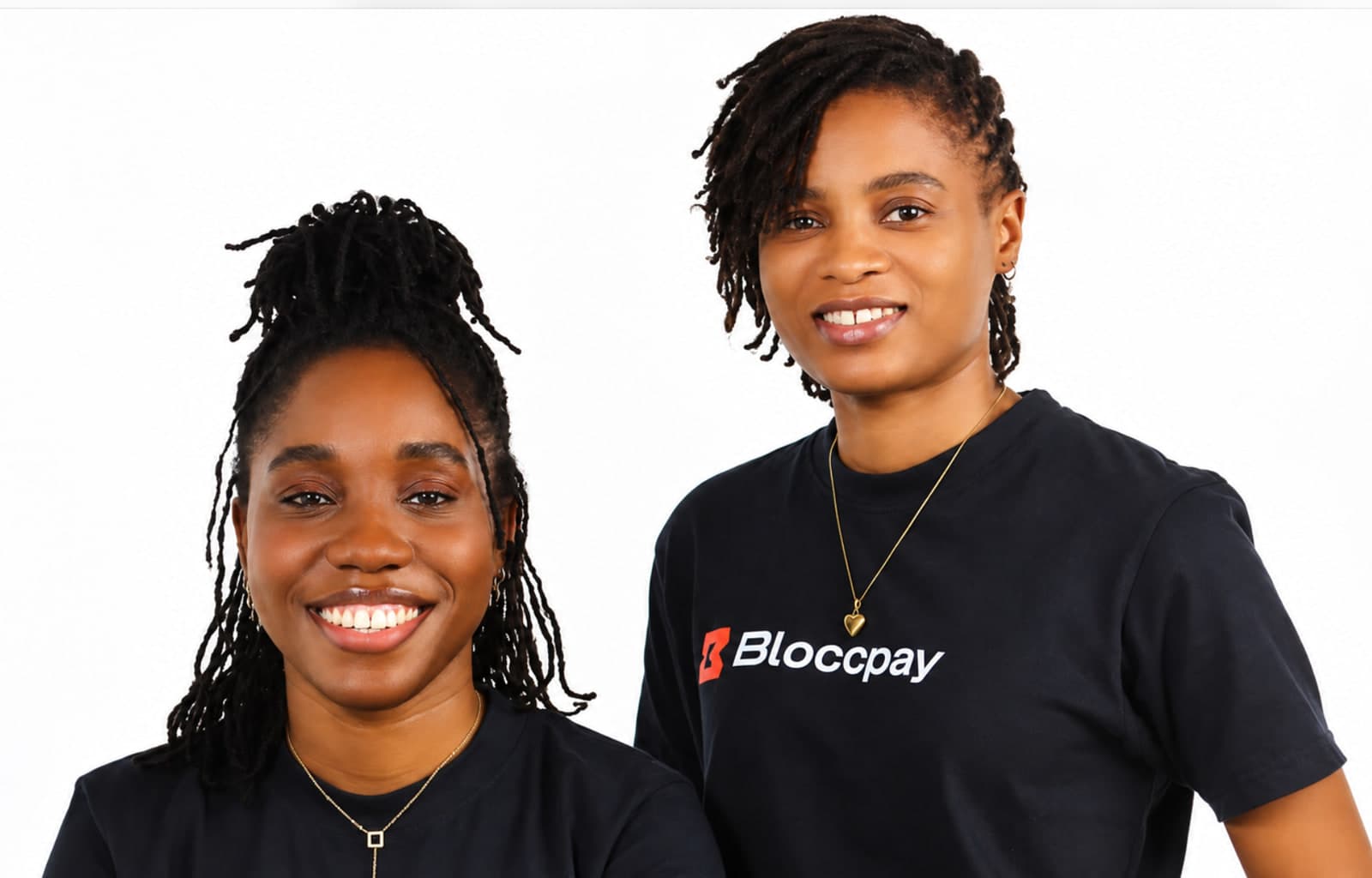
She ended up sending money through friends, converting dollars into stablecoins and using peer to peer trades to get the funds into her UAE bank account. Echenim, a software engineer with experience in blockchain, decided to build a service that could handle the payment and the paperwork. She teamed up with Ajoke Asunmonu to start Bloccpay, a payroll and invoicing platform that uses stablecoins to move money across borders. The idea took shape in 2022, and the company began private beta testing in 2023.
Getting paid is only part of the job
“A payment notification does not always mean the money is ready to use.”
For someone working remotely for a company in another country, a payment notification does not always mean the money is ready to use. They may still need to convert it into local currency, transfer it to a bank account and keep records showing where the money came from. Those records can matter when applying for a visa, renting a home or opening a bank account.
A history of cryptocurrency transactions may show that funds moved between wallets, but it may not explain the employment or contract behind the payments. Bloccpay is designed to handle both sides of the process. Businesses can register on the platform, verify their company details and add employees or independent contractors. They can arrange weekly or monthly payments and fund them using traditional currency or cryptocurrency.
Bloccpay supports multiple blockchain networks, allowing workers to receive payments without requiring their employers to manage each network separately.
The platform also produces digital payslips and payment receipts. Contractors can create invoices with contracts, proof of work documents and VAT calculations attached. For a freelancer paid by a foreign client, that means having a record of the work and payment in one place, rather than trying to piece together the details later.
What users pay
Bloccpay charges $15 per contractor each month for payroll processing. It also charges 1% on invoices and a 1% withdrawal fee when users move funds out of the platform. The company wants to build beyond payroll and invoicing. Its plans include adding services such as health insurance, travel bookings, gym memberships and utility payments. For now, it is concentrating on growing payment volumes and improving access to services that convert digital assets into local currency.
The paperwork still has to pass the test
Bloccpay operates in a market that includes Bitwage, Request Finance and Rise Works, which also offer services for paying workers across borders. Its focus is on the needs of African workers earning from international employers and clients. Stablecoins can make transfers faster, but they do not remove every cost. Workers may still pay to convert funds into local currency or withdraw them into a bank account. The options available also differ from one country to another.
There is another limitation: a payslip generated by Bloccpay will not automatically satisfy every bank or immigration authority. Each institution has its own rules about the documents it accepts as proof of income. That leaves Bloccpay with two jobs. It needs to make payments easier to manage, and it needs to give workers records that are useful when someone asks how they earn their money. Echenim's experience in the UAE showed how frustrating it can be when those two things do not come together. Bloccpay is her attempt to solve that problem for other people earning across borders.