Amr El Fangary uses AI to build WonderBooks into a library of more than 2,000 stories
Amr El Fangary spent years trying to get WonderBooks off the ground. He launched the digital reading platform in 2016, but it struggled to attract users. When he returned to the project, AI tools gave him a different way to build it.
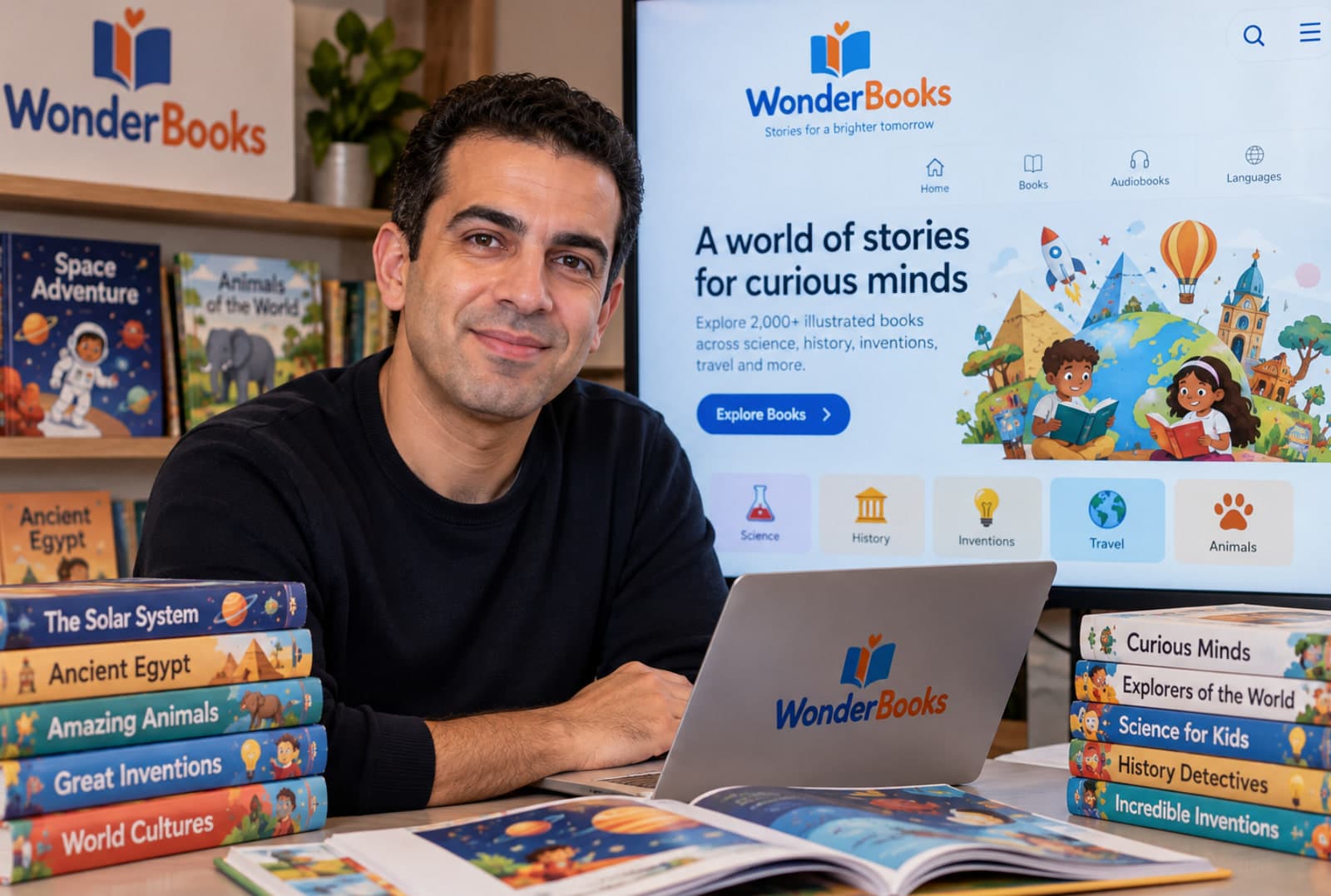
Amr El Fangary
Amr El Fangary spent years trying to get WonderBooks off the ground. He launched the digital reading platform in 2016, but it struggled to attract users. When he returned to the project, AI tools gave him a different way to build it. El Fangary used AI to produce stories, illustrations and audio narration.
AI-generated summary. It can miss nuance — read the full story above for the complete picture.
Amr El Fangary spent years trying to get WonderBooks off the ground. He launched the digital reading platform in 2016, but it struggled to attract users. When he returned to the project, AI tools gave him a different way to build it. El Fangary used AI to produce stories, illustrations and audio narration. WonderBooks now has more than 2,000 illustrated books covering subjects such as science, history, inventions and travel. Readers can access stories in different languages and choose to read or listen to them.
For one founder, that is a substantial library to produce without employing separate teams of writers, illustrators and developers. But getting thousands of books onto a platform is one challenge. Getting people to use it regularly, and pay for it, is another.
One founder doing several jobs
“A large catalogue is of little value if customers cannot find what they need or see no reason to pay for it.”
Producing a digital book involves more than writing a story. Someone has to prepare the illustrations, edit the text and put the finished product together. Audio and translated versions add more work. AI allows El Fangary to handle much of this production himself. For a small publisher, similar tools could reduce the cost of creating children's books, learning materials or content in several languages. There is still work to do after a story has been generated. The text needs to be checked for errors, illustrations must fit the story, and translations need to read naturally. Publishers also have to consider the cost of software, hosting and marketing. The savings depend on how the tools are used and how much checking each book requires. Producing more titles does not automatically make the business cheaper to run.
Building a library is only half the job
WonderBooks offers a free library and is working towards a membership model. El Fangary has said the platform has reached readers in around 150 countries, although it has not officially launched. That gives the business a starting point, but the number of countries reached does not show how often readers return or how many are willing to pay for access. Those figures will matter when the company works out whether subscriptions can cover its costs.
The same issue applies to small publishers, educators and other businesses selling digital content. AI can help them produce more material without increasing staff numbers at the same rate. But a large catalogue is of little value if customers cannot find what they need or see no reason to pay for it. A small education business, for example, could use AI to prepare learning materials for different age groups or languages. Before producing hundreds of resources, it would still need to find out what teachers and parents want, what they can afford and where they look for those materials.
Can the model pay for itself?
WonderBooks shows how AI has changed the amount of content one person can produce. El Fangary has been able to expand the library without building a conventional publishing team for every task. The commercial side is harder to judge. The available figures do not establish how much revenue WonderBooks earns, how many paying subscribers it has or whether the business is profitable. For other small businesses considering AI, that distinction matters. Saving time on production is useful, but the money saved needs to outweigh the cost of the tools and the work required to check the output. The finished product must also give customers a reason to buy. El Fangary has built a library of thousands of stories. The next measure of success will be whether WonderBooks can turn that catalogue into a service readers return to and are willing to pay for.