Africa's Minerals Come into Focus at 2025 Critical Minerals Summit
Despite being endowed with vast Critical Mineral resources, Africa's true wealth remains largely untapped, with the continent's minerals often being extracted and exported in raw form, only to be transformed into value-added products elsewhere. This missed opportunity means that Africa has not realized the full value of its mineral wealth, with the benefits of its
Africa's Minerals Come into Focus at 2025 Critical Minerals Summit
Despite being endowed with vast Critical Mineral resources, Africa’s true wealth remains largely untapped, with the continent’s minerals often being extracted and exported in raw form, only to be transformed into value-added products elsewhere. This missed opportunity means that Africa has not realized the full value of its mineral wealth, with the benefits of its natural resources largely adding to other regions. To change this narrative, African nations must prioritize local processing and manufacturing, adding value to their minerals before export. By doing so, they can unlock the true potential of their resources, drive economic growth, create jobs, and increase revenue, ultimately realizing the full value of their mineral wealth and propelling the continent towards sustainable development and prosperity.
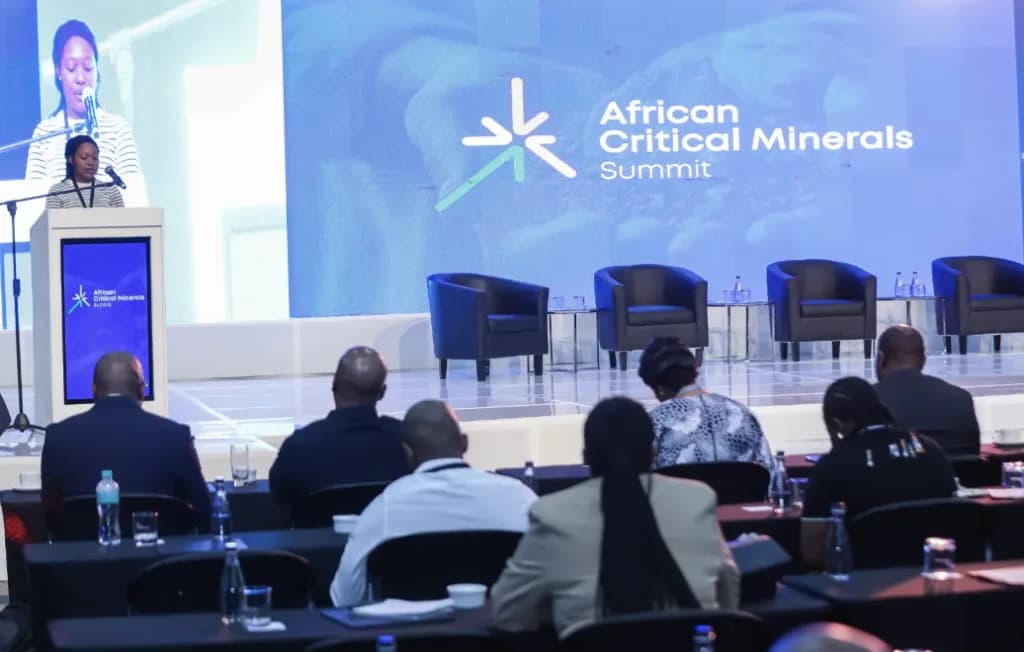
It was against this backdrop that The two day African Critical Minerals Summit 2025 officially opened yesterday in Gauteng under the theme “The True Value of Africa’s Critical Minerals.” The gathering drew policymakers, financiers, industry leaders, and economists to chart pathways for transforming Africa’s vast mineral wealth into inclusive and sustainable prosperity
Building on Past Momentum
In her opening remarks, Sthembiso Dlamini, Acting CEO of the Gauteng Growth and Development Agency, welcomed delegates and emphasized the urgency of translating Africa’s mineral potential into tangible benefits for local economies. A recap of the 2023 and 2024 summits highlighted progress on regional policy coordination, setting the stage for deeper debates around governance and development.
Gregory Mofokeng, Vice President of the Black Business Council, followed with a strong message on collaborative growth, stressing that the mining sector must become a driver of transformation across industries.
Turning Resources into Opportunity
Dr. Matthews Phosa addressed the theme “Political Stability and the Resource Curse: The Role of Critical Minerals in Political Stability Avoiding the Resource Curse,” highlighting governance and accountability as crucial elements in this context. He noted that without strong institutions, mineral abundance could undermine rather than strengthen political stability, and that Africa’s mineral wealth should serve as a foundation for social inclusion and economic resilience. Drawing on his experience in the mining sector, from its historical reliance on coal to the emergence of new players in coal, chrome, platinum, and copper, as well as his own journey from public service to chairing Jubilee Metals, a company that evolved from a concept to one of the world’s largest chrome processors, he offered a unique perspective on how mining can evolve into an inclusive, innovative, and sustainable enterprise..
At the same time, economists like Bongani Motsa of the Minerals Council South Africa stressed the opportunities presented by the global energy transition. With Africa holding some of the world’s largest reserves of cobalt, platinum, copper, and lithium, he noted, the continent must prioritize beneficiation and local manufacturing to capture greater value from its resources.
Sovereignty and Global Power Dynamics
The conversation also turned to sovereignty and Africa’s position within global power structures.Which explored how critical minerals are shaping geopolitical dynamics, urging African leaders to adopt strategies that give the continent greater negotiating power and ensure local communities see direct benefits.
Financing Africa’s Value Chains
The afternoon session focused on financing, with a high-level panel discussion emphasizing the financial sector’s crucial role in unlocking Africa’s mineral wealth. Representatives from Absa and Standard Bank shared insights on structuring investment models that support infrastructure and processing projects, while Natasha Gombakomba from Nedbank emphasized the importance of blended finance solutions in mitigating risk for emerging enterprises. The panel agreed on the view that banks need to adopt a more innovative approach, moving beyond traditional lending to empower local businesses and fortify value chains.