What Happens to Mining Skills When the Equipment Goes Digital?
African mining companies are putting more automation, robotics, artificial intelligence and connected equipment into their operations.
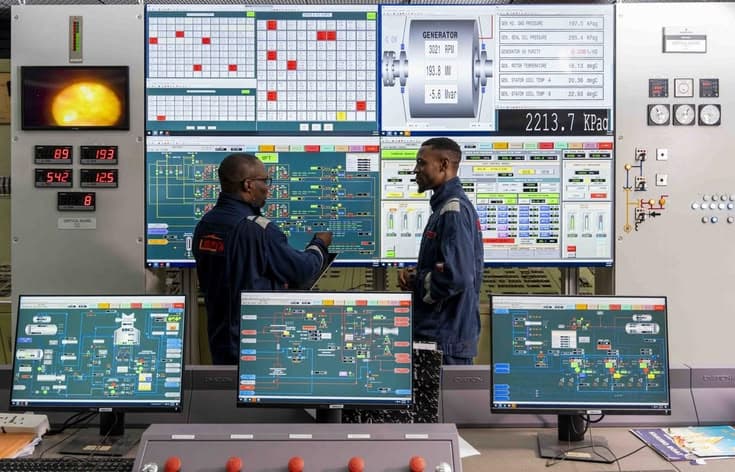
Process Plant Control
African mining companies are putting more automation, robotics, artificial intelligence and connected equipment into their operations. As these technologies become part of everyday mine operations, they are also changing the skills required across the workforce.
Operators, technicians, technologists and engineers are increasingly expected to work with automation, data, remote operations, robotics and digital systems alongside their conventional mining expertise. This is changing what it takes to operate and maintain a modern mine.
For mining companies, that creates a workforce development issue. Investing in automated equipment and sophisticated software is one thing; having people who can operate the systems, maintain them and understand the data they produce is another.
This is where micro-credentials offer mining companies a way to train employees in specific areas as new technologies are introduced. The courses are typically shorter than conventional qualifications and can focus on practical skills needed in the workplace.
The Skills Behind the Technology
The change is already visible in mining jobs that have traditionally been built around mechanical, electrical and operational skills. An equipment operator needs to understand digital control systems and remotely operated machinery. Technicians need skills in sensors, industrial networks, robotics and predictive maintenance. Engineers are increasingly working with operational data, digital twins, artificial intelligence and automated decision-support systems.
The challenge is adding these capabilities to a workforce that already has years of mining experience.
South Africa's Mining Qualifications Authority (MQA) has identified cloud computing, AI, robotics and the Internet of Things among the technologies affecting the mining and minerals sector. Its 2026–2027 sector skills plan also points to gaps in digital literacy and concerns that training material is not keeping pace with technological change.
This is where the argument for shorter, targeted training becomes stronger. Mining companies do not always need to replace an experienced employee when a new technology is introduced. They need to give that employee the skills required to work with it.
Where Micro-Credentials Fit
A technician working on conventional equipment, for example, can add training in industrial automation, sensors or predictive maintenance as the mine introduces connected systems.
An engineer can build additional skills in data analytics or machine learning, while an operator can train in the systems used to control automated or remotely operated equipment.
The attraction of micro-credentials is their focus. Training can be linked to a particular technology or competency and completed while employees remain in the workplace.
UNESCO-UNEVOC has identified micro-credentials and digital badges as tools for addressing skills gaps and giving workers verifiable evidence of specific competencies.
The African Continental Qualifications Framework has also examined their role in connecting training with labour-market requirements. For mining, the issue will be whether these credentials are recognised by employers and linked to the skills actually required at operating mines.
Are Mining Companies Using Them?
The evidence of widespread adoption across Africa is still limited.
Mining companies and training institutions are developing programmes around automation, robotics, artificial intelligence and other 4IR technologies, but micro-credentials have not become a standard workforce-development model across the continent.
South Africa's experience shows why the skills issue remains important. PwC's 2026 research into 4IR in South African mining found that two-thirds of mining companies surveyed had not implemented AI in core operations. Skills shortages were also identified as a significant constraint on AI readiness.
The CSIR has responded through mining learning factories that use technologies including augmented reality, collaborative robots and smart systems to provide practical training linked to mine modernisation.
These initiatives point to a broader issue for the sector. Training has to follow the technology being deployed at mines. Workers handling automated equipment or digital systems need training that reflects those actual working environments.
The Question for African Mining
The success of 4IR in African mining will depend partly on how effectively companies bring their existing workforce into the technology transition.
An operator who understands the mine, equipment and production process brings knowledge that is difficult to replace. The same applies to technicians and engineers with years of experience in specific mining environments.
The challenge is adding the digital skills required to that experience.
Micro-credentials can provide one route, particularly where companies need workers to acquire specific capabilities quickly. But the value will depend on the quality of the training, recognition by employers and how closely it matches the technologies being used on the mine site.
For African mining operators, the real test of 4IR will not be how much automation, robotics or artificial intelligence they install. It will be whether the people operating those systems have the skills to use them properly, keep them running and make better decisions from the data they generate.
That puts workforce development much closer to the centre of the technology investment than it is often treated. A mine can spend millions on new systems, but the value of that investment is ultimately tied to the people expected to operate, maintain and improve them.
If the technology is moving faster than the workforce, the gap will not be solved by buying more technology. Mining companies need to build the necessary skills alongside the systems they are deploying, while operators also need to take responsibility for upgrading their own skills.