
Your Next Customer is Already an AI Agent - Are African startups Marketing to the Wrong Audience?
Dion Chang’s TRENDS briefing at the Experian Summit in Sandton last week maps six shifts that are already under way.
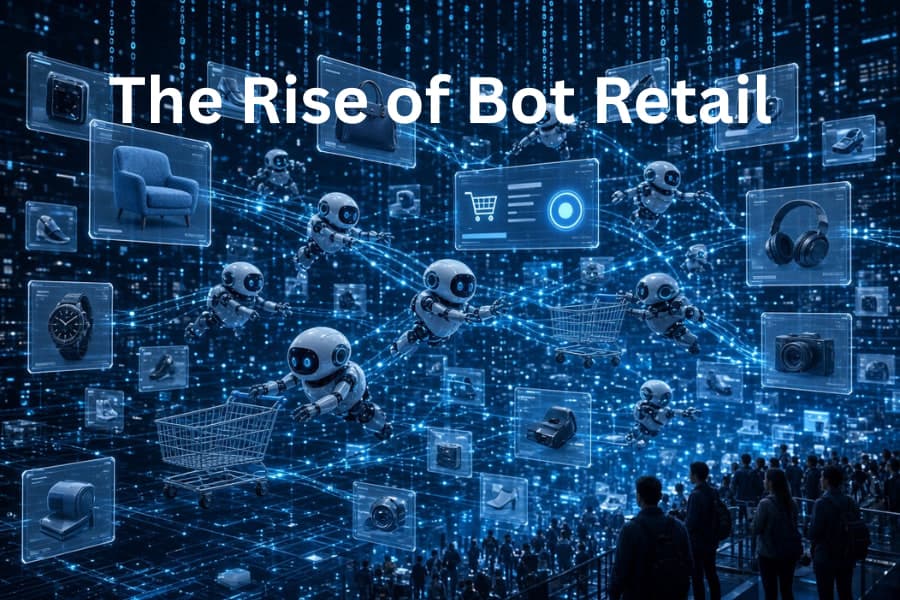
The Rise of Bot Retail
TRENDS already in motion. What African startups must fix before the agents arrive
Dion Chang’s TRENDS briefing at the Experian Summit in Sandton last week maps six shifts that are already under way. For founders and owners of startups and scaling businesses in Africa, the useful question is not whether every detail applies tomorrow, but which parts create immediate risk or room to move. The lessons are valuable because African companies already operate with thinner margins, weaker infrastructure buffers and faster digital adoption than many of their peers elsewhere. Mobile-first markets, high youth populations and heavy reliance on a small number of global platforms mean the same forces Chang described can arrive with less warning and higher cost.
Bot's Overtaking Humans Online
Start with technology. Chang showed that bot-generated content and engagement have already overtaken human-generated material on large parts of the internet, and that AI agents now visit websites more often than people. For an African e-commerce or services startup this changes two practical things.
First, traffic and engagement numbers become less reliable signals of real demand. Second, any process that depends on documents, identity checks or customer complaints can be manipulated at low cost.
Founders who still treat website visits or social metrics as primary proof of growth will misallocate limited marketing spend. The protective move is to build verification that does not rest only on screenshots, ID images or self-reported data. This can mean simple in-person or agent-assisted confirmation for higher-value transactions, or partnerships with local payment and identity providers that already have offline checks.
The gain side is narrower but real: early use of agents for routine supplier outreach, inventory checks or customer follow-up can free scarce staff time, provided the company keeps a human review step before money or contracts move.
Are Bots or Humans your real Clients?
Retail follows the same logic. Chang described agentic commerce, in which software shops, compares and orders on behalf of people, and the rise of fully synthetic influencers. In African markets where many customers already buy through WhatsApp, informal traders or short video, the distance between brand and buyer can shrink further.
Companies that still rely only on search-engine ranking or traditional influencer deals will find it harder to reach the person who ultimately pays. The practical response is to treat generative engine optimisation as a current task rather than a future one: create clear, structured product and service information that an agent can read and act on, while keeping a direct channel (WhatsApp Business, USSD or a simple app) that the end customer still controls.
At the same time, founders should assume that refund claims, delivery disputes and even basic identity documents can be generated or altered. Building a short internal checklist for high-risk transactions, and training the small number of staff who handle money, reduces the chance that AI-assisted habitism becomes a steady leak.
Price Shifts are Rapid and Real
The speculative economy section points to volatility that African businesses already feel. High-frequency trading and geopolitics-driven swings can move commodity prices, shipping costs and exchange rates within hours. Prediction-market style betting on conflict or policy, and the wider normalisation of frictionless gambling, also compete for the same limited household cash that startups try to capture.
The ALICE pattern Chang highlighted—people who have jobs yet cannot afford housing in the cities where they work—appears in Cape Town, Johannesburg, Nairobi and Lagos in different forms. For a scaling business this means customer acquisition costs can rise while average order values stay flat, and that staff retention becomes harder when essential workers cannot live near the workplace.
Owners can protect themselves by shortening cash-conversion cycles, holding more of their working capital in local currency instruments that can be moved quickly, and testing smaller, more frequent pricing or product adjustments rather than large seasonal campaigns. The gain lies in products or services that reduce the friction of daily life for this group: affordable last-mile delivery, flexible payment schedules that do not rely on formal credit scores, or workplace benefits that help staff stay housed.
Environmental Factors
Climate and natural-wealth pressures arrive as both cost and potential tool. Chang’s examples of sudden temperature swings and flood damage are already familiar in parts of South Africa, East Africa and West Africa. Anticipatory insurance models that use satellite and weather data to pay before a disaster fully hits can lower the cost of recovery for farms, logistics firms and retailers that sit in the value chain.
African startups that integrate simple parametric cover, or that partner with insurers testing these products, reduce the chance that one weather event wipes out a season’s inventory or a key route. The same data centres that enable AI also compete for scarce electricity and water. Founders planning any meaningful compute use should map their energy exposure early and look for locations or partners that already have dedicated or renewable supply rather than assuming grid power will remain stable and cheap.
Data Residency and Design
On the diplomacy and power side, Chang’s point about decision compression and concentration of capability in a handful of AI companies is relevant wherever African firms depend on global platforms for cloud, payments or customer tools. When an algorithm makes a credit, content or logistics decision in seconds, the local team has less time to catch an error and less ability to explain it to a regulator or a customer.
The protective step is to keep a human override and an audit trail for any automated decision that affects money, compliance or reputation. The longer-term positioning move is to treat data residency and local partnerships as design choices rather than afterthoughts. Governments in several African markets are already testing rules on where certain data must stay; companies that can demonstrate they control key customer and transaction records will face fewer sudden restrictions.
Changes in Society's Structure
Social shifts round out the picture that Chang paints. Declining birth rates and rising pet ownership are still early in most of Africa, yet the same platforms that spread child-free messaging and pet content also reach young urban customers.
At the same time, younger men in several markets are showing higher rates of church attendance and more conservative voting patterns than younger women. For a startup this is less about ideology and more about audience fragmentation. Content and product positioning that assumes a single “youth” segment will miss groups that respond to different messages and trust different channels. The practical test is to run small, parallel campaigns aimed at distinct segments and measure which ones convert, rather than scaling one broad creative approach.
Keeping the Shifts In Focus - Good for Business Resillience
These lessons are valuable because they describe mechanisms that already change the cost of acquiring customers, verifying transactions, managing energy and weather risk, and retaining both buyers and staff.
African founders cannot wait for perfect data or mature local regulation. The workable sequence is to audit the two or three processes that move the most money or reputation, add a human check or local verification layer where AI or automated scoring is involved, shorten the time between sale and cash, and test one anticipatory or agent-based tool in a limited pilot.
Companies that treat the shifts as operating constraints rather than distant trends will spend less time recovering from avoidable losses and more time capturing the narrower openings that appear when global platforms and local conditions meet.