
The Race Gate on Youth Enterprise Money In South Africa
A look at How Race Classification Is Impacting Entrepreneur Support Programs in South Africa
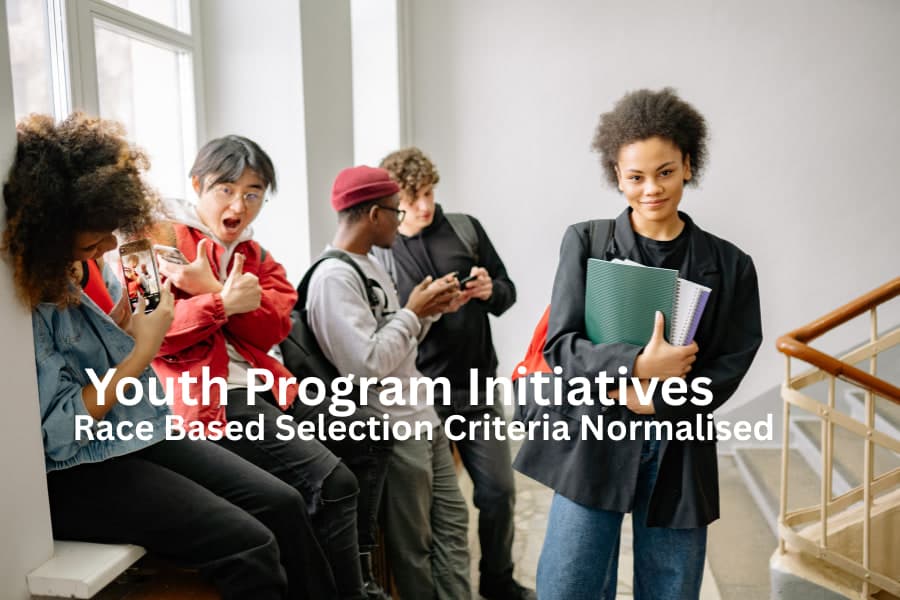
Youth Program Selection Criteria
South Africa’s large banks are again advertising youth enterprise programmes in which race is the condition an applicant must clear before age, place, disability or the quality of the business is even read. The Absa Youth Entrepreneurship Fund, now open for applications, is the latest case. Standard Bank and FNB have used the same kind of gate.
Absa’s programme page says the fund is for young South African entrepreneurs aged 18 to 35 who are running early-stage, black-owned businesses, from a viable idea through to a young business ready to grow. Applications opened on 29 September 2026 and close at 23:59 on 31 October 2026. The Tshiamo Foundation runs the programme for Absa. Support is a conditional grant, released in phases against an agreed plan, with no loan to repay and no equity taken, plus mentoring and market-access support. Coverage of the opening put the fund at R12 million. Absa’s own page does not publish that figure, and neither does it provide a definition for black-owned.
Three Key Questions That Clarify Motive
If the aim is a country that no longer sorts its young people by race, the banks advertising these funds are not neutral messengers. They are choosing the sort, and they are doing it in the open.
Business Tech Africa asked Absa three questions: why race is a criterion, whether disadvantage or disability or other socio-economic factors were not better suited criteria that should be considered instead, and how an applicant is supposed to know whether they meet a black-owned test when the Constitution does not permit classifying citizens by race.
The written reply is plain. The fund is a flagship of the Absa CSI Trust, set up as part of Absa’s broad-based black economic empowerment transaction in 2023. The Trust’s mandate is to advance economic empowerment for black South Africans, with a focus on young people. Race was included, Absa says, so that the fund matches that mandate. As an entity created through the transaction, the Trust must direct its money to initiatives that support the participation of black South Africans.
Absa adds that race is not the only test. Applicants must be 18 to 35, South African citizens, based in South Africa, and a founder or key decision-maker. Inside that pool, Absa says it looks at the person and the enterprise: drive, response to feedback, action already taken, where the business sits, and whether the support will be used well.
It also says it wants reach into rural, peri-urban and township areas, that the application asks about disability, and that it prefers founders for whom the money will change the outcome over founders already served by other capital. Those are sensible tests. They are however applied after the racial condition is met, not instead of it. Absa’s own wording is that they operate within the eligible pool.
On the third question, Absa does not explain a method. It says the criteria follow South African transformation laws. Under the Broad-Based Black Economic Empowerment Act, black people is a generic term for Africans, Coloureds and Indians who are citizens by birth or descent, or who became citizens by naturalisation before 27 April 1994, or after that date only if they would have been entitled to naturalisation before it. Absa says black-owned should be read in that sense. It does not say who decides, what document proves it, or what happens if two people disagree.
That gap is the point. The Act names three groups. It does not say how a person is identified as African, Coloured or Indian. It does not set a pigment test, a language test, or a descent test beyond the citizenship rule.
The Background to Race Classification
The common claim that the Act simply covers people with darker skin is not what the statute says. The South African Population Registration Act of 1950, which forced every person in the country onto a race register under apardheid, was repealed by the Population Registration Act Repeal Act 114 of 1991, with effect from 28 June 1991. The repeal was written to abolish the legal distinction between population groups. The Constitution adopted in 1996 creates no new race register. Section 9 prohibits unfair discrimination on race. Section 9(2) allows measures designed to advance people disadvantaged by unfair discrimination. A permission to design redress is not a working definition of who belongs to which race.
In practice, the system runs on self-classification. Small firms often submit a sworn affidavit. Verification agents, when ownership is checked, generally accept a person’s own statement, and may ask for a further race declaration if someone queries it. There is no public board that classifies a founder the way the apartheid state once did.
The category is also a legal construction, not a colour line. In 2008 the Pretoria High Court held that South African Chinese people who were citizens before 1994 qualify as Coloured for this purpose. Most black African immigrants who took citizenship after 1994 do not qualify, even where a casual reader would call them black. White South Africans do not qualify, including those in poor rural towns. The phrase black-owned hides all of that.
Widespread Race Utilisation in Support Programs
The same gate appears at the other big banks. Standard Bank’s Youth Forward programme, run with the Gordon Institute of Business Science, has required applicants aged 18 to 35, with a business at least a year old, annual revenue of at least R100,000, and at least 51 percent black ownership. Applicants have had to submit a B-BBEE certificate or a sworn affidavit. Standard Bank’s enterprise development rules use the same 51 percent line, and the bank’s own material says black means African, Coloured and Indian under the Act, and a South African citizen.
FNB’s Youth Start-up Accelerator, delivered with Fetola, required applicants aged 18 to 35 whose business was at least 51 percent black-owned, with annual turnover not above R250,000. Preference went to township, peri-urban and rural applicants, but only after the ownership test. FNB’s Market Masters programme has used the same 51 percent black-owned and managed rule for youth businesses. In May 2026 an FNB digital enablement programme for small firms was likewise limited to businesses that were at least 51 percent black-owned, with revenue between R2 million and R10 million.
None of these banks is hiding the rule. The criterion sits in the brochure, often as the first commercial condition after age. That is what makes the practice remarkable. A youth fund could be aimed at people with no collateral, no network and no track record. These funds are instead aimed first at a legally defined race category, and only then at need.
Discrimination Normalised
Absa’s reply treats this as normal because the Trust was born from a B-BBEE transaction. That explains the incentive. It does not answer the objection. A bank that wants enterprise development points has a reason to restrict a programme to black-owned firms. A bank that claims to be building a shared economy has a reason to ask whether a race gate is the right tool. The two motives are not the same, and the public material does not separate them. The advertisement speaks of young entrepreneurs and job creation. The form speaks of race.
The cost is concrete. A 24-year-old founder in a small Free State town, with no other capital and a business that would employ three people, is out if the founder is white. A 30-year-old founder in a wealthy suburb who attended a private school is in if the race ownership test is met, even before anyone reads the plan. Absa says it will prefer the person for whom the grant makes a difference, and that it asks about disability and about rural and township location. Those questions could be the entry test. They are not. Disability, in the empowerment framework Absa cites, is a priority inside the black category, not a route around it.
The Race Struggle Revisited
There is also a harder continuity. Apartheid’s harm was not only who held the wealth. It was the idea that the state, and later the firm, may sort people by race before it deals with them as citizens. The country repealed the register in 1991 and wrote a constitution that starts from equal citizenship. Keeping race as the key on a private grant does not restore the old statute. It does keep the habit. Every founder who must declare a race, and every banker who must accept or reject that declaration, is doing work the law of classification was supposed to end.
Corporates are not powerless in this. The Codes reward black ownership in enterprise development. They do not compel a bank to make race the headline condition of a youth grant, or to refuse a needs test that would also reach black founders in townships. A programme open to founders under 35 (who would almost all have been born After the end of Apartheid), with low turnover, thin collateral, a rural or township base, a disability, or no prior funding, would still land mostly on the people these funds say they want. It would not require a clerk to decide who is African, Coloured or Indian. It would also match the tests Absa already says it uses, once the pool has been racially cut.
The defence on offer is that this is how empowerment works, and that black is a broad legal word. Both statements can be true, and the policy can still be wrong. A lawful exclusion is still an exclusion. A generic term that nobody can apply without a personal declaration is not a serious basis for handing out public-facing development money.
If the aim is a country that no longer sorts its young people by race, the banks advertising these funds are not neutral messengers. They are choosing the sort, and they are doing it in the open.