
Standard Bank aims to roll out cashless simple taxi fare payment countrywide
Standard Bank South Africa has introduced a groundbreaking innovation as it looks to make life while using taxis easier. Part of the big four in the country, the bank says it plans to collaborate with more taxi associations and owners to grow the national footprint of its Taxi Yam cashless payment solution. The financial institution has already
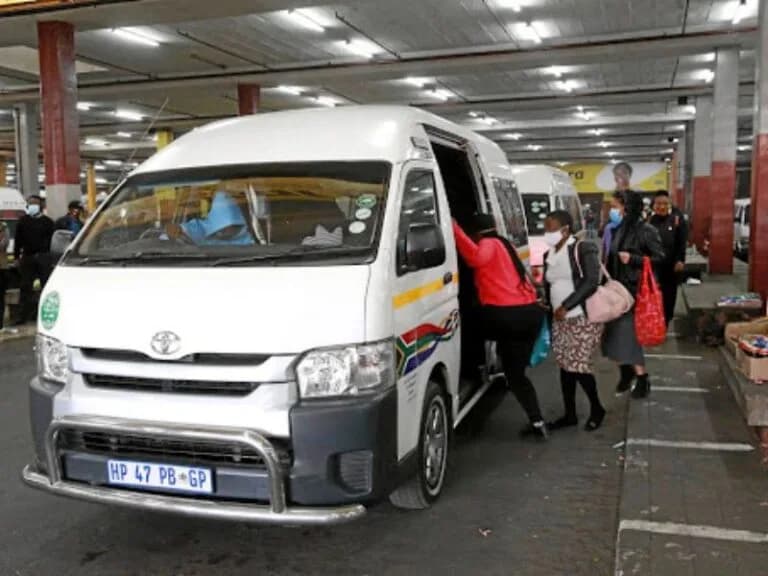
Standard Bank aims to roll out cashless simple taxi fare payment countrywide
Standard Bank South Africa has introduced a groundbreaking innovation as it looks to make life while using taxis easier.
Part of the big four in the country, the bank says it plans to collaborate with more taxi associations and owners to grow the national footprint of its Taxi Yam cashless payment solution.
The financial institution has already rolled out the solution to 10 taxi associations in KwaZulu-Natal (KZN) earlier this month and looks to spread to more provinces.
Comprised of a mobile application that can be downloaded for Android and iOS and card, Taxi Yam aims to help simplify taxi payments for commuters and drivers, so says Motlatsi Mkalala, head of main markets at Standard Bank.
“Taxi Yam is a complete mobility platform that will help taxi owners and drivers connect and interact with commuters,” says Mkalala.
“Our goal is for the app to become a reliable part of the public transport system in South Africa and improve the lives of passengers, drivers, and owners.”
The solution will enable commuters to budget their monthly transport costs and pay the exact amount for taxi fares without having to stop to draw cash.
According to ITWeb, in order to get up and running, a customer has to download the app and register on it, Mkalala tells ITWeb.
At the taxi ranks, where Standard Bank is working with the various associations, agents are stationed to assist customers with the sign-up process, after which they are issued a Taxi Yam card that will be linked to the app, he explains.
“The taxi associations, owners, and drivers from the associations we have been working with are very much aware of the solution,” he added.
“We also have to onboard the owner and his taxis, including the taxi drivers, for the solution to work. We go through a sign-up process to onboard the owners and their fleet of taxis onto the system.
“Our approach to growing our national footprint is to collaborate with associations and get their buy-in for the Taxi Yam solution prior to rollout to commuters and drivers for in-taxi usage. This approach ensures we have support on the ground from the industry’s decision-makers.”
After completing the registration process, the customer then loads their taxi money on the app to enable them to make payments in the taxi. In addition, taxis are then equipped with point-of-sale (POS) machines for ease of tapping and the driver carries a phone with them that is linked to the POS machine.
According to Mkalala, the bank initially tested the cashless solution in KwaMashu and Umhlanga in KZN with two taxi associations from April 2021 and the bank decided to launch the solution between 5 to 7 September.
“We have seen this through the number of customers that we have onboarded and the usage of the app and the cards,” continued the bank official.
“The card and the app are not limited to being used in taxis. It is a debit card and the customers can use this card at any store, like any debit card. Even if you do not have a Taxi Yam app or card, you will still be able to use any other bank card to pay for your taxi fare.”
In addition, Taxi Yam will add different features as the rollout continues, for example, it has enabled customers to sign in and register using their mobile numbers instead of an e-mail address, he indicated.
Main Image: SA Taxi Commuters/SowetanLIVE