SA fights to keep Agoa benefits
South Africa’s trade minister, Ebrahim Patel, will be concerned with wider trade issues than poultry when he goes to the United States next month. According to Business Day reports the minister will be leading a delegation to present arguments to the US government on why South Africa should not be excluded from the benefits of America’s
SA fights to keep Agoa benefits

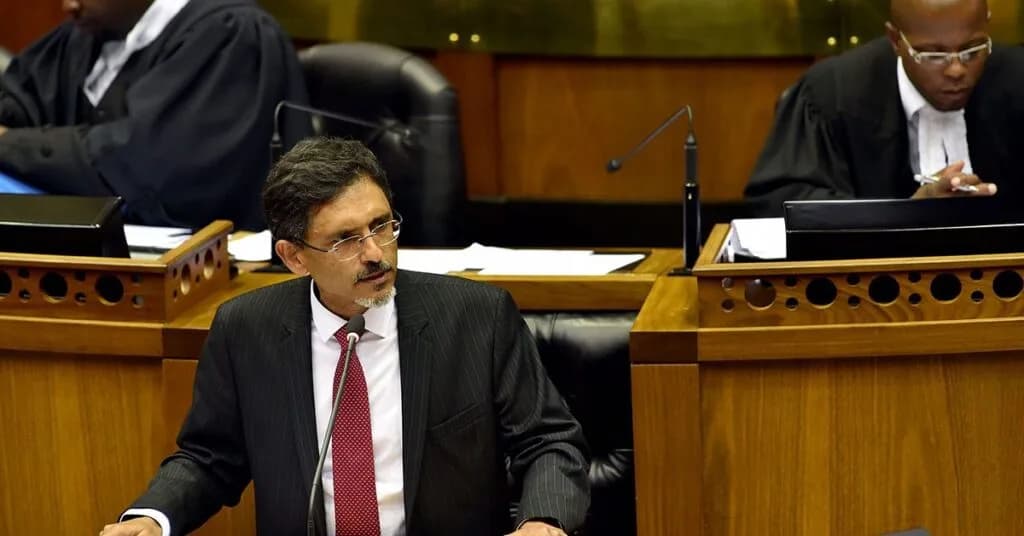
South Africa’s trade minister, Ebrahim Patel, will be concerned with wider trade issues than poultry when he goes to the United States next month.
According to Business Day reports the minister will be leading a delegation to present arguments to the US government on why South Africa should not be excluded from the benefits of America’s Africa Growth and Opportunity Act (Agoa). The benefits are substantial and include duty-free access to America for South African manufactured goods and agricultural products.
US legislators have argued that South Africa could lose those benefits because of South Africa’s perceived bias towards Russia following the Russian invasion of Ukraine.
As this bulletin noted last week, poultry could become an Agoa issue for South Africa if the country is allowed to continue benefiting and can propose revised terms when the US legislation comes up for renewal in 2025.
But Minister Patel’s priority next month will be to keep South Africa on the list of African countries that qualify for Agoa benefits.
Political opposition is not the only threat South Africa faces. As Patel explained to parliament, South Africa could be “graduated” out of the Agoa agreement if the US concludes that South Africa has benefited sufficiently and no longer needs preferential access to US markets. He will have to fight against that argument, too.
The cost of coal: US, EU carbon taxes threatens SA exports

Yet another trade problem for Minister Patel and his delegation in Washington will be US plans to impose a carbon border tax which will push up the price of steel and other carbon-intensive goods imported into the US.
South Africa and the US both objected when the European Union announced its carbon border tax. Now the US plans to follow the EU’s lead and South African goods will be threatened in two of its main export markets.
As the financial newspaper Business Day reported, “the noose is tightening on exporters around the world – including South Africa – that have high levels of greenhouse gas emissions in their production processes”.
The EU border tax comes into effect in 2026, but importers will have to start reporting on their carbon content from October this year. It will apply to carbon-intensive products such as iron and steel, cement, aluminium, fertilisers, electricity and hydrogen.
Apart from these industries’ own production processes, they use electricity which, in South Africa, is mostly derived from coal. South Africa has its own carbon tax, but it is being applied slowly. The difference will be paid at EU borders from 2026.
For the country applying the border tax, it is seen as an equaliser. They are imposing costs on their industries as countries seek to reduce carbon emissions in terms of the 2015 Paris Agreement on climate change.
The tax treats imports according to the same standards as local producers, applying a carbon price to ensure that imports do not enjoy an unfair advantage over local industries.
The measure, officially a carbon border adjustment mechanism or CBAM, also aims to prevent “carbon leakage” – the relocation of factories to countries with less ambitious climate policies.
However, for countries whose goods will be subject to the tax, it can be seen as “green protectionism” – the accusation Patel levelled against the EU. He also called it “profoundly unhelpful”.
A report on the implications of the EU border tax for Africa estimated that African countries could lose $25 billion a year. Details of the US measure, such as when and how it will be applied, will not be known until legislation is introduced. While it will primarily be aimed at China, South Africa and other countries will be caught in the crossfire.