Rooftop solar tax breaks: What they signify for South African complexes and sectional titles
According to National Treasury, body corporates and sectional title schemes would be unable to benefit from the rooftop solar tax savings revealed during the budget address on Wednesday (22 February). Finance Minister Enoch Godongwana announced the rooftop solar tax incentive, which is one of numerous steps being adopted to assist the country's extensive and quick
Rooftop solar tax breaks: What they signify for South African complexes and sectional titles
According to National Treasury, body corporates and sectional title schemes would be unable to benefit from the rooftop solar tax savings revealed during the budget address on Wednesday (22 February).
Finance Minister Enoch Godongwana announced the rooftop solar tax incentive, which is one of numerous steps being adopted to assist the country’s extensive and quick transition to renewable energy.
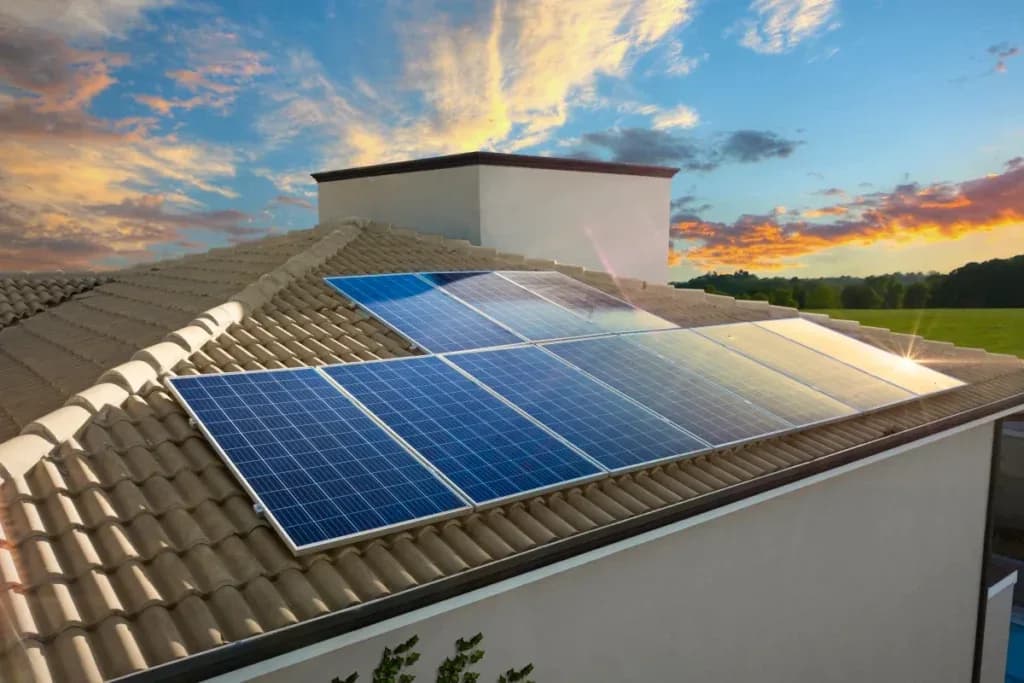
Individuals who install rooftop solar panels in their private homes beginning 1 March 2023 will be entitled to claim a 25% discount on the cost of the panels, up to a maximum of R15,000. This can be utilised to minimise their tax liability in the fiscal year 2023/24. This incentive will be available for one year.
Solar panels must be purchased and installed in a private property to qualify, and a certificate of conformity for the installation must be granted between 1 March 2023 and 29 February 2024.
Individuals can claim the rebate if they have a VAT invoice that shows the cost of the solar PV panels separately from other items, as well as proof of payment and a certificate of compliance proving that the solar PV panels were installed for the first time between 1 March 2023 and 29 February 2024.
PAYE taxpayers will be eligible to claim the assessment refund with the 2023/24 filing season. Provisional taxpayers will be allowed to apply for the refund against both provisional and final payments.
Nevertheless, because the rooftop solar tax credit is only available to individuals, complexes and associated body corporates are not eligible.
complex issue
According to Treasury, there has been no evidence that many body corporates would prefer to buy solar panels rather than lease them or use alternative methods to save up-front expenses for members. As a result, they were not taken into account when the programme was designed.
Nonetheless, the government stated that it will continue to examine and consult on this issue, and that solutions may be found.
“If there is widespread interest in body corporates purchasing and installing solar panels, then payment (e.g. special levies) for solar installations levied from the occupants would have to indicate the cost of the solar panels separately – as would be the case for any other claimant,” said the Treasury.
“The applicable Certificate of Compliance data would also have to be shared with the South African Revenue Service. Because there would be some adjustments to ensure that the right people could claim the right amounts, there will be a consultation to determine the required approach and documentation.”
There is no ownership restriction for individuals who rent their houses, thus installation by landlords or tenants would be allowed, but only the party who pays for the solar panel may collect the refund.
As it is, if inhabitants of such schemes are able to install their own panels within complexes and sectional titles, then the tax advantage applies to each individual.
Inverters are not included
Most complexes and sectional title schemes cannot afford the upfront expenses of installing solar for the entire scheme, therefore individual owners are frequently forced to figure out their own backups.
Installing an inverter or using a generator is one of the simplest solutions to meet the power demands of tiny devices of this type (if allowed by the body corporate).
The bad news for homes considering this option is that inverters, batteries, and generators are not covered at all by the incentive.
This is because the incentive is entirely focused on increasing extra generating capacity – and these load shedding mitigation techniques either do not create more electricity or are not sustainable generators, according to Treasury.
“Diesel generators are often used as emergency back-up, but are not a sustainable solution to generate additional power. They increase demand for fuel and have negative environmental impacts,” it said.
“Including generators would detract from the climate objectives government is committed to, where fiscal instruments like the carbon tax play an important role.”
While solar panels need the usage of an inverter and batteries, inverters and batteries can also be used without solar panels, in which case they provide no extra capacity to the system.
“The focus on solar PV panels is to maximise the use of limited government funds to get as much additional generation capacity as possible – and recognises that government will have to focus on a partial rebate of the components that are most directly linked to generation . This is why installation costs are not included either,” Treasury said.
Not nearly enough
While the incentives are a start in the right direction, the solar PV industry group, SAPVIA, believes they do not go far enough in addressing South Africa’s power crisis and the pressing need of homes to avoid load shedding.
“Solar panels alone do not protect end users against load shedding,” it said. “The solar panels incentive is limited and does not address those households that can’t access instruments for the purchase of solar systems.”
Those who install solar panels will only receive up to R15,000 back from their taxable income. Based on a 25% cap, this might amount to an R60,000 solar system, which SAPVIA claims will not have a significant impact on the ordinary family without storage.
According to the organisation, the average South African family purchases a 5kW hybrid system, which includes panels and battery storage and costs between R95,000 and R200,000, depending on the components utilised.
“Incentivising solar PV is a step in the right direction. However we urge government to consult with SAPVIA as industry experts to finetune and improve the design of relief packages and financial instruments.”