Namibia introduces air ambulance for patients who cannot reach hospitals by road
A serious accident or medical emergency in a remote part of Namibia can leave hospitals with a difficult decision: how do they get a critically ill patient to specialist care when the nearest referral hospital is hours away?
Namibia
A serious accident or medical emergency in a remote part of Namibia can leave hospitals with a difficult decision: how do they get a critically ill patient to specialist care when the nearest referral hospital is hours away?
AI-generated summary. It can miss nuance — read the full story above for the complete picture.
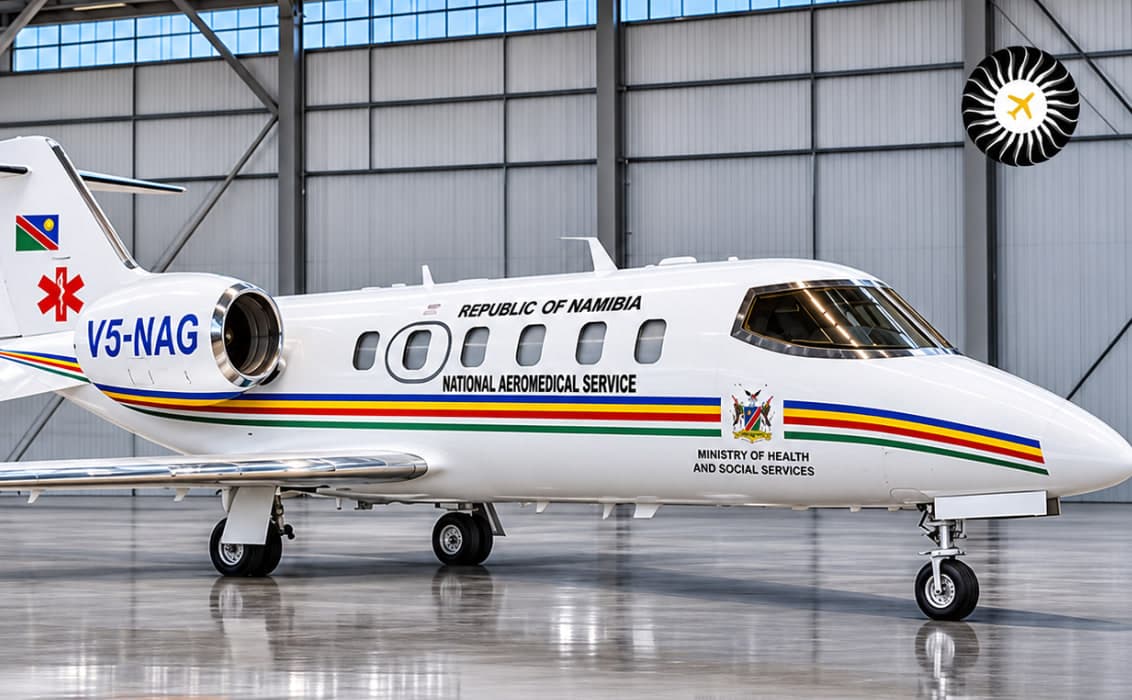
A serious accident or medical emergency in a remote part of Namibia can leave hospitals with a difficult decision: how do they get a critically ill patient to specialist care when the nearest referral hospital is hours away? The government has introduced a state-owned air ambulance service to help with those transfers. The service was launched in Windhoek on Wednesday, 4 November, by Vice President Lucia Witbooi. At the centre of the service is a Learjet 31A, registered as V5-NAG. It has been fitted with medical equipment to allow healthcare workers to monitor and treat patients during flights.
The government will also use helicopter evacuation services through arrangements with the Namibian Police Force and the Namibian Defence Force. Government Air Transport Services will provide pilots, while specialised medical staff will accompany patients.
Not every hospital transfer will involve a flight
“The aircraft may save hours on the journey, but the receiving hospital must be ready to treat the patient when it arrives.”
The aircraft is intended for patients who need urgent specialist treatment and cannot safely make the journey by road. Health minister Esperance Luvindao said the service would consider cases involving serious trauma, heart conditions, neurosurgery and pregnancy complications, among others. The decision will depend on the patient's condition and whether road transport creates an unacceptable risk or delay. The ministry has activated an emergency call centre to assess requests, verify referrals and coordinate transfers. Hospitals will therefore need to make a case for air transport rather than simply request a flight for every patient.
The problem starts before a patient reaches the airport
Namibia's distances place pressure on hospitals that do not have specialist doctors or equipment. A patient may be assessed at a regional facility, but still need to travel to another hospital for surgery or more advanced treatment. The air ambulance service follows concerns raised by Luvindao in September about patients who had died while being transferred between healthcare facilities. The ministry was reviewing records of deaths during transfers over the previous two years.
The new service gives hospitals another option when a road journey is too long or medically unsuitable. It does not, however, remove the need to improve services at regional hospitals. Patients who can be treated closer to home should not have to travel to Windhoek or another major centre simply because local facilities lack staff or equipment.
Running an air ambulance will come with ongoing costs
The government has to keep the aircraft maintained, pay for fuel, provide medical equipment and retain pilots and healthcare workers trained for emergency flights. The handover between hospitals also needs to work properly. A flight may save time, but the receiving hospital must know the patient's condition and be ready to continue treatment when the aircraft arrives.
Witbooi acknowledged that regular funding, maintenance, staff training and aviation safety would be necessary to keep the service operating. The government has not yet provided a detailed public breakdown of the service's operating costs.
What Namibia needs to measure
The first question will be how often the service is used and which parts of the country it reaches. The government should also report how long patients wait for transfers, how quickly they reach referral hospitals and whether the service is improving outcomes. For families in remote communities, the value will be measured in whether a relative who needs urgent treatment can get to the right hospital in time. Namibia now has an aircraft dedicated to medical transfers. The bigger job is making sure it is available, properly staffed and connected to hospitals that can treat the patients it brings in.