Load Shedding crisis hits major banks, but they amplify plans to mitigate risks
Major banks in South Africa are already planning ahead as they look to navigate their way amid load shedding challenges. Banks such as Standard Bank, Absa, First National Bank, and Nedbank have amplified their efforts to cushion themselves against load-shedding. The quartet is recognised for being the leaders in the banking sector and they emphasised
Load Shedding crisis hits major banks, but they amplify plans to mitigate risks
Major banks in South Africa are already planning ahead as they look to navigate their way amid load shedding challenges.
Banks such as Standard Bank, Absa, First National Bank, and Nedbank have amplified their efforts to cushion themselves against load-shedding.
The quartet is recognised for being the leaders in the banking sector and they emphasised the need to mitigate the risks associated with rolling power outages.
As the Eskom power cuts continue and citizens get ready to live with that challenge, the impact has become a concern in the financial services sector, leading to banks finding alternative solutions to limit the impact on clients and their businesses.
This comes after a warning issued by the South African Reserve Bank (SARB) that rolling power cuts may pose a threat to the country’s financial stability.
Recognised as Africa’s biggest lender, Standard Bank said it understands the frustration load-shedding causes to its business as well as clients.
“Standard Bank, like many other businesses in South Africa, has gone to great lengths to mitigate the risks associated with rolling power outages,” said spokesperson Ross Linstrom per ITWeb.
“At all times, a viable and convenient alternative banking channel is and has been available to customers should an ATM not be available due to extended load-shedding, as an example.
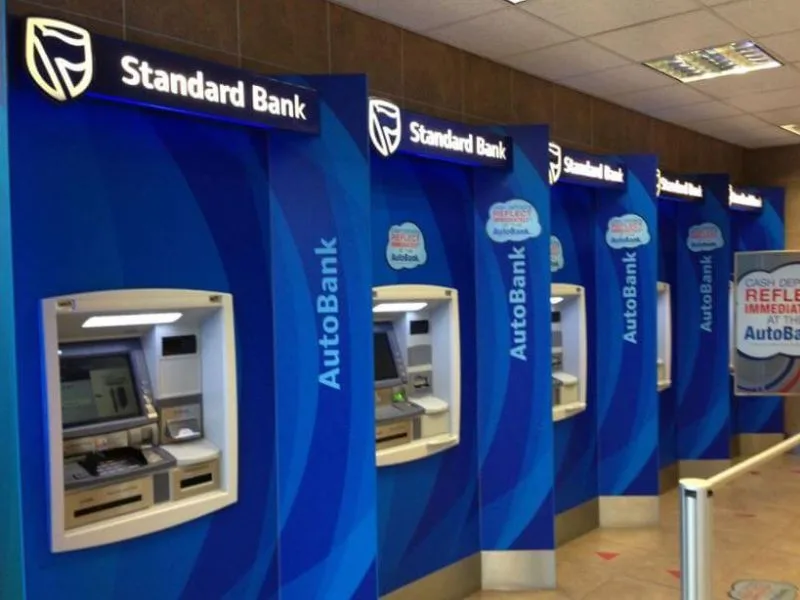
“Standard Bank ATMs are equipped with backup power facilities that provide services to customers even when there is load-shedding. However, due to the nature and extent of load-shedding schedules at times, certain ATMs may not be available until such a time as their power backup systems have been replenished.”
A Nedbank spokesperson said the institution has remained resilient in ensuring continuous operations since the increased frequency of power cuts implemented by the embattled power generator, Eskom.
Nedbank spokesperson said branch ATMs are linked to the branch’s backup power and the bank is working on ensuring all its ATMs have 100% coverage.
“As a business, we are well-prepared for load-shedding and currently have generators and alternative solutions in place to limit the impact on our clients and our business,” said the spokesperson.
“90.3% of the branches have backup power and are able to carry on with operations. Installation of a central battery system will be made during the first half of 2023 at the branches that currently don’t have backup power.
“Currently, clients are redirected and assisted via digital or call centre channels, and if need be, redirected to the closest alternative branch. There are also limited alternative payment methods, such as QR code payment. In terms of our corporate offices, all our offices have backup electricity supply and operate normally during load-shedding.”
On behalf of FNB, Lee-Anne van Zyl, CEO of FNB points-of-presence said they regularly review their backup power contingency plans to minimise inconvenience to customers in the event of load-shedding and power disruptions.
“While many of our points-of-presence and campuses are equipped with backup power, we also work closely with landlords in areas such as shopping malls, to minimise disruptions,” she said.
“Furthermore, we encourage our customers to use the FNB app, online and cellphone banking to access most of our services. FNB is committed to providing accessible financial and lifestyle solutions through assisted and unassisted channels.”