Kenyan Agritech Startup Rhea Raises $100,000 to Expand Across East Africa
Kenyan agritech startup Rhea Soil Health Management has secured a $100,000 investment as it prepares to expand its soil-intelligence technology beyond Kenya into other agricultural markets across East Africa.
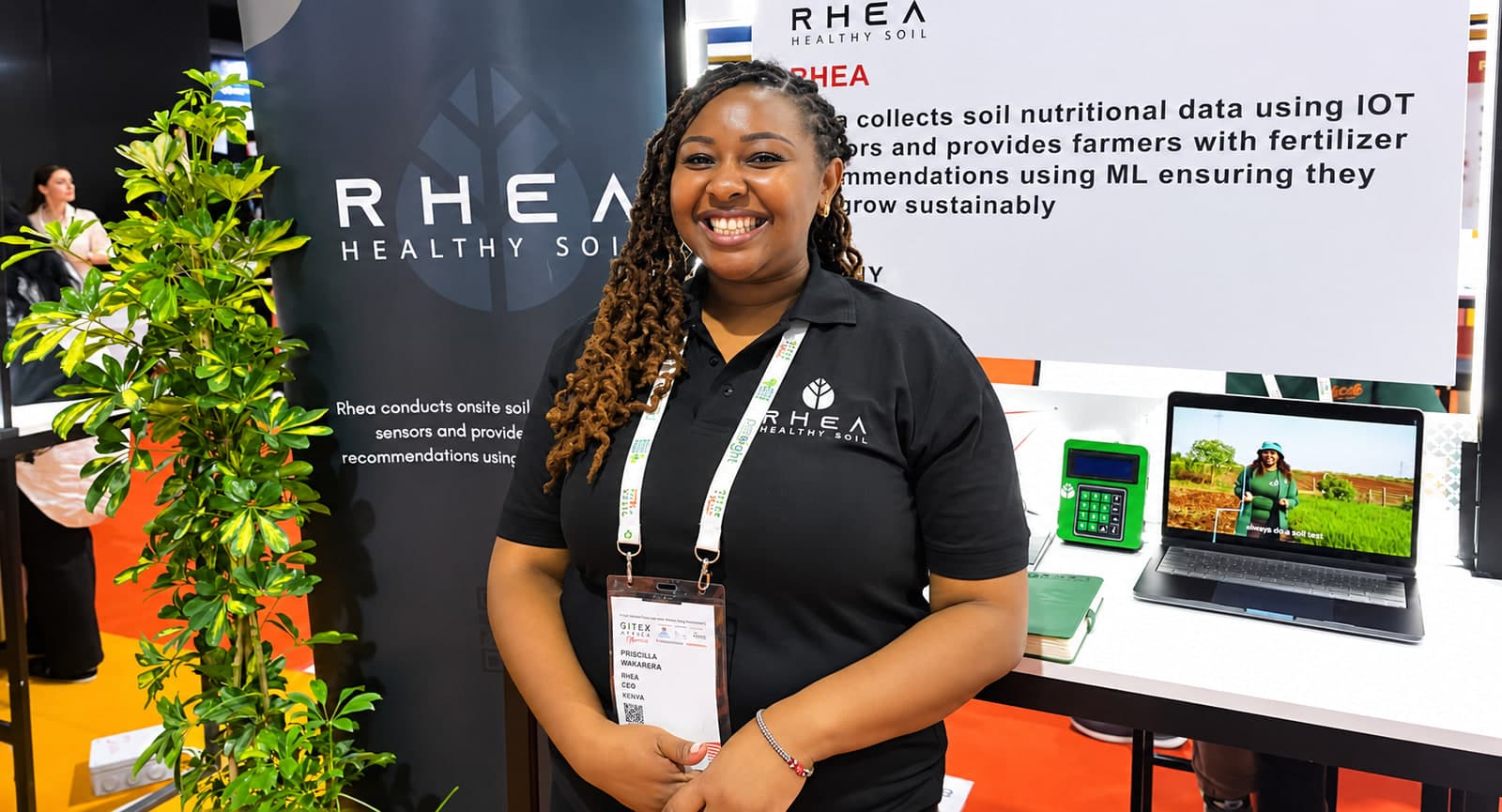
Rhea
Kenyan agritech startup Rhea Soil Health Management has secured a $100,000 investment as it prepares to expand its soil-intelligence technology beyond Kenya into other agricultural markets across East Africa.
Founded in 2022 by Priscilla Wakarera and Soinato Leboo, Rhea is focused on helping farmers make better decisions about soil health, fertiliser use and crop production.
The company’s flagship product, the RHEA AgriPad, is a portable soil-testing device that combines sensors, software and machine learning to collect and analyse soil information in the field.
The investment comes from Obudu Capital, which committed the $100,000 through a convertible note. The funding is linked to several milestones, including commercialising the AgriPad, deploying 100 devices, reaching 5,000 farmers and expanding into Tanzania.
For Rhea, the investment comes as the company moves from developing its technology to testing how it can operate as a scalable commercial business.
Bringing Soil Testing Closer to Farmers
Farmers make important decisions about fertiliser and crop production without always having timely information about their soil. Fertiliser is also one of the major variable costs in crop production. Applying too little can affect crop performance, while applying too much can increase costs without delivering a similar increase in output.
Soil testing can help farmers understand which nutrients are present and what needs to be replenished. Accessing conventional testing, however, can be difficult for smallholder farmers.
Samples have to be collected, transported and processed before farmers receive the results. They then need to interpret the information and decide what action to take.
Rhea is trying to bring more of that process closer to the farm.
The RHEA AgriPad is designed as a portable testing system. Its digital platform processes the information and provides recommendations, while the company also uses channels such as WhatsApp to share information and agronomic advice with farmers.
The aim is to connect soil measurement directly to a farming decision rather than simply provide farmers with a laboratory report.
Building Around Farmers and Agronomists
Rhea’s product development has involved working directly with farmers to understand what they need and what they can afford. Wakarera has previously said the company developed three prototypes over almost two years while testing the technology with farmers.
The company has also been building a network of agronomists who can work directly with farmers and support the use of its technology. During the first half of 2026, Rhea said it recruited and trained 135 agronomist agents across Makueni, Taita Taveta and Kajiado.
The company also launched the Rhea Agent App to support field operations and introduced Rhea Optima, a product aimed at medium and large-scale farmers, agronomists and laboratories.
The model combines technology with human expertise. The AgriPad collects soil measurements, the software processes the information and agronomists help farmers understand what the results mean for their crops and fields.
For Rhea, the value of the technology ultimately depends on whether the information helps farmers make better decisions and improve their economic returns.
Building a Business Around Soil Data
The AgriPad is the most visible part of Rhea’s technology, but the soil data generated through the platform could become an important part of its wider business model.
A single soil test provides information about a particular field at a specific point in time. A much larger dataset could provide information about soil conditions, nutrient requirements and agricultural patterns across different regions.
Rhea has identified potential applications for its soil-performance data in areas such as agricultural finance, insurance and carbon markets.
These applications would require verification, commercial partnerships and regulatory frameworks. Soil testing on its own does not automatically create access to credit, insurance or carbon revenue.
The opportunity, however, gives Rhea a reason to build beyond a soil-testing device.
Financial institutions could use better farm-level information to assess agricultural risk. Insurers could use data to understand farms and potential losses. Input companies could use it to better understand farmer requirements, while agricultural programmes could use measurements to track the results of interventions.
The challenge for Rhea is turning that potential into consistent commercial demand.
The $100,000 Growth Test
Obudu Capital’s $100,000 investment gives Rhea funding to test that next stage of the business. The milestones attached to the investment provide a clear commercial target: bring the AgriPad to market, deploy 100 devices, reach 5,000 farmers and enter Tanzania.
For a startup built around agricultural data, those targets will also give Rhea a chance to test how well its technology works at a larger scale and whether farmers and agricultural businesses are willing to pay for the information it provides.
The expansion into Tanzania would give the company its first opportunity to take its soil-intelligence model into another East African market.
Rhea’s next stage will therefore be less about proving that soil can be tested digitally and more about showing that the technology can reach farmers, support better decisions and generate a sustainable business.