Global Perspectives on Capital Deployment: Key Lessons for Africa
Capital is Mobile and Africa needs to ensure it meets the capital landing requirements for investment to thrive
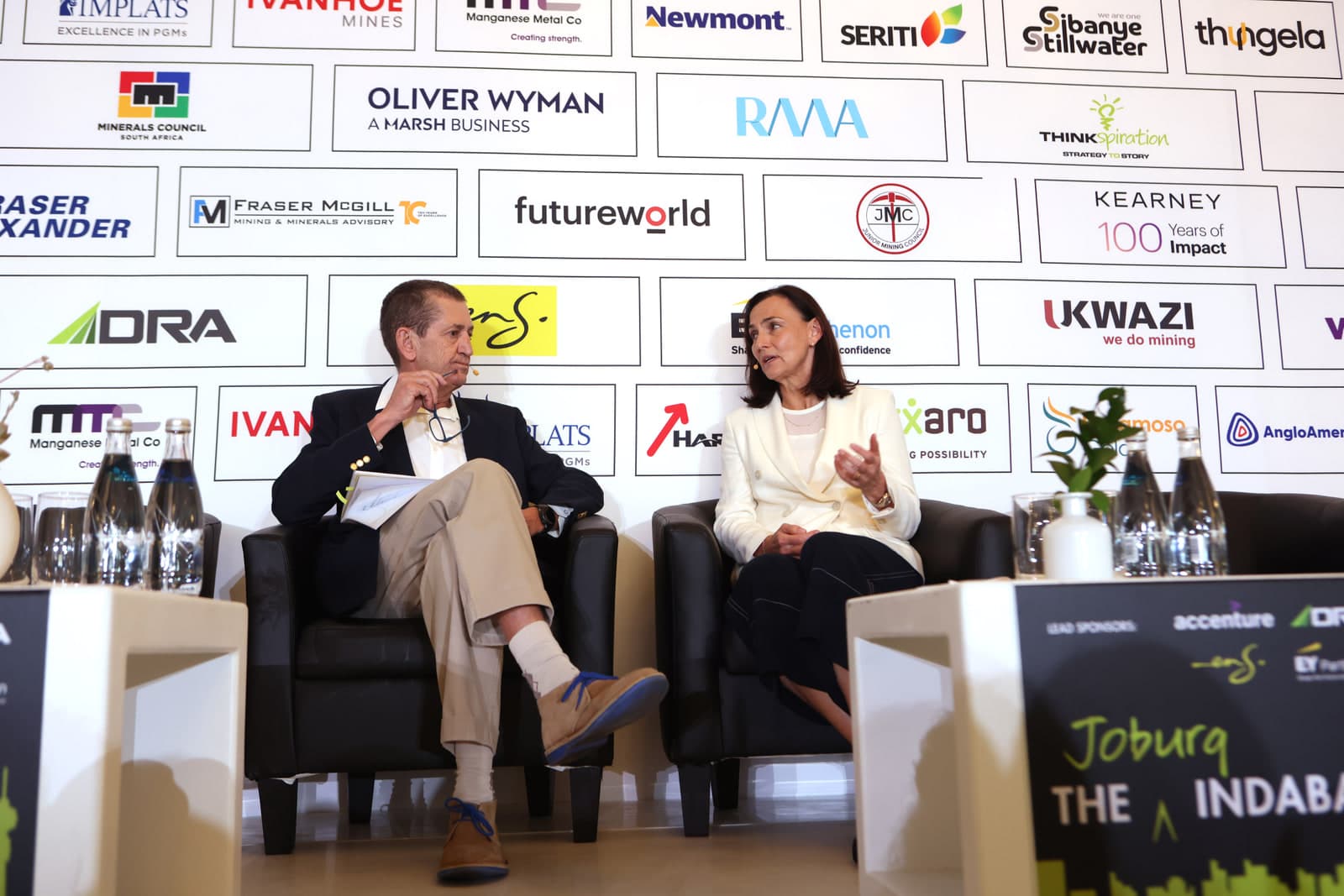
Bernard and Natascha - Joburg Indaba 2026
Building Capital Landing Runways
Capital is mobile. That was the plain lesson from the Joburg Indaba at the Inanda Club in Johannesburg on 7 October 2026. It sounds obvious. It is also the test that decides whether a mineral endowment becomes an industry or stays a hole in the ground.
Across Africa there is a strong wish to process raw minerals at home, rather than ship ore and concentrate to other countries and buy finished goods back. On the surface the case is sound. Downstream plants can build skills, factories and jobs. The harder question is who funds that processing at scale. Beneficiation is not free. It needs power, water, ports, permits and patient capital. Capital does not have to stay.
Keeping Downstream Value at Home not Simple
Recent policy has tried to force the issue. Zimbabwe banned the export of raw lithium ore in December 2022 and has since tightened the net. In February 2026 it suspended exports of raw minerals and lithium concentrate, and it has set January 2027 as the point at which concentrate shipments are meant to stop unless local sulphate plants are in place. Ghana’s Gold Board, from 1 September 2026, has required gold doré bought by self-financing aggregators for approved offtakers to be refined in Ghana before export. That is not a ban on all gold leaving Ghana. It is a local-refining rule on a defined part of the trade.
The Democratic Republic of Congo went further on 29 June 2026, banning exports of copper concentrate and cobalt concentrate. Namibia has told new investors to build processing plants in the country, and Malawi imposed a broad restriction on raw mineral exports in October 2025.
Very Few Mineral Monopoly's
These steps can create leverage. They do not, by themselves, build a competitive plant. Few minerals today sit in one country alone. If power is expensive, permits are slow, or the rule can change after the money is spent, supply and capital move to a jurisdiction that does not impose the same condition. Indonesia’s nickel ban worked as industrial policy only because large processing investment followed. Several African bans have not yet been matched by that investment.
What are the Capital Magnets?
Natascha Viljoen, President and Chief Executive of Newmont, the world’s largest gold miner, set out how a major actually decides where to put money. She was speaking in the opening session with Bernard Swanepoel. Ore quality comes first. After that, she listed three further tests: the stability and investability of the country; the support the industry receives, including infrastructure, government and the supply chain; and the ability to operate and execute, which means skills, services and inputs. Newmont mines in nine countries, and in eleven if joint ventures are counted. Capital inside one company already competes across borders. These are not mining-only tests. A factory, a data centre or a processing plant faces the same questions.
That is the point African governments miss when they treat low foreign investment as a mystery. The endowment is the starting condition, not the decision. Viljoen’s added warning was that the endowment itself has to be renewed. If a country stops spending on exploration, it is living off a map drawn years ago.
Wider Lesson for African Entrepreneurs
The same test applies to entrepreneurs. A new mine is already a heavy capital decision. If the state then demands a smelter or refinery as the price of the mining right, the project has to clear two hurdles, not one. In a market where several countries hold the same mineral, that second hurdle is often where the money leaves.
Richard Stewart, Chief Executive of Sibanye-Stillwater, put the political question differently in a later session at the same Indaba. The argument, as heard on the floor, was that the industry should ask how to grow the pie, not only how to cut it. Mines cannot be moved. If a competitive industry can be built beside them, the logic of processing close to the ore is real. The missing piece is still the extra capital, and the conditions that make that capital stay.
Why South Africa Misses the Capital Landing Mark
South Africa is the clearest local case of a rich geology that is not winning the allocation. Shareholders, Viljoen said, want mining exposure, and more money is now aimed at the sector after years in which technology took the larger share. The constraint is not a global refusal to fund mines. It is jurisdiction. She tied South Africa’s weak pull to the time it takes to rebuild trust, and to policy uncertainty, infrastructure and skills.
The flow numbers match that account. On UNCTAD’s World Investment Report 2026 measure, foreign direct investment into South Africa fell from 3.9 billion US dollars in 2023 to 2.4 billion US dollars in 2024, and then turned into a net outflow of 2.3 billion US dollars in 2025. The South African Reserve Bank recorded the same turn in local terms: direct investment liabilities switched from an inflow of 43.5 billion rand in 2024 to an outflow of 41.4 billion rand in 2025. A rebound to 49.8 billion rand in the second quarter of 2026 does not reverse that year. The Reserve Bank tied the quarterly rise to debt funding from a non-resident parent into one local telecommunications company.
Exploration Dwindling in South Africa
The exploration figure is sharper still. Real exploration spending in South Africa was 738 million rand in 2025, against a peak of 6.2 billion rand in 2006, on Statistics South Africa data cited by Minerals Council chief executive Mzila Mthenjane. Mining’s share of gross domestic product fell from 8.6 percent in 2010 to 6.2 percent in 2025. In the Fraser Institute’s 2025 survey of mining companies, South Africa ranked 64th of 68 jurisdictions on policy perception, and 10th of 14 African countries on overall investment attractiveness. Botswana led the African list. Skills have moved as well. A processing plan that assumes the old technical base is still in place is writing a cheque against a workforce that has already left.
Swanepoel’s opening caution belongs in the same argument. Other governments are reforming, and other miners are building processing capacity elsewhere. Ore that has sat in the ground for a billion years does not give a country a prior claim on the capital that arrives in this cycle. The window is an opportunity, not a destiny.
Building Better Beneficiation Prospects
For South Africa, and for African states using export bans as a shortcut to industry, the lesson from the Indaba is narrow and practical. Capital will fund beneficiation where the ore is good, the rules hold, the infrastructure works, and the skills are still there. Where those four tests fail, the ban moves the mineral. It does not build the factory.