Ghana Reports First Offshore Hydrocarbon Discovery in Five Years
Ghana has reported a new offshore hydrocarbon discovery, ending a five-year gap in exploration finds in the area and opening another prospect for the country's oil industry.
Wagenborg offshore energy services Shaping the future of Energy, reliably and responsibly
Ghana has reported a new offshore hydrocarbon discovery, ending a five-year gap in exploration finds in the area and opening another prospect for the country's oil industry.
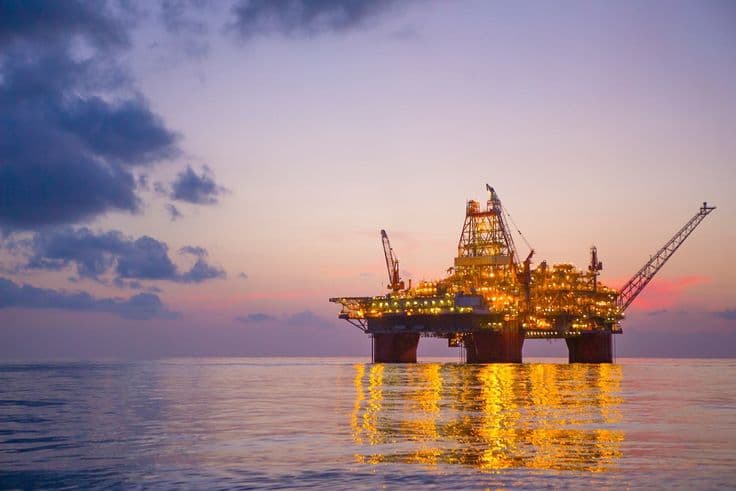
The Nya Gyidie-1X exploration well, drilled in the Deepwater Cape Three Points block in the Tano Basin, encountered hydrocarbons in carbonate rock formations. The discovery is significant because it points to a geological system different from the sandstone reservoirs that host Ghana's main commercial oil fields.
President John Dramani Mahama announced the discovery on Tuesday, 10 November, during the opening of the Petroleum Commission's local content conference in Takoradi. According to the Ghana News Agency, local company Planet One Oil & Gas drilled the well with the participation of the Ghana National Petroleum Corporation (GNPC) and GOIL Upstream.
Located approximately 148 kilometres off Ghana's coast, Nya Gyidie-1X was drilled in water depths of 2,289 metres. It encountered hydrocarbons in carbonate formations at measured depths of between 3,364 and 3,499 metres.
The discovery follows the Eban-1X find in July 2021, when Italian energy company Eni identified an approximately 80-metre column of light oil in a sandstone reservoir in the same area. Preliminary estimates at the time placed the potential of the Eban-Akoma complex at between 500 million and 700 million barrels of oil equivalent in place.
Carbonate Reservoirs Open a New Exploration Prospect
Nya Gyidie-1X has attracted attention because it encountered hydrocarbons in carbonate reservoirs, rather than the sandstone formations associated with Ghana's established commercial oil fields.
GNPC believes the result could encourage exploration companies to investigate other geological structures with similar characteristics. The discovery therefore provides another geological lead for exploration in the Tano Basin.
However, the find is still at the exploration stage. No resource estimate has been released, and there is not yet enough information to establish whether the discovery is commercially viable. Authorities have also not disclosed the precise composition or volume of the hydrocarbons encountered.
Ghana Seeks to Reverse Declining Oil Production
The discovery comes as Ghana faces pressure to reverse several years of declining oil production. According to the Institute for Energy Security (IES), six years of falling output have cost the country an estimated $16.5 billion in lost revenue.
The Public Interest and Accountability Committee (PIAC) has called for increased investment in existing oil fields and further exploration in new areas to address the decline.
Ghana's immediate challenge is to establish the commercial potential of Nya Gyidie-1X. Until further appraisal work confirms the size and quality of the discovery, the well remains an exploration result rather than a new source of production.