DNI backs Mission Mobile with up to R500 million
Mission Mobile has secured backing of up to R500 million from DN Invest (DNI), one of South Africa’s largest privately owned technology and distribution groups
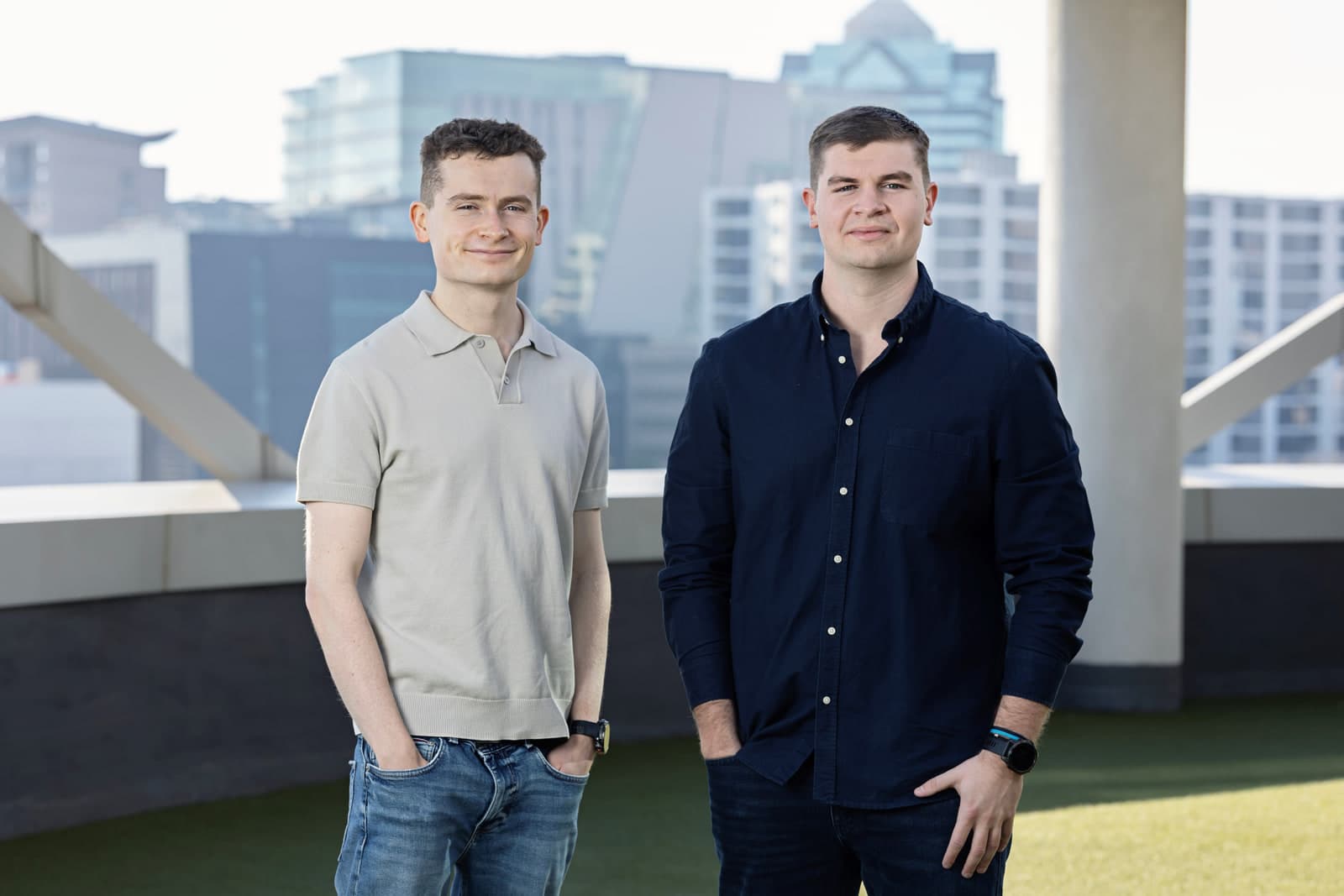
Adam and Tim Strike - Cofounders of Mission Mobile
The Johannesburg startup will use growth capital drawn from DNI’s own resources and ring-fenced debt facilities to fund devices, widen its footprint inside operator retail, and build new propositions for prepaid and postpaid customers.
Mission Mobile has secured backing of up to R500 million from DN Invest (DNI), one of South Africa’s largest privately owned technology and distribution groups, in a deal designed to put financed smartphones and cheaper data into the hands of customers that conventional mobile contracts still leave behind.
The facility, announced in Johannesburg on Monday, is the first detailed allocation to the homegrown startup after DNI last week disclosed a broader R2.1 billion programme across connectivity, digital services and fintech. That package also covers fibre operator Frogfoot, internet service providers Vox and Hypa, and eSIM group KnowRoaming. Mission Mobile’s slice is growth capital rather than a conventional venture round: DNI is drawing on its own balance sheet and ring-fenced debt to fund the working capital a device-finance business consumes as it scales.
For a company founded only in 2023, the cheque is large. For DNI, it is a logical extension of a two-decade journey from township SIM distribution to an integrated connectivity group that already moves more than four million handsets a year and generates more than R12 billion in annual revenue.
How the deal took shape
DNI signalled the move on 14 September when it said it was welcoming Mission Mobile and KnowRoaming into its ecosystem, following earlier capital into Frogfoot, Vox and Hypa. Group chief executive Dr Ryan Noach, who joined DNI in March 2024 after running Discovery Health, has framed the strategy in plain terms: access to digital tools increasingly determines access to opportunity, whether that is fibre, a smartphone or global mobility.
Noach has spoken publicly in recent days about DNI’s ambition to touch most South Africans every day within five years by broadening connectivity and financial inclusion. The Mission Mobile facility is the device-and-data expression of that thesis. Mick Silke, chief executive of FinCo at DNI, said the group invests in the people behind the businesses. Tim and Adam Strike and their team, he argued, had seen that operators could serve millions more customers if the underwriting and fulfilment problem were solved — and then built the technology to do it.
The commercial logic is mutual. DNI already sits on deep relationships with all four local mobile networks, is recognised as a leading informal-market SIM wholesaler, and has procurement muscle in handsets. Mission Mobile brings a proprietary scoring engine and an off-balance-sheet model that lets operators sell more devices without taking the credit risk. Combining the two is intended to turn a promising retail experiment into a national channel.
From Beam to the store floor
Mission Mobile did not start as a retail brand. Its origin is Beam, a cash-flow underwriting platform the founders launched in early 2024 with a narrow thesis: credit providers in South Africa were still declining large numbers of viable customers because bureau files were thin, not because those customers could not pay.
More than 40 percent of potential applicants, the company says, fail a conventional credit check. Beam was built to read how people actually earn and spend — bank-account behaviour, payment patterns and other alternative data — and to produce an affordability decision in minutes rather than a binary bureau pass or fail. The firm later folded that engine into a full-stack offer for mobile network operators: it funds the handset, underwrites the customer, delivers the device, collects the instalments and, on prepaid, attaches data benefits through its DataBack Device proposition.
The model is designed to sit inside existing MNO stores rather than compete with them. A customer who is declined for a standard contract can receive a second look without the operator loading capital, collections infrastructure or bad-debt risk onto its own books. Mission Mobile says it has processed more than 10,000 applications and is already live, in beta form, through operator retail and digital channels. That is still a small base relative to South Africa’s prepaid-heavy market — more than 80 percent of mobile connections remain prepaid — which is precisely why DNI’s capital matters.
A founder-built business with little prior institutional capital
Unlike many local fintechs that arrived at scale via successive seed and Series A rounds, Mission Mobile has no widely disclosed venture history. It has been a tightly held, founder-led build. Johannesburg-born brothers Tim and Adam Strike established the company in 2023. Tim, the chief executive, leads commercial strategy and draws on earlier South African ventures including E Centive and Ignite. Adam, the chief technology officer, studied mathematics and computer science at the University of Pennsylvania and cut his engineering teeth on Penn Labs student software before returning to build Beam and the Mission Mobile stack.
The absence of a long public funding trail is not unusual for a business whose product is working-capital intensive and whose natural partners are operators and distributors rather than consumer-app investors. What DNI is providing is therefore less a valuation event than a balance-sheet: the ability to buy devices at volume, carry receivables, and stay in market while the underwriting models season.
Where the R500 million is meant to go
The company and DNI have not published a line-by-line budget, but the press statement and earlier group comments point to four uses of capital.
The first, and largest, is device and receivables funding. Mission Mobile finances every handset upfront and takes the credit exposure. Scaling that model nationally is a treasury problem before it is a software problem. Growth capital and ring-fenced debt are intended to warehouse inventory and fund instalment books as volumes rise inside MNO stores.
The second is geographic and channel reach. The priority, the company says, is to extend the offer through more operator outlets and to more customers who today bounce between prepaid SIMs. DNI’s existing store, dealer and wholesale relationships give Mission Mobile a distribution ramp that a standalone startup would take years to assemble.
The third is product development. Management wants further propositions tailored to individual networks, spanning postpaid smartphone access for customers who fail traditional vetting and prepaid bundles that combine a device with discounted data. Preferential wholesale rates on popular data bundles, secured through operator relationships, are already part of the model; capital will be used to industrialise onboarding, payments, data fulfilment and service.
The fourth is operating capacity. The business remains small. National rollout implies more people in onboarding, logistics, collections and partner management, and continued investment in Beam so that scoring stays fast enough for a store queue.
Why operators have a stake in the outcome
South Africa’s networks spend heavily to acquire customers, then watch many of them fragment across multiple SIMs with little loyalty. Strike argues that this both erodes the value of the relationship for the operator and weakens the customer’s own purchasing power. A financed device plus cheaper bundled data is meant to pin usage to a single SIM, lift average revenue per user and cut early churn — without the operator putting capex or credit risk on its own balance sheet.
That dual-sided pitch is what DNI says is rare enough to back at this scale. “The commercial opportunity is considerable, but so is the potential impact on people’s lives — greater value from their hard-earned money and the ability to stay connected,” Silke said. Strike was more direct about the next chapter: device financing that only places a phone in someone’s hand is incomplete. The test is whether those customers stay connected.
What comes next
Monday’s announcement does not name the networks already live with Mission Mobile, nor does it set a customer or store target against the R500 million. Those details will determine whether the facility is a bridge to a large national book or a costly inventory trade. What is clear is the architecture: a founder-built underwriting engine, an operator-embedded retail model, and a strategic shareholder that already dominates much of the physical distribution of SIMs and handsets in South Africa.
If the model holds, DNI will have added the last missing piece of a stack that now runs from fibre in the ground to the phone in a prepaid customer’s pocket. For Mission Mobile, the next 18 months are less about inventing the product than about proving it can be funded, fulfilled and collected at the scale its new backer is paying for.