China takes 19 seat electric plane into piloted flight testing
China's COMAC has flown its 19 seat CE-25A electric passenger aircraft with pilots on board for the first time. Designed for shorter routes, the aircraft has a planned range of 400km, but commercial approval and the cost of operating it remain outstanding.
China's COMAC
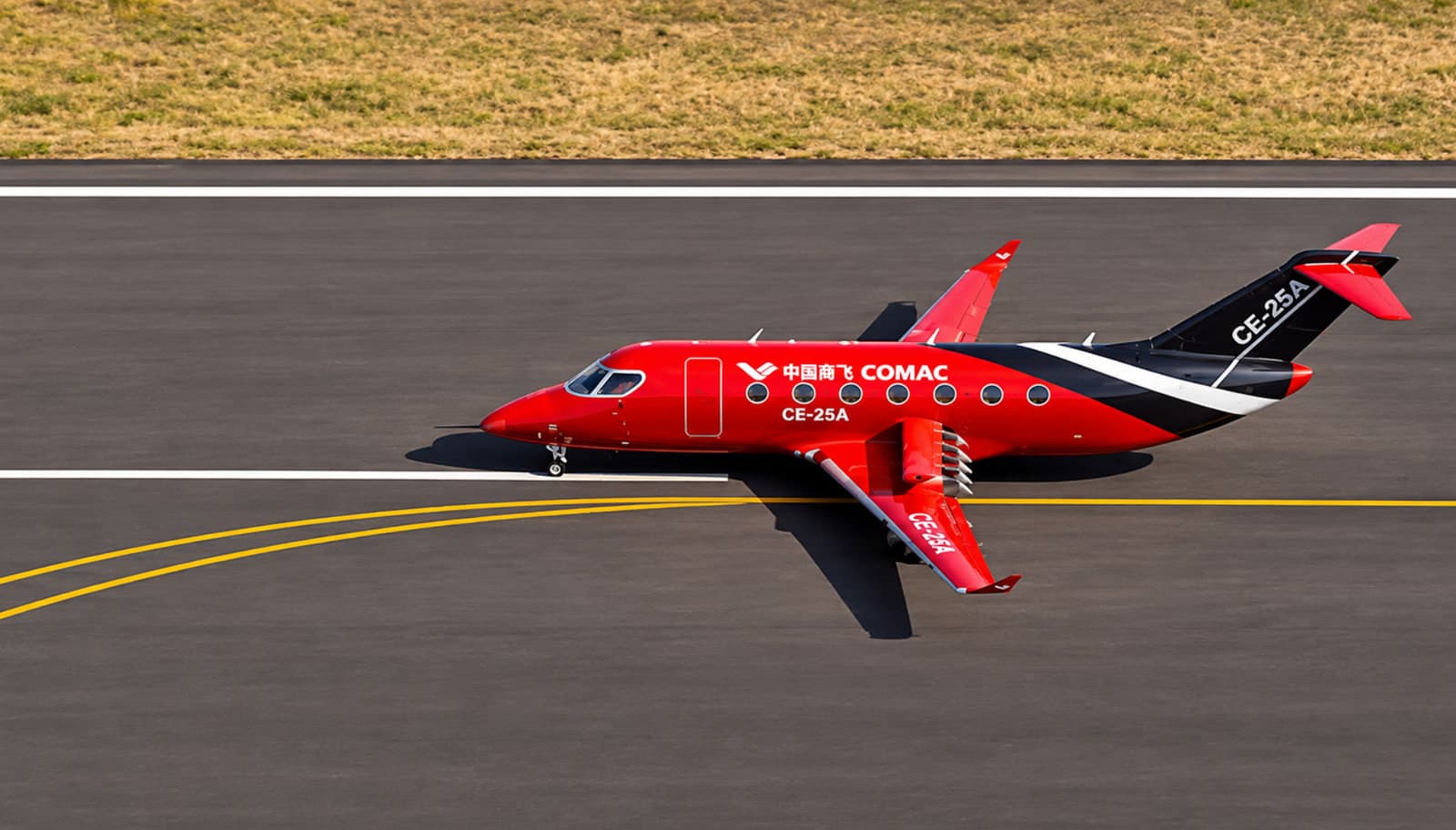
A 19-seat electric aircraft being developed in China has now flown with pilots on board. The CE-25A, built by the Commercial Aircraft Corporation of China (COMAC), is designed for shorter passenger journeys, with a target range of 400km.
AI-generated summary. It can miss nuance — read the full story above for the complete picture.
A 19 seat electric aircraft being developed in China has now flown with pilots on board. The CE-25A, built by the Commercial Aircraft Corporation of China (COMAC), is designed for shorter passenger journeys, with a target range of 400km. The aircraft took off in Binzhou, Shandong Province, on 14 November. Two pilots and a flight-test engineer were on board. It spent about 16 minutes in the air, covering roughly 60km.
This was not the aircraft's first time off the ground. It completed an unmanned flight in February and has since undergone 19 autonomous flight tests. The November flight was the next stage, allowing the development team to assess its performance with a crew operating it.
The CE-25A has 10 electric ducted fans fitted along its wings. It is designed to carry 19 passengers, cruise at 300km/h and operate over a range of up to 400km. COMAC is developing the aircraft with battery manufacturer CATL, Shanghai Jiao Tong University and other partners.
“Getting an electric aircraft into the air is one thing. The real test is whether airlines can operate it safely and at a cost that makes commercial sense.”
The business case is still to be tested
A 19-seat aircraft is a different proposition from the larger passenger planes used on busy domestic and international routes. COMAC is targeting shorter journeys where smaller aircraft could be more suitable. But getting an electric plane into the air is only part of the job. Airlines will want to know how much it costs to buy and operate, how long its batteries last, how much time it needs on the ground for charging and how many flights it can complete in a day.
These questions will matter just as much as its flying performance. The aircraft has not yet been cleared for commercial passenger operations. COMAC has applied for a type certificate, and the certification process still needs to be completed. For African aviation, the project is worth following. Smaller regional routes could offer a potential market for aircraft of this size, particularly where passenger numbers do not support larger planes. However, charging infrastructure, route demand and operating costs would need to be considered before airlines could make a case for using them.
For now, COMAC is still working through the testing programme. The important question is no longer simply whether the aircraft can fly, but whether it can do so safely and economically as a passenger service.