Canva Launches Its Own AI Image Model to Compete With OpenAI and Google
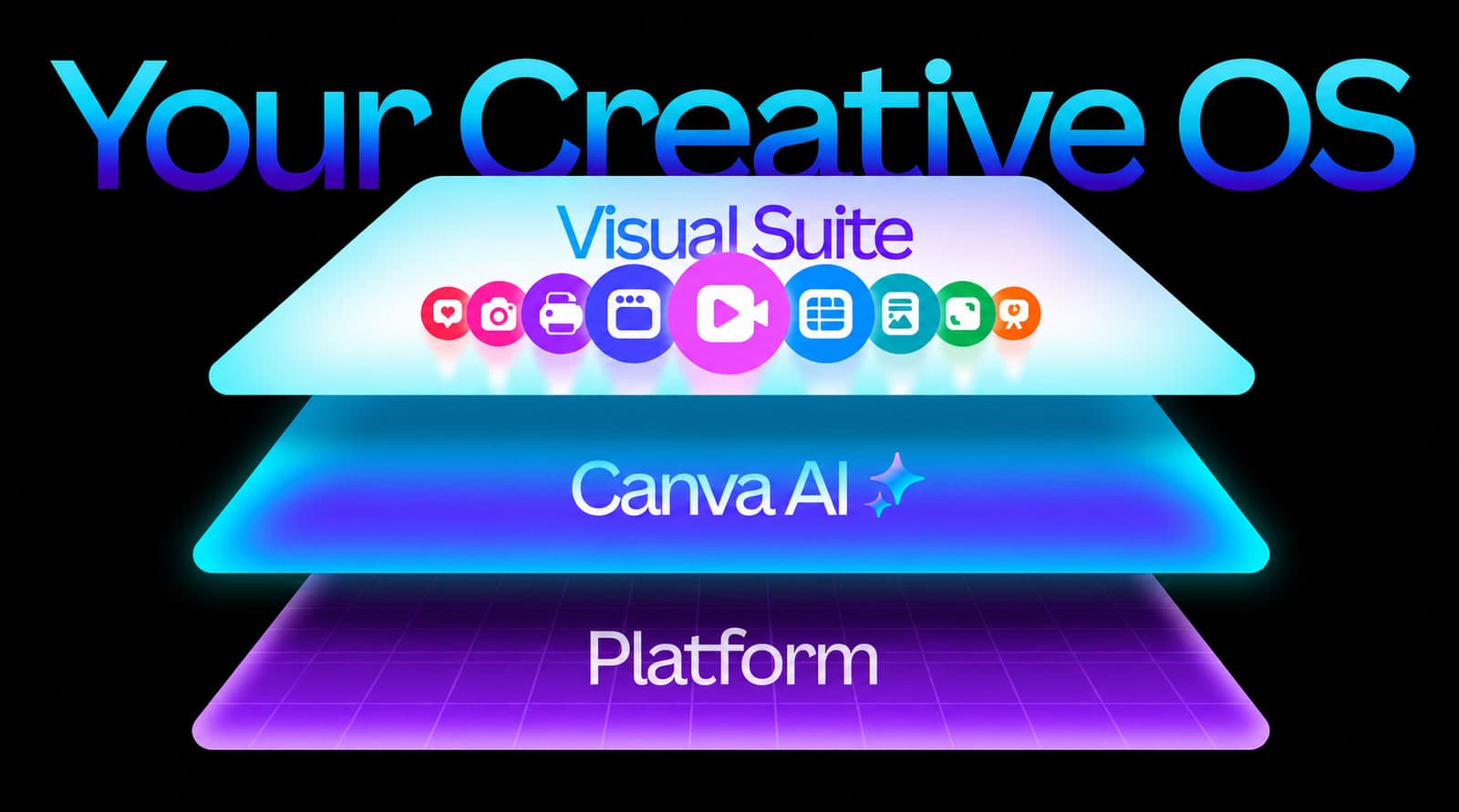
Canva has launched Canva Craft, its first in-house image-generation model, giving the design platform greater control over how artificial intelligence creates images, handles text and follows layout instructions.
Canva
Canva has launched Canva Craft, its first in-house image-generation model, giving the design platform greater control over how artificial intelligence creates images, handles text and follows layout instructions.
Unveiled on October 22, the model was developed and trained by Canva Research, the company’s internal AI team. It is designed to compete with image-generation systems from OpenAI, Google, ByteDance and Meta, with a focus on producing visuals that are ready to use in marketing materials, presentations and social media designs.
Canva Craft is available globally through Dream Lab, Canva’s AI image-generation tool, and through the company’s public API for developers.
Two-stage image generation
Unlike conventional image generators that move directly from a prompt to an image, Canva Craft uses a two-stage process.
First, the model interprets the user’s instructions and creates a plan for the image. This includes the placement of objects, their relative sizes, the visual hierarchy and where text should appear. A second model then renders the final image at resolutions of up to 2K, supporting more than 30 aspect ratios.
The approach is intended to improve text readability, object placement and consistency across complex compositions. Users can request specific changes without necessarily having to regenerate the entire image.
For example, someone creating a promotional poster could specify the headline, product placement, background and layout in one prompt. The model is designed to follow those instructions more closely, reducing the amount of manual correction needed afterwards.
Trained on design templates
Canva trained Craft on millions of human-designed templates from its content library, including posters, social media graphics, presentations, infographics and menus.
This gives the model examples of how typography, spacing, alignment and visual hierarchy work together in finished designs. Canva says the training approach helps Craft produce layouts that are more suitable for practical design work than images created solely for visual effect.
The model also works with Canva’s Magic Layers technology, which can convert generated images into separate editable elements. This gives users more control over individual parts of a design after generation.
Canva says Craft ranked fourth among image-generation models on DesignArena, a crowdsourced evaluation platform. The company uses this result to support its claim that Canva Research is the world’s second most advanced AI lab for image generation.
Available through Dream Lab
Users can access Canva Craft through the Dream Lab section of Canva. Developers can also use the public API to integrate the model into their own products, including marketing platforms, e-commerce tools and advertising services.
Canva is also developing two faster versions, Craft-fast and Craft-ultrafast, intended to generate images at lower cost and higher speed.
The launch gives Canva ownership of the underlying image-generation technology instead of relying entirely on external models. That could help the company manage performance and operating costs while tailoring its AI tools to the design workflows used by its customers.