Africa's AI plans are starting with the infrastructure problem
The Korea-Africa programme includes cloud credits, data infrastructure, training and digital projects in countries from Sierra Leone to Rwanda. If you look past the AI label, much of the new Korea-Africa programme is about fairly basic things. Servers. Data. Electricity. Skills. Digital systems.
AI Hub Pic
The Korea-Africa programme includes cloud credits, data infrastructure, training and digital projects in countries from Sierra Leone to Rwanda.
If you look past the AI label, much of the new Korea-Africa programme is about fairly basic things.
Servers. Data. Electricity. Skills. Digital systems.
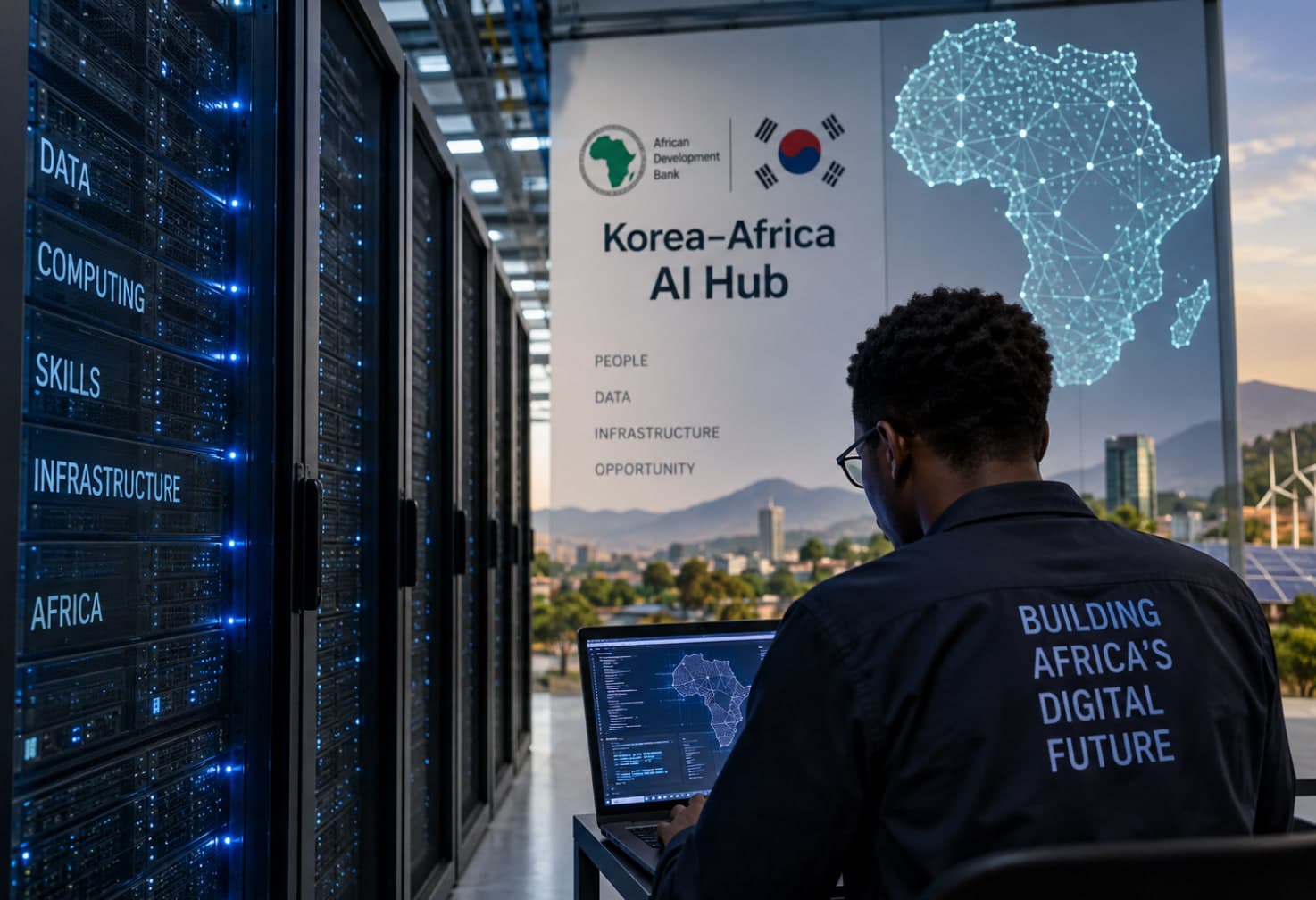
The African Development Bank and South Korea are establishing a Korea-Africa AI Hub, with governments, universities, research institutions, financial organisations and businesses expected to take part.
The wider programme includes a proposed Data Embassy in Sierra Leone, cloud computing credits for African AI startups, a smart-city platform in Kigali and digital governance work in Kenya. There is also an AI talent accelerator planned for The Gambia.
AI-generated summary. It can miss nuance — read the full story above for the complete picture.
The Korea-Africa programme includes cloud credits, data infrastructure, training and digital projects in countries from Sierra Leone to Rwanda.
If you look past the AI label, much of the new Korea-Africa programme is about fairly basic things. Servers. Data. Electricity. Skills. Digital systems. The African Development Bank and South Korea are establishing a Korea-Africa AI Hub, with governments, universities, research institutions, financial organisations and businesses expected to take part. The wider programme includes a proposed Data Embassy in Sierra Leone, cloud computing credits for African AI startups, a smart-city platform in Kigali and digital governance work in Kenya. There is also an AI talent accelerator planned for The Gambia.
There are projects outside the technology sector too, including digital agriculture in Zimbabwe and Angola, telemedicine, digital water infrastructure in Egypt and electricity and digital infrastructure work in Zambia and Rwanda. That list says quite a bit about where the practical problems are.
“The most interesting part is the list of things that have to be in place before the technology can do much at all.”
Startups still need somewhere to run their software
Building an AI product can get expensive before a startup has a paying customer. The computing needed to train and run models is one of those costs. The programme includes a K-AI Cloud Voucher scheme aimed at giving African startups access to cloud computing. The AfDB has also pointed to the shortage of data-centre capacity on the continent, saying Africa has less than 2% of global capacity. For a small company, having access to computing without having to carry the full cost could make a difference.
It also exposes a bigger issue for African technology businesses. A company can have developers, customers and an office on the continent while much of the infrastructure its product depends on sits elsewhere.
Sierra Leone's data project
The proposed Data Embassy in Sierra Leone is another part of the programme that could be more consequential than the AI branding around it. The project sits within a wider push around data governance and digital public infrastructure. The AfDB and South Korea's National Information Society Agency are also working together on areas including AI-ready datasets and data governance. That matters because AI systems need data that can actually be used.
For governments, the issue can be even more basic. Records have to be digitised, stored properly and made accessible to the systems that need them. There is little value in putting an AI tool in front of a government department if the information underneath it is still sitting in disconnected systems.
It is not just a startup programme
The projects are spread across several parts of the economy. Kigali is set to get a smart city platform. Kenya is included through digital governance projects, while Egypt is looking at AI-supported auditing. Zimbabwe and Angola are part of digital agriculture initiatives. There are also plans involving telemedicine and water infrastructure in Egypt. Zambia and Rwanda feature in projects combining electricity and digital infrastructure.
These are very different uses of technology. A farmer looking for better information about crops has little in common with a city authority managing traffic or a government department checking financial records. What they have in common is the infrastructure underneath the service.
Electricity is part of the AI story
This is where some of the less glamorous projects become relevant. Data centres consume large amounts of electricity. Networks need reliable power. Servers need cooling. Businesses need connectivity that does not disappear every time there is a power or network problem. The Korea-Africa programme includes energy and digital infrastructure projects alongside its AI initiatives.
That is not a coincidence. You cannot build a large computing business around unreliable infrastructure, regardless of how good the software is.
The skills question
There is also a people problem. The programme includes an AI talent accelerator in The Gambia, while a separate technology training initiative in Tanzania will focus on areas including AI, robotics and data analysis. The AfDB and South Korea's KAIST have also agreed to cooperate on AI research, datasets, digital policy and knowledge transfer. Training programmes are relatively easy to announce. The more useful question will be what happens afterwards: whether people move into technology jobs, start companies, work in research or end up building systems for governments and businesses.
The announcements are easier than the build
Most of these projects are still at the programme or development stage. The Korea-Africa AI Hub is being established through an agreement between the AfDB and South Korea, while the wider roadmap covers projects planned for 2027 and 2028. So there is still a lot that needs to happen. The cloud credits have to reach startups. Data infrastructure has to be built. Training programmes have to produce people with usable skills. Digital projects have to move beyond launches and demonstrations. That is where this story will become easier to judge. For now, the most interesting part of the Korea-Africa AI programme is not another promise about what artificial intelligence will do. It is the list of things that have to be in place before the technology can do much at all.