AfCFTA signs $5.17bn digital trade deal to make African trade easier
Trading between African countries is still harder than it should be. A small business can have a buyer in another country and still struggle to complete the sale because of different currencies, payment systems and the cost of moving money across borders.
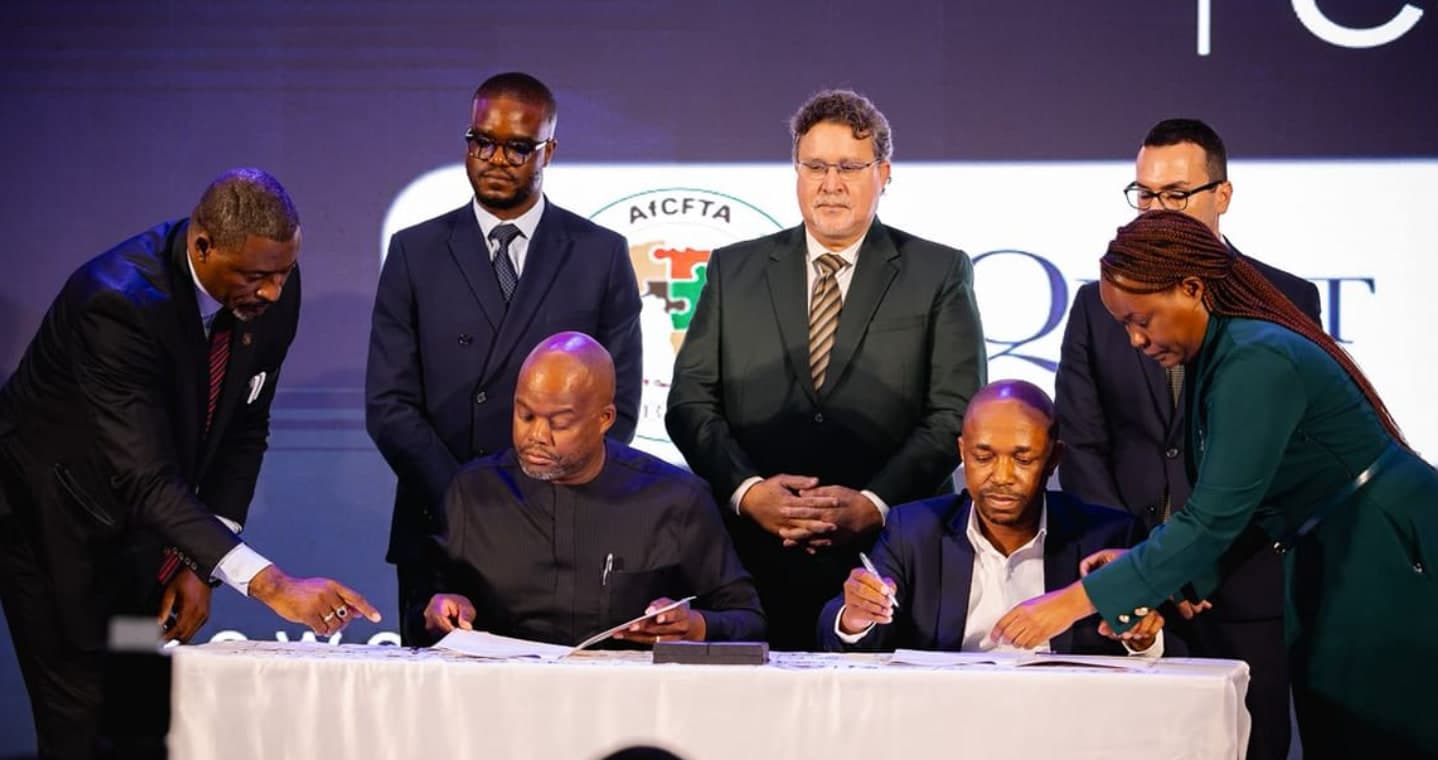
AfCFTA Pic
Trading between African countries is still harder than it should be.
A small business can have a buyer in another country and still struggle to complete the sale because of different currencies, payment systems and the cost of moving money across borders.
The African Continental Free Trade Area (AfCFTA) is trying to deal with part of this problem through a new digital trade agreement.
AfCFTA has signed a $5.17 billion digital trade corridor agreement with Ghana-based Quest Ghana. The agreement brings together a commodities exchange and an interoperable payments system to support trade between African markets.
AI-generated summary. It can miss nuance — read the full story above for the complete picture.
Trading between African countries is still harder than it should be. A small business can have a buyer in another country and still struggle to complete the sale because of different currencies, payment systems and the cost of moving money across borders. The African Continental Free Trade Area (AfCFTA) is trying to deal with part of this problem through a new digital trade agreement. AfCFTA has signed a $5.17 billion digital trade corridor agreement with Ghana-based Quest Ghana.
The agreement brings together a commodities exchange and an interoperable payments system to support trade between African markets. The idea is fairly simple. Businesses should be able to trade goods and settle payments across borders without having to deal with completely separate systems in every country. For small and medium-sized businesses, that matters because cross-border trade can become expensive quickly. A business selling locally already knows how to receive payments, pay suppliers and manage its cash flow. Once it starts selling into another country, there can be additional bank charges, currency conversion costs and delays before the money reaches its account.
For an SME, these costs can have a bigger impact than they would on a large company. A manufacturer selling a few hundred units to a buyer in another African country, for example, may not have a finance department handling international payments. The owner or a small team may have to work out how to receive the money, convert it into the local currency and deal with whatever banking requirements apply to the transaction. That can make some cross-border orders more trouble than they are worth. The new payment system is meant to make that part of the process easier.
For SMEs, getting paid across borders can be just as difficult as finding the customer.
The deal also covers commodities
The agreement is not only about payments. Quest Ghana is also bringing a commodities exchange into the digital trade corridor. This gives businesses involved in commodities another platform to find buyers and sellers. That could be relevant to SMEs in agriculture and commodity trading, where businesses often depend on intermediaries to connect them with markets. A farmer, trader or small processor may have access to a product but not necessarily to buyers outside their country. Finding a buyer in another African market can involve several people and separate processes for pricing, payment and delivery. A digital exchange could make it easier to connect the two sides.
But it does not solve everything. The goods still need to move from one country to another. Businesses still have to deal with customs, transport, storage and local regulations. If a road is poor or a shipment is held at a border, a digital payment system cannot fix that. What it can do is remove some of the difficulty around the transaction itself.
Why SMEs matter
AfCFTA's larger goal is to increase trade between African countries, but much of that trade will eventually have to happen through businesses of different sizes, including SMEs. For many of these companies, expanding into another African market is not necessarily about opening an office or building a large operation. It could simply mean getting a few more customers in a neighbouring country. The problem is that the process can become complicated once money has to cross a border. This is where a connected payment system could be useful. If an SME can receive payment from a customer in another African country through a system that works across markets, it may be able to take more orders without setting up a complicated arrangement for every new market.
It could also help businesses that are already trading across borders but are losing part of their margins to payment and currency costs.The impact will depend on how many countries, banks, payment companies and businesses eventually connect to the system. An interoperable network only becomes useful when enough participants are using it.
The $5.17bn target
The agreement has a $5.17 billion target for commerce. That does not mean $5.17 billion has already passed through the platform. It is the value of trade the initiative is targeting. The more important question will be whether businesses actually use it and whether it makes cross-border transactions cheaper and easier. That will be particularly important for smaller businesses. AfCFTA can remove some of the trade barriers between countries, but SMEs still need practical ways to find customers, move goods and get paid. For a small business, saving money on a transaction or getting paid sooner can make a real difference. It can determine whether the business has enough cash to buy more stock, take another order or pay its suppliers on time. The Quest Ghana agreement is trying to address one part of that problem by connecting the trade and payment sides of a transaction.
It is not going to remove every obstacle to doing business across Africa. But if the system is adopted widely, it could make one of the more frustrating parts of cross-border trade a little easier for the businesses that have the least room for delays and extra costs.