$45.6m to expand Cameroon’s local manufacturing
A Cameroonian manufacturer has secured $45.6 million in revolving working-capital financing from Afreximbank, giving it more room to buy materials, maintain production and expand the products it makes locally.
Cameroon
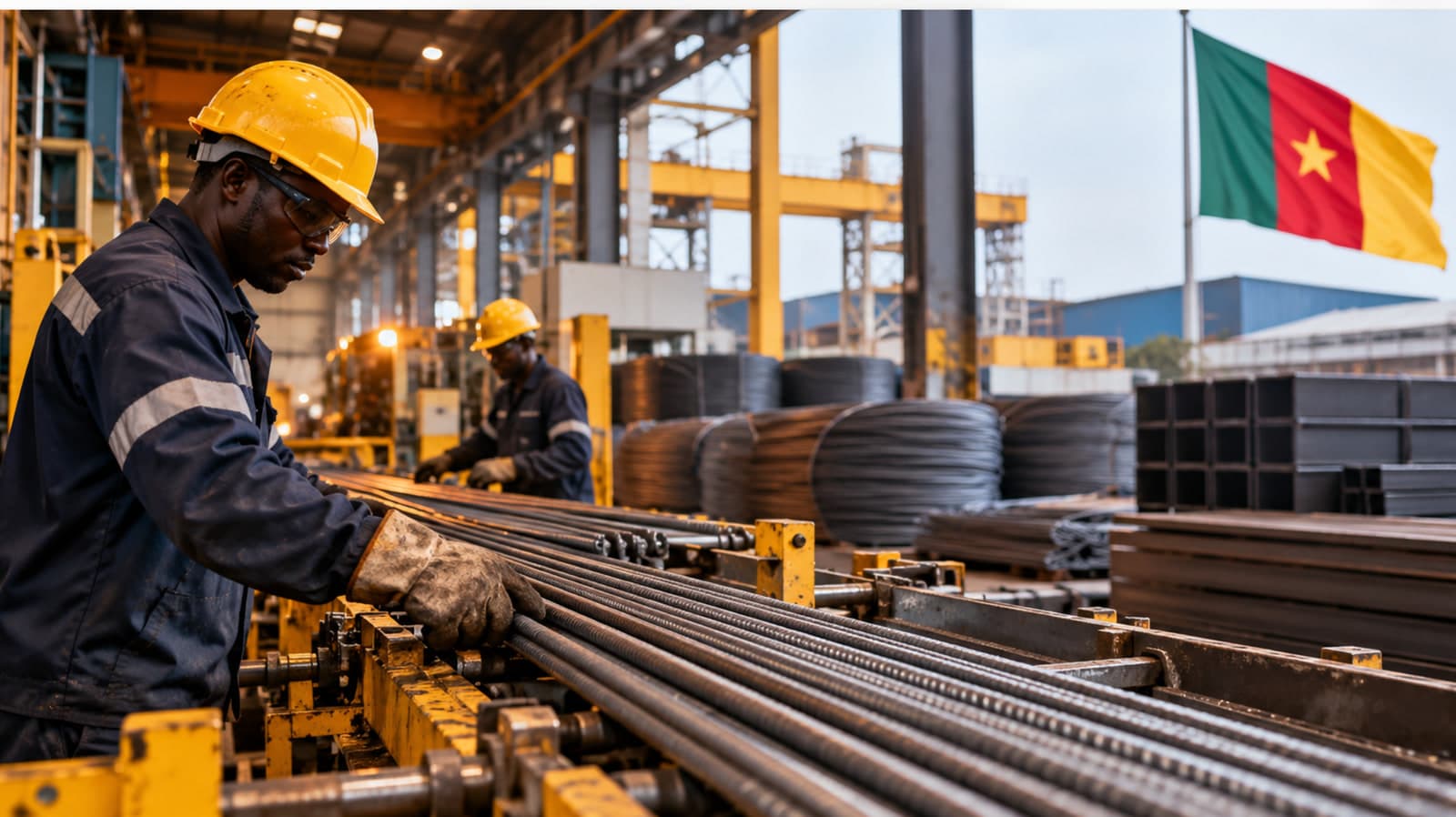
A Cameroonian manufacturer has secured $45.6 million in revolving working-capital financing from Afreximbank, giving it more room to buy materials, maintain production and expand the products it makes locally. Prometal SA, one of Cameroon's major steel manufacturers, operates seven plants with combined annual capacity of about 360,000 tonnes of finished steel. The company is also involved in edible oils and soap, but its steel operations are where the financing could have a wider effect on businesses working across construction, agriculture and industrial supply chains.
AI-generated summary. It can miss nuance — read the full story above for the complete picture.
A Cameroonian manufacturer has secured $45.6 million in revolving working-capital financing from Afreximbank, giving it more room to buy materials, maintain production and expand the products it makes locally. Prometal SA, one of Cameroon's major steel manufacturers, operates seven plants with combined annual capacity of about 360,000 tonnes of finished steel.
The company is also involved in edible oils and soap, but its steel operations are where the financing could have a wider effect on businesses working across construction, agriculture and industrial supply chains. Prometal plans to use the financing to support its existing operations and increase its ability to turn semi processed steel into finished products, including agricultural equipment and construction materials.
That is important for more than just the manufacturer. A large factory depends on hundreds of smaller businesses to keep it operating. Transport companies move materials and finished products. Engineering firms maintain machinery. Workshops supply repairs and fabrication services. Smaller suppliers provide tools, packaging, protective equipment and other goods needed on a factory floor. If Prometal increases production, some of these businesses could see more orders.
“A small engineering company does not need to own a steel plant to benefit from a stronger manufacturing sector.”
Where SMEs could benefit
The first impact could come through local suppliers. Manufacturing plants do not operate in isolation. They need regular deliveries and services, from industrial maintenance to logistics. An increase in production can therefore create additional work for smaller companies already operating around the plant. For a transport SME, for example, more steel moving between factories, warehouses and customers can mean more trips.
For an engineering business, increased factory activity could create demand for equipment repairs, welding, fabrication and maintenance. For smaller logistics companies, there could be opportunities to move finished products to construction sites, agricultural businesses and distributors. The opportunity will depend on how much of this work Prometal can source locally. But the potential supply-chain effect is an important part of the story.
Construction businesses could get another local supplier
Construction is another area where the financing could have an effect. Prometal already produces steel products used by the construction industry. Expanding into more finished construction materials could give contractors and building-material suppliers access to a wider range of locally produced products.
For smaller construction companies, having another source of materials can be useful when imported products face delays, currency movements or higher transport costs. It does not necessarily mean local products will always be cheaper. A manufacturer still has to deal with electricity, transport, labour, imported machinery and raw-material costs. But having production closer to the customer can reduce some of the logistical complications involved in importing finished products. For a small contractor working on a tight project deadline, availability can sometimes matter just as much as price.
Agriculture is another part of the equation
Prometal's move into agricultural equipment could also open opportunities for smaller businesses. Agricultural machinery is often expensive to import, particularly when equipment has to be shipped from outside the region. Local production could eventually make it easier for distributors and agricultural suppliers to source certain products closer to their customers.
That could create opportunities for SMEs involved in equipment sales, repairs, servicing and distribution. It could also make it easier for smaller farmers and agricultural businesses to access equipment without relying entirely on imported products. Again, the impact will depend on what Prometal eventually produces, how much it costs and whether local distributors can get the products to businesses outside the major industrial centres.
Working capital is part of the problem
The financing itself also highlights a problem that is easy to overlook when discussing African manufacturing. People often focus on the cost of building factories. But once a factory exists, the business still needs money to operate it. A manufacturer may need to purchase raw materials months before receiving payment for the finished goods. It has salaries, electricity, maintenance, transport and other expenses to cover along the way.
That creates a working-capital gap. The $45.6 million revolving facility gives Prometal additional financial room to manage that cycle. For a growing manufacturer, that can make the difference between having production capacity on paper and actually being able to use that capacity consistently.
The SME effect could extend beyond Cameroon
There is also a wider African angle. When large manufacturers increase local production, they can create markets for smaller companies around them. This is how industrial clusters develop. A steel plant needs maintenance companies. Those maintenance companies need technicians and suppliers. Transport companies move materials. Distributors sell finished products. Construction businesses use the steel. Equipment suppliers service those businesses.
One investment can therefore create several layers of commercial activity. But that does not happen automatically. Large manufacturers can also rely heavily on established international suppliers, particularly for specialised equipment and raw materials. Smaller local businesses need the capacity, pricing and reliability to compete for those contracts. This is where the financing could become more significant for Cameroon if Prometal's expansion leads to greater local procurement.
The bigger manufacturing challenge
Cameroon's challenge is not simply producing more steel. The bigger question is how much value can be created inside the country before a product reaches its final customer. Turning semi processed steel into finished construction products or agricultural equipment means more of the production process takes place locally.
That potentially creates more jobs, more supplier relationships and more opportunities for smaller businesses. It can also reduce the country's dependence on imported finished products, although imports will remain part of the supply chain for many manufacturers. For SMEs, the opportunity is therefore not necessarily in competing with Prometal.
It is in supplying, servicing, distributing and using what companies like Prometal produce. A small engineering company does not need to own a steel plant to benefit from a stronger manufacturing sector. A logistics company does not need to manufacture anything. A construction supplier can build a business around distributing locally produced materials. The success of the investment will ultimately be measured by more than the amount of steel coming out of Prometal's plants. The more interesting question is whether increased production creates a bigger market around the factories — and whether Cameroon's smaller businesses are able to take part in it.