
World's Largest Hydro Power Project Gets Green Light
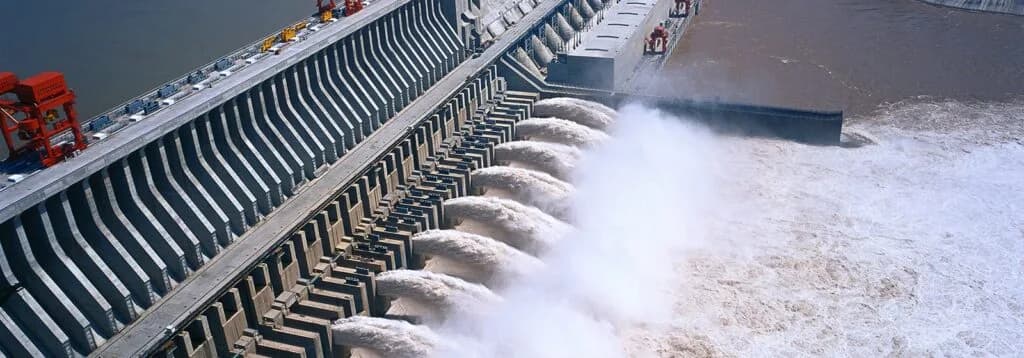
China has given approval for what is set to become the world’s largest hydropower dam complex, that will be capable of producing nearly a three times multiple in power as the current leading generation unit at the Three Gorges Dam in China. The project will be executed along the Yarlung Zangbo River in Tibet, close
World's Largest Hydro Power Project Gets Green Light
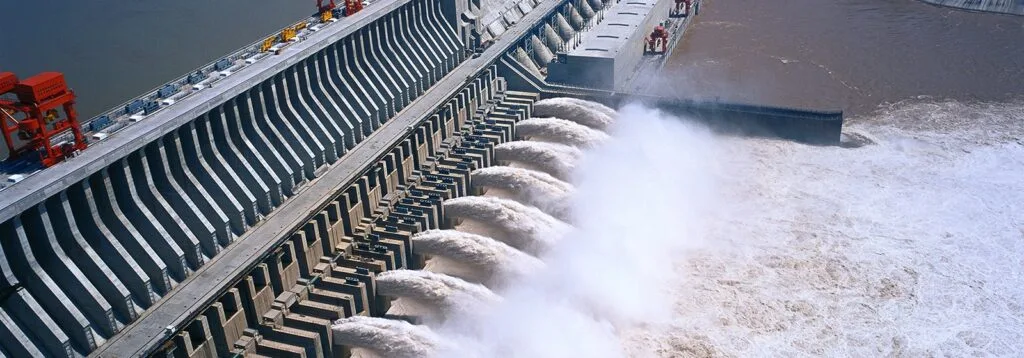
China has given approval for what is set to become the world’s largest hydropower dam complex, that will be capable of producing nearly a three times multiple in power as the current leading generation unit at the Three Gorges Dam in China.
The project will be executed along the Yarlung Zangbo River in Tibet, close to the Indian border. The expected construction cost has been estimated to be a monumental US$137 billion.
China Anticipates Massive Power Generation Capacity
The dam and Hydropower unit is part of China’s 14th “Five-Year Plan,” which includes environmental goals to accelerate renewable energy and fight pollution.
The location of the proposed dam will take advantage of the river’s steep geography and will be capable of producing 300 billion kilowatt-hours of power per year. This translates to 300 TWh, enough energy to provide the consumption requirements of as many as 300 million people in China.
The Three Gorges Dam, spanning the Yangtze River in China, currently holds the record for the most installed capacity and annual hydroelectricity generation, producing between 95 and 112 TWh every year.
Once completed, the proposed Yarlung Tsangpo Hydroelectric Project will eclipse the Three Gorges Dam production by nearly three times this amount.
For a sense of scale, the largest hydroelectric power plant in the US is the Grand Coulee Dam on the Columbia River in Washington, that produces around 20 TWh per year.
Location Provides key Factor – Massive Height Variance
The Yarlung Zangbo River, which later becomes the Brahmaputra river, over the Indian border, is one of the highest altitude rivers in the world. Its origin begins in the Angsi Glacier in the Tibet Autonomous Region. The region sits on tectonic plates and is subject to regular earthquake activities. It’s also one of the deepest canyons in the world, reaching a maximum depth of 6,009 m. The natural river course is a major landscape feature at 504.6 km in length.
This gives the Yarlung Zangbo River a drop of roughly 7,667 m from its highest point down to India. This makes it one of the most suitable river flows for developing hydro generated power globally. A stretch of 50-km near the Namcha Barwa mountain, provides a drop of 2 kilometres, making it the most suitable location for a hydroelectric power station.
Complex Construction
Construction of a major dam in that location would not be a simple project by any means. The project It would require drilling multiple 20-km) tunnels to divert sufficient water from the river. The current average flow is approximately 2000 cubic meters per second, sufficient to fill three Olympic-sized swimming pools every second.
Concerns over water flow control From India
Indian authorities have raised concerns about the construction of the dam as the project would see China controlling the water flow of the river. They foresee possible complications as this could have severe impact on the Indian territories across the border.
Chinese officials claim to have completed extensive geological studies on the seismically active area and believe construction could be completed safely. No timeline has been set for construction yet.