
Will Classical Technology Help Speed Up the Quantum Internet?
While the construction of a quantum internet is still in its early stages, it should come as no surprise that a pioneer of the conventional internet is working to discover efficient ways to implement quantum technology. Cisco, which was founded in 1984, played a crucial role in the development of the internet as we know
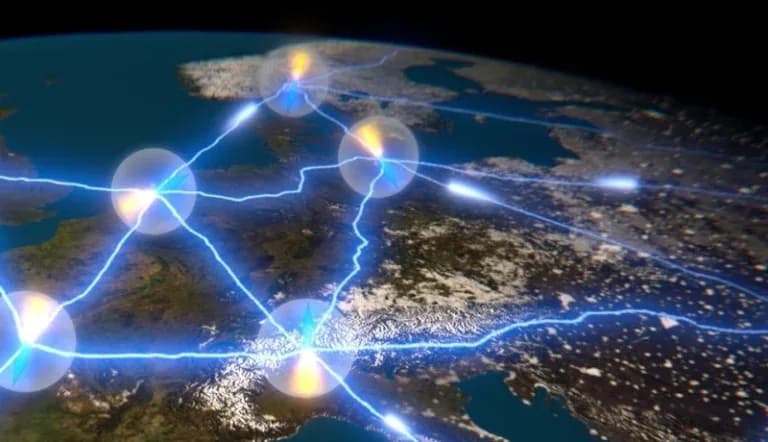
Will Classical Technology Help Speed Up the Quantum Internet?
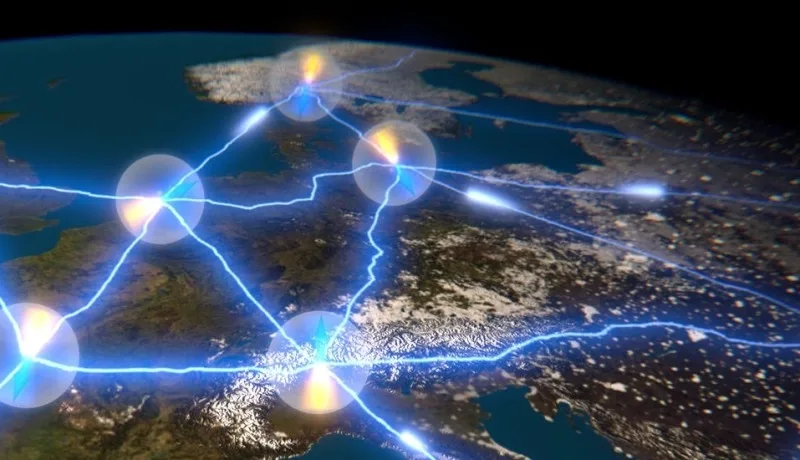
While the construction of a quantum internet is still in its early stages, it should come as no surprise that a pioneer of the conventional internet is working to discover efficient ways to implement quantum technology.
Cisco, which was founded in 1984, played a crucial role in the development of the internet as we know it. Its networking devices, internet connection solutions, and associated communications technologies are based on internet protocol, which is the data format used for sending data across a network or the internet.
Cisco researchers propose employing a regular internet technology—packet switching—to hasten the creation of a quantum internet in an academic article titled: “Packet Switching in Quantum Networks: A Path to Quantum Internet,” released in May 2022.
The promise of a quantum internet is that shared data will be safe and nearly unhackable, preserving corporations’ and governments’ most valuable asset: information.
The current difficulty is that quantum communications are quite cumbersome. Entities can send and receive quantum-encrypted information from point to point utilising trustworthy nodes at either end of the transmission using technologies such as quantum key distribution (QKD). Teleportation and entanglement-swapping techniques are two more typical quantum network designs being researched nowadays.
The difficulties in traversing continental distances, as well as the lack of efficiencies with trusted nodes, and the requirement for back-to-back terminals, which is, at best, an expensive proposition, as well as a difficult-to-achieve mesh network cornerstone of all our advanced telecommunications networks., are perhaps the most critical architectural shortcomings of these approaches.
Building QKD-enabled networks inside a confined metropolitan region has gained traction in Europe, Japan, and China, with China leading the globe in QKD network installations. Sadly, not so much in the United States. See my earlier post, “Why Public-Private Partnership Can Accelerate QKD Adoption in the United States,” for more information.
But, the current driving concern in quantum research is how to get to a quantum internet quicker and more effectively.
And this is where Cisco’s study into the possible applications of packet switching becomes intriguing. They propose using a system that works in today’s complicated internet and adapting it to a quantum network.
To provide dynamic network routing, the traditional internet depends on packet switching. Packet switching makes the best use of network resources and is hence the preferred design for the traditional internet. It is worth noting that, as the world continues to investigate the most effective designs for a quantum internet, some, such as internet pioneer Cisco, are looking at ways for the quantum internet to take use of packet switching efficiency.
In data transmission, packet switching divides a message into pieces. The bits are transported separately along whichever route is available or best for that package, and then reassembled when they arrive at their destination.
This method makes the best use of network resources and allows for dynamic network routing.
Wouldn’t it be cool if we could leverage the present classical internet’s fabric to kickstart a hybrid classical/quantum internet?
Researchers are beginning to integrate packet switching efficiency with the quantum-safe characteristics of QKD networks. An internet that combines the traditional efficiency of routing using packet switching with the unrivalled security of QKD implies a marriage of the two technologies, resulting in a neoclassical quantum internet.
At its heart, such a hybrid network would require the traditional routing information included in the header of every packet processed by a packet switch. Yet, the information in the packet would be created in a quantum and safe manner using QKD. That’s an intriguing notion.
Yet, the dilemma of how to overcome distance limits and trustworthy nodes with heavy hardware needs persists.
For metropolitan scale QKD networks, packet-switched QKD will first capture the efficiency of the conventional internet architecture. This is a promising solution that looks to significantly lower the high cost of trusted nodes using back-to-back hardware.
This is a step towards a more ubiquitous quantum internet, but we must first crawl. Nonetheless, the fact that firms like Cisco, which formed the foundation of today’s internet, are thinking in this manner shows a dazzling picture of what may happen when industry leaders stand up.