
Why is rand weak right now
The rand is much lower versus major currencies, owing to global and domestic pressures. On Tuesday (7 February), the local currency fell to a low of R17.69 per dollar, rebounding only marginally to roughly R17.55 on Wednesday morning. The rand's decline, according to Investec chief economist Annabel Bishop, is mostly due to risk sentiment changing,
Why is rand weak right now
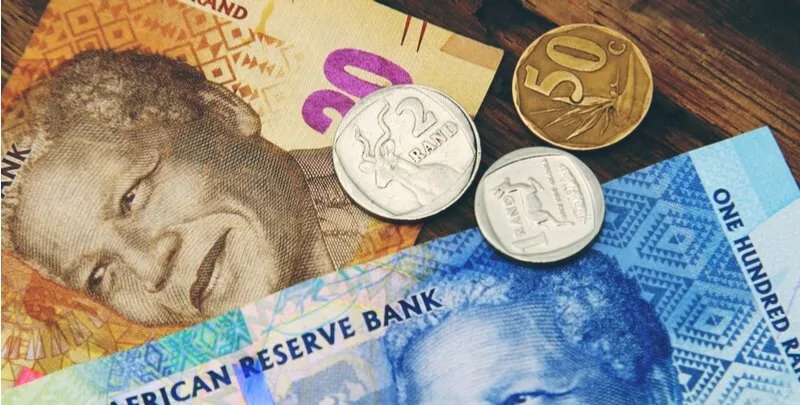
The rand is much lower versus major currencies, owing to global and domestic pressures.
On Tuesday (7 February), the local currency fell to a low of R17.69 per dollar, rebounding only marginally to roughly R17.55 on Wednesday morning.
The rand’s decline, according to Investec chief economist Annabel Bishop, is mostly due to risk sentiment changing, with markets still perceiving inflation threats in the United States.
“While the Fed last week was careful to highlight its rate hikes are not at an end, core measures of inflation are proving sticky and not just in the US,” she said.
“US Treasury Secretary Yellen reiterated this week that she does not expect a US recession, and legislative measures will aid inflation to fall more rapidly, but markets have started to worry about inflationary effects of stronger than expected economies.”
TreasuryOne agreed, noting that the stronger-than-expected performance of the US economy is bad news for developing markets, particularly the rand.
“The fact that the US economy is doing better than any other economy in the world caused the market to flock back into the US dollar,” it said. “This puts pressure on emerging markets. As the market follows the US dollar, it is usually the market EM that loses its shine, and this case is no different.”
“Moreover, the magnifying glass is still on South Africa, which does not bode well for the rand, at least in the short term, due to local problems. We need a sustained break back below R17.50 to open the way for a more significant recovery for the local currency,” it said.
The rand’s weakness, according to Bishop, is not just due to feelings around the US Fed, with President Cyril Ramaphosa’s State of the Nation Address on Thursday (9 February) also contributing to tensions.
Markets expect the president to make few game-changing reforms, leaving many previous goals unmet and the economic climate worsening.
“The rand has weakened on falling electricity supply, lack of broad state support for Eskom’s CEO, and Transnet failing to meet rail and port capacity needs, while the size of the government and its poor governance is feared to increase under the National Health Insurance scheme,” she said.
TreasuryOne stated that past State of the Nation speeches had little impact on the local currency, but anything related to Eskom and the continuing power crisis will be scrutinised – “it could be a bumpy ride this week,” it warned.
Looking ahead, Dr Francois Stofberg, managing director for private clients at Efficient Wealth, believes that the rand can still strengthen in 2023 despite its current downturn.
Given the South African Reserve Bank’s recent rate rises to keep inflation under control, he believes the plan will begin paying rewards through a stronger rand.
“We believe that the rand can strengthen to at least R16.50 against the US dollar in 2023, although it might appreciate well below R15.50 for brief periods.
“This is not because of a success story in our local economy – load shedding is making that impossible – but because of a slowdown in developed economies, a shift towards emerging markets, a normalisation in global currency markets, and the frontloading done by the SARB to attract capital to our markets,” he said.
In South Africa, inflation should progressively fall as markets get more confident about external pressures and supply-side forces are addressed, he added.
The rand was trading at the following values versus major currencies at 13h55 on Wednesday:
- ZAR/USD: R17.51
- ZAR/EUR: R18.82
- ZAR/GBP: R21.19